How GLP-1 Drugs Like Ozempic Can Affect Your Health—and Your Long-Term Care Insurance Application

About This Article
GLP1 medications including Ozempic, Wegovy, Mounjaro and Zepbound all mimic a natural gut hormone that slows digestion and signals fullness to the brain. They can produce both health benefits and side effects and, in some cases, may influence LongTerm Care Insurance underwriting.

Linda Maxwell
Linda Maxwell is a journalist who writes about aging, health, chronic illness, caregiving, and long-term care issues impacting older adults and their families.
Table of Contents
- What Are GLP-1 Drugs, and How Do They Work?
- Why You Might Still Feel Hungry
- Psychological Side of GLP-1 Therapy
- Common Side Effects and How to Manage Them
- Protecting Your Muscle and Bone Health
- Who Should Consider a GLP-1
- Questions to Ask Your Doctor Before Starting a GLP-1 Medication
- Looking Ahead
- If You Are Applying for Long-Term Care Insurance, Your GLP-1 Use Matters
- GLP-1 and LTC Insurance - Bottom Line
You have probably heard someone mention Ozempic this week, whether at the pharmacy counter, in a waiting room, or on the news. What started as a type 2 diabetes treatment has become one of the most talked-about medication classes in the country. Every day you hear radio and TV commercials for these products.
Ozempic, Wegovy, Mounjaro, Zepbound and Saxenda all belong to the same family of drugs, and each works a little differently on your appetite, weight and overall health. If you are 45 or older and weighing whether a GLP-1 (glucagon-like peptide-1) medication is right for you, or you are already taking one and thinking about your future care planning, here is what the science says, and what it could mean for your health and even your Long-Term Care Insurance application.
What Are GLP-1 Drugs, and How Do They Work?
GLP-1 medications mimic a hormone your gut naturally releases after you eat. That hormone slows digestion, helps regulate insulin, and tells your brain you are full sooner than usual. The Food and Drug Administration approved semaglutide, sold as Ozempic, for type 2 diabetes in 2017, and later approved it under the brand name Wegovy for chronic weight management in adults with obesity.
Tirzepatide, a related dual-hormone medication, was approved as Mounjaro for type 2 diabetes in 2022 and later as Zepbound for chronic weight management in 2023. Saxenda, an older once-daily GLP-1 medication built on liraglutide, was approved specifically for weight loss as well.
Obesity and overweight are serious conditions that can be associated with some of the leading causes of death such as heart disease, stroke and diabetes. In light of increasing rates of both obesity and overweight in the United States, {this} approval addresses an unmet medical need.” — John Sharretts, M.D., director of the Division of Diabetes, Lipid Disorders, and Obesity in the FDA’s Center for Drug Evaluation and Research.
Many people on a GLP-1 say food feels different. Cravings shrink. Old favorite foods lose their pull. Fullness arrives faster and lasts longer.
Why You Might Still Feel Hungry
A GLP-1 prescription is not a hunger switch. Stress, poor sleep, emotional eating, and even the timing of your dose relative to meals can all keep hunger in the picture. Hunger has a mental and social side, not just a physical one, so pairing the medication with supportive habits, like checking in with your body instead of the clock, tends to produce better results.
Psychological Side of GLP-1 Therapy
Researchers continue studying how GLP-1 medications affect the brain's reward pathways. Many people report fewer food cravings and greater control around eating, though individual experiences vary. A University of Virginia research team found that GLP-1 drugs act on a brain pathway connecting the hindbrain, the central amygdala, and dopamine-producing neurons, regions tied to reward and motivation, not just fullness.
What we show is that these drugs can reduce not just hunger, but the desire to pursue rewarding food."— Ali D. Güler, PhD, neuroscientist, University of Virginia, lead researcher of a study published in Nature.
Güler also noted that some patients report an easier time curbing compulsive behaviors like smoking, while others report a diminished sense of pleasure.
Common Side Effects and How to Manage Them
The good news is that most Ozempic side effects and those of other GLP-1 medications are somewhat mild and temporary, meaning they can be sidestepped with some strategies. Most side effects are mild and improve as your body adjusts. The most frequently reported include:
- Nausea: Common in early weeks and often eases over time
- Diarrhea: Usually mild to moderate
- Vomiting: Sometimes paired with nausea
- Constipation:Infrequent or difficult bowel movements and constipation
- Abdominal pain: Mild to moderate cramping or discomfort
- Delayed gastric emptying: A slower stomach-emptying effect tied to how the drugs work
A few strategies can help with day-to-day side effects:
- Eat smaller, more frequent meals instead of three large ones
- Skip high-fat, greasy, or spicy foods, which can worsen nausea
- Stay hydrated and use an electrolyte drink if you have diarrhea or vomiting
- Ask your doctor about taking your dose before bed if nausea is a problem
- Ask your doctor about ginger or ginger tea for nausea relief
Severe abdominal pain should be reported to your physician promptly, since, although uncommon, GLP-1 medications have been associated with pancreatitis in some patients.
Delayed gastric emptying is also why anesthesia providers pay close attention to GLP-1 use before surgery. A 2024 multisociety guidance from the American Society of Anesthesiologists and several partner medical organizations found that most patients can safely continue their GLP-1 medication before elective surgery. However, patients with active nausea, vomiting, or other gastrointestinal symptoms on the day of a procedure may need a liquid diet beforehand or a delay. Always follow your physician's specific instructions about your medication before any procedure requiring anesthesia.
Protecting Your Muscle and Bone Health
Rapid weight loss of any kind, including weight loss from a GLP-1, can include a loss of lean muscle mass, particularly without adequate protein intake or resistance exercise. A joint advisory from the American College of Lifestyle Medicine, the American Society for Nutrition, the Obesity Medicine Association and The Obesity Society recommends that patients on GLP-1 therapy get a baseline assessment of muscle strength and body composition, and that structured resistance training be built into treatment to help protect muscle and bone mass. The same advisory notes that substantial, rapid weight reduction can affect bone density, while slower, more moderate weight loss tends to better preserve bone mass.
Maintaining adequate protein intake, hydration, and regular resistance exercise helps reduce the risk of losing muscle while losing weight. Talk with your physician or other qualified healthcare professional about a nutrition and activity plan that fits your GLP-1 treatment.
Who Should Consider a GLP-1
A GLP-1 is not for everyone. Doctors generally reserve these medications for adults with type 2 diabetes or obesity, prescribed and monitored under medical supervision.
Juliana S. Simonetti, M.D., medical weight loss specialist at the University of Utah Health, says that for most people, GLP-1s are safe, but it's essential to take them under medical supervision, not casual or cosmetic use.
If you just wanted to lose five or ten pounds, this is not the medication for you. We have more tools in our toolbox now, but it still needs to be done with medical guidance." — Juliana S. Simonetti, M.D.
Talk with a physician or other qualified healthcare professional before starting any GLP-1 therapy, since your history and current health determine whether it is appropriate.
Questions to Ask Your Doctor Before Starting a GLP-1 Medication
A conversation with your physician before starting a GLP-1 medication can help you understand the benefits, potential risks, and whether the treatment fits your health goals. If Long-Term Care Insurance is part of your future planning, it's also a good time to discuss how your underlying health condition and treatment may be documented in your medical records.
- Why is this medication right for me?
Ask why your physician believes a GLP-1 medication is appropriate for your situation. Is the goal to improve blood sugar control, reduce cardiovascular risk, support weight loss or address another medical concern?
- Which GLP-1 medication do you recommend?
Several GLP-1 medications are available, including Ozempic, Wegovy, Mounjaro, Zepbound and Saxenda. Ask why one medication may be a better choice than another based on your health history, treatment goals, and insurance coverage.
- What results should I realistically expect, and what else should I do?
Ask how much weight loss or improvement in blood sugar control is realistic and how long it may take to see results. Discuss nutrition, adequate protein intake, resistance exercise, physical activity, and other lifestyle changes that can help preserve muscle mass and improve long-term success.
- What side effects should I watch for, and how can I reduce them?
Discuss common side effects such as nausea, constipation, diarrhea, vomiting and delayed stomach emptying. Ask which symptoms are expected, which require medical attention, and what strategies may help reduce side effects during treatment.
- Will my health insurance cover this medication?
Ask whether your health insurance requires prior authorization, what your out-of-pocket costs may be, whether manufacturer savings programs are available and whether long-term treatment is financially realistic.
- What should we monitor while I'm taking a GLP-1 medication?
Ask how often your physician wants to monitor your weight, A1C, blood pressure, kidney function, and other laboratory values. You should also discuss preserving muscle strength and bone health during weight loss.
- What happens if I stop taking the medication?
Ask whether weight regain is likely, how treatment would be adjusted if you discontinue the medication, and what lifestyle changes can help you maintain your progress over time.
- What should I know before surgery or other medical procedures?
Because GLP-1 medications can slow stomach emptying, ask whether you need to temporarily stop the medication before procedures involving anesthesia or sedation. Always follow your physician's specific instructions.
- I'm planning to apply for Long-Term Care Insurance. Is there anything important that should be documented in my medical record?
Tell your physician if you expect to apply for Long-Term Care Insurance. Ask whether your medical record clearly documents your diagnosis, the reason the medication was prescribed, your weight history, treatment progress, laboratory results, and overall health stability. Well-documented medical records can help underwriters accurately evaluate your application.
Looking Ahead
GLP-1 medications can be an effective tool for managing type 2 diabetes or obesity, but they work best as part of a comprehensive health plan that includes nutritious eating, regular physical activity and ongoing medical care. Asking informed questions helps you better understand your treatment, set realistic expectations and become an active partner in your healthcare.
If you're also planning for retirement, it's worth thinking beyond today's health goals. Long-Term Care Insurance is generally easier to obtain before chronic health conditions become more complex. By discussing your treatment plan with your physician and working with an experienced long-term care planning specialist, you can make informed decisions that support both your long-term health and your future financial security.
If You Are Applying for Long-Term Care Insurance, Your GLP-1 Use Matters
Millions of older adults are now taking a GLP-1 medication, and if you are one of them and shopping for Long-Term Care Insurance, expect the medication to come up during underwriting. It is essential, according to LTC Insurance specialists interviewed for this article, that you disclose this information, along with all your health information, prior to applying.
LTC News surveyed underwriting executives and underwriting departments at nearly every major carrier offering Long-Term Care Insurance in May 2026 to find out how they currently evaluate GLP-1 use, and a clear picture emerged.
- The medication itself is not the primary concern for any insurance carrier surveyed.Underwriters consistently said they are not rating applicants down simply for taking a GLP-1, and none of the carriers surveyed distinguish meaningfully between individual GLP-1 brands or molecules. What drives the underwriting decision instead is your build, your weight stability, your underlying health conditions, and whether your weight loss looks sustainable.
- Why you were prescribed the medication matters more than the prescription itself. GLP-1 use tied to diabetes or another metabolic condition typically brings closer review of your A1C and related lab history, prior diagnosis, and metabolic indicators. GLP-1 use for weight management alone, without significant comorbidities, is generally viewed more favorably, and several carriers noted they view proactive weight management as a sign of good health engagement rather than a red flag.
- Most insurance carriers add back a portion of recent weight loss when calculating your build. The dominant industry practice, used by the large majority of carriers surveyed, is to add back roughly half of the weight you lost in the prior 12 months when classifying your build for underwriting purposes. If you lost 40 pounds over the past year, for example, a carrier using this approach would typically evaluate your case as if you had lost closer to 20. A smaller number of carriers only apply an adjustment once weight loss crosses a specific threshold, commonly around 20 pounds in the prior year, and use your current weight without adjustment below that line. Individual underwriting decisions still vary based on age, body build, laboratory values, and overall medical history.
- Stability periods generally run 6 to 12 months. Weight lost more than a year ago and holding steady is treated far more favorably than weight lost in the past few months. The most conservative carrier approach identified in the survey adds back the full amount of weight lost if the loss occurred within the past six months, stepping down to a partial add-back between six and 12 months, and using your actual current weight once you have held it for a year or more.
- Weight regain after stopping the medication is a recurring concern among underwriters at Long-Term Care Insurance companies. More than one carrier specifically flagged the risk that applicants regain weight after discontinuing a GLP-1, and underwriters said they weigh long-term sustainability, not just the number on the scale at the time of application, when setting a rate class. As one underwriter told LTC News during the survey: "Losing weight is the easy part. Maintaining it is harder."
- Cosmetic or non-medically supervised use draws more scrutiny. Several insurance carriers distinguish between medically appropriate obesity or diabetes treatment and weight loss pursued for cosmetic reasons or through questionable sourcing, with the latter more likely to face additional underwriting review.
Based on these findings, three broad risk tiers emerged across the industry:
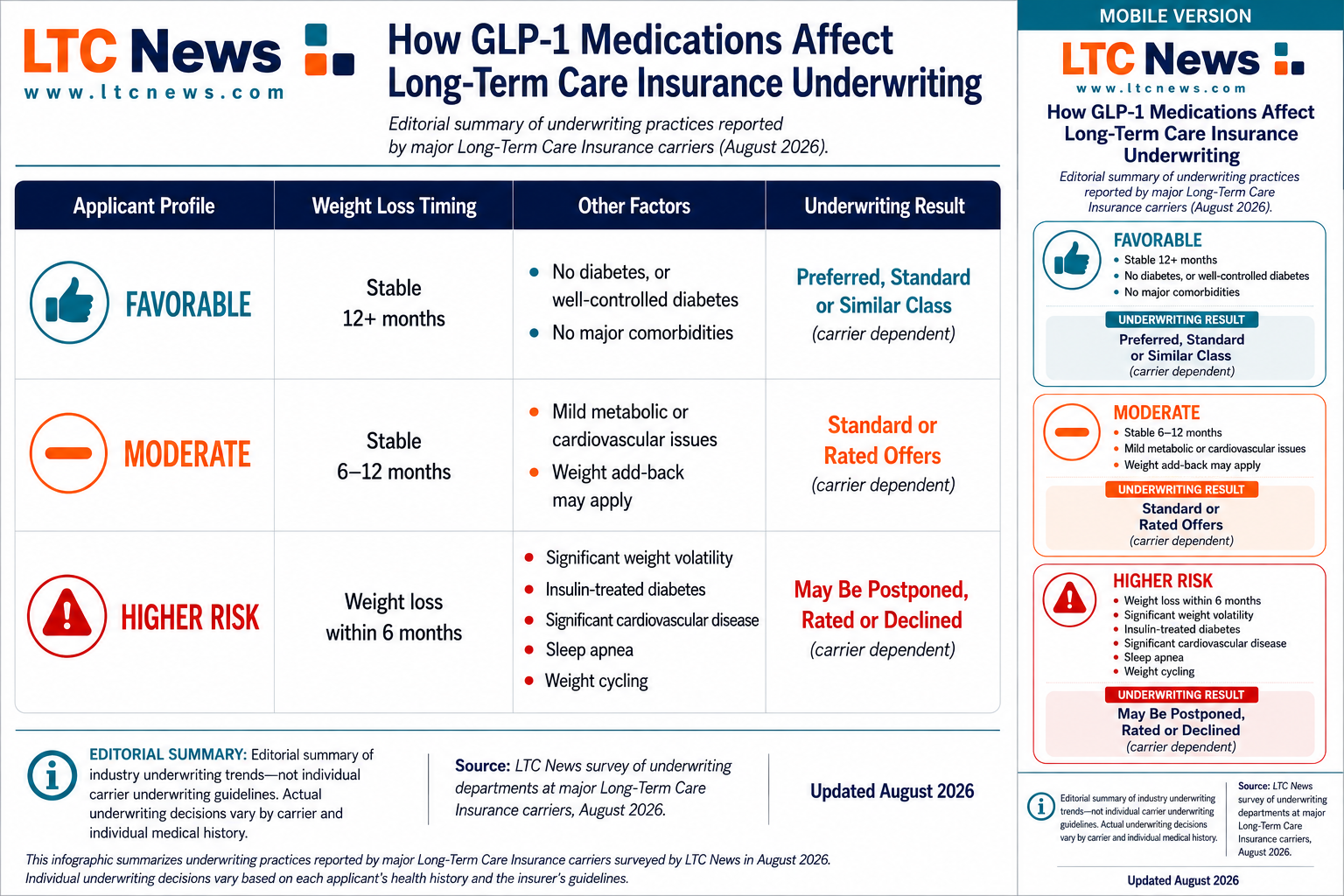
None of this means denial is automatic. The overall industry trend identified in the survey is favorable toward medically supervised GLP-1 use, provided an applicant can demonstrate stable health, stable weight, and manageable underlying conditions. The takeaway is not to hide GLP-1 use, but to apply with complete, accurate records, including your diagnosis, dosage history, and recent lab results, so an underwriter can evaluate your full picture rather than guessing.
If you are taking a GLP-1 and thinking about Long-Term Care Insurance, talk with a licensed long-term care planning specialist who can walk you through how underwriting currently treats GLP-1 disclosures and help you time your application well. Waiting until your weight and related health markers have stabilized for at least a year may improve your options, though every situation is different.
In most states, Partnership-qualified Long-Term Care Insurance policies can also protect assets if Medicaid is ever needed after benefits are exhausted, so ask your specialist whether a Partnership policy fits your planning goals.
Learn More: LTC News Long-Term Care Insurance Learning Center
GLP-1 and LTC Insurance - Bottom Line
Whether you are considering a GLP-1 medication to manage diabetes or to improve your weight and overall health, remember that today's health decisions can influence tomorrow's planning opportunities. As obesity medications and diabetes medications become more common among adults focused on healthy aging and retirement planning, understanding how they intersect with insurance is increasingly part of the conversation.
The best time to explore Long-Term Care Insurance is typically while you are still healthy and before chronic medical conditions become more complex. Understanding how GLP-1 therapy fits into today's underwriting environment allows you to make informed decisions rather than facing unexpected surprises later.
Curious what long-term care might cost in your area, or how a GLP-1 prescription could factor into your own planning timeline? Try the Cost of Care Calculator to see current and projected local long-term care costs.
This article is for general informational purposes only and is not medical advice. Talk with your physician before starting or stopping any medication and consult a licensed long-term care planning specialist before making Long-Term Care Insurance decisions.
Frequently Asked Questions
Why do Long-Term Care Insurance companies ask about recent weight loss?
Rapid weight loss can make it more difficult for underwriters to assess long-term health risk. Many insurers evaluate weight stability over time and may adjust recent weight loss when reviewing an application. Stable weight and well-controlled health conditions are generally viewed more favorably.
What should I discuss with my physician before applying for Long-Term Care Insurance?
Let your physician know you plan to apply for Long-Term Care Insurance. Ask whether your medical records clearly document your diagnosis, treatment plan, weight history, laboratory results and overall health stability. Complete and accurate medical records can help underwriters evaluate your application more efficiently.
Can GLP-1 medications cause muscle loss?
Rapid weight loss can include some loss of lean muscle mass if adequate protein intake and resistance exercise are not part of the treatment plan. Physicians often recommend strength training, proper nutrition and regular monitoring to help preserve muscle and bone health.
What are GLP-1 medications?
GLP-1 medications are prescription drugs that mimic a naturally occurring hormone that helps regulate blood sugar, slows digestion and signals fullness to the brain. They are commonly prescribed to treat type 2 diabetes and, in many cases, obesity or excess weight.
What are the most common side effects?
The most frequently reported side effects include nausea, vomiting, diarrhea, constipation, abdominal discomfort and delayed stomach emptying. These side effects often improve as the body adjusts, but severe or persistent symptoms should be reported to your physician promptly.
Should I stop taking my GLP-1 medication before surgery?
Because GLP-1 medications can slow stomach emptying, your physician or anesthesiologist may recommend temporary changes before certain procedures. Always follow your healthcare team's specific instructions before surgery or procedures requiring anesthesia.
Why do some people still feel hungry while taking a GLP-1 medication?
Hunger is influenced by more than stomach fullness. Stress, poor sleep, emotional eating, meal timing and individual differences all affect appetite. Healthy eating habits and regular physical activity remain important even while taking a GLP-1 medication.
Why do GLP-1 medications reduce appetite?
GLP-1 medications slow stomach emptying and activate areas of the brain involved in appetite regulation. Many people feel full sooner, experience fewer food cravings and naturally eat smaller portions.
Why should I consider Long-Term Care Insurance before my health changes?
Long-Term Care Insurance is generally easier to qualify for while you are in good health. Waiting until chronic medical conditions become more advanced may reduce your options or affect premiums. Planning early can provide more choices and greater financial protection for future long-term care needs.
Does taking a GLP-1 medication automatically mean I'll pay a higher premium or be declined?
No. According to the LTC News survey of major Long-Term Care Insurance carriers discussed in this article, medically supervised GLP-1 use alone is generally not a reason for a higher premium or denial. Underwriters evaluate your overall health, medical history, weight stability and the condition being treated rather than the medication itself.
What's the difference between Ozempic, Wegovy, Mounjaro, Zepbound and Saxenda?
These medications belong to the same general class but have different FDA-approved uses and active ingredients. Ozempic and Wegovy contain semaglutide, while Mounjaro and Zepbound contain tirzepatide. Saxenda contains liraglutide and is an earlier GLP-1 medication used for weight management.
Should I wait to apply for Long-Term Care Insurance if I'm taking a GLP-1 medication?
Every situation is different, but many Long-Term Care Insurance specialists recommend applying after your weight and related health markers have stabilized whenever practical. An experienced long-term care planning specialist can help determine the best timing based on your individual circumstances and current underwriting practices.
Can taking a GLP-1 medication affect my Long-Term Care Insurance application?
The medication itself is generally not the primary underwriting concern. Long-Term Care Insurance companies are typically more interested in why the medication was prescribed, your underlying medical condition, recent weight changes, overall health and whether your weight has remained stable over time.