How Drug Shortages Are Reshaping Medication Safety in Long-Term Care
About This Article
Drug shortages hit long-term care differently than hospitals. Nursing home residents depend on daily medications for chronic conditions, so even a brief interruption can disrupt care.

Joel Zupnick
Joel Zupnick is the founder of SpecialtyRx, the largest privately-owned long-term care pharmacy in the nation, serving more than 350,000 patients annually in long-term care facilities.
Table of Contents
If you have a parent or loved one in a nursing home, you may not think much about where their medications come from until a shortage puts that routine at risk.
Drug shortages have become a persistent challenge across health care, but they hit long-term care differently than they hit hospitals. A hospital can often delay a procedure or substitute a treatment on the fly. A nursing home cannot pause a resident's daily medications without consequences.
For long-term care residents, medications are not optional. They support treatment plans for chronic illness, neurological disorders, diabetes, heart disease, behavioral health conditions, and pain management. Even a short disruption can create problems that reach far beyond the pharmacy shelf.
As shortages grow more frequent, long-term care organizations have had to rethink what medication resilience actually means. It is no longer just about finding a replacement drug. It is about building systems that catch disruptions before they ever reach a resident.
Shortages Start Long Before the Shelf Goes Empty
One of the biggest misconceptions is that a shortage begins the moment a medication disappears from the shelf. In reality, the response usually starts weeks or months earlier.
Long-term care pharmacies track manufacturer notifications, wholesaler inventories, supply trends, and purchasing data to flag medications that may become hard to get. Early warning gives the pharmacy team time to evaluate alternatives, consult prescribers, and review resident medication profiles before a gap ever reaches the care setting.
That groundwork stays invisible to nursing home staff. It can still make the difference between a smooth transition and a medication crisis.
Substitutions Require More Than Swapping Bottles
Replacing one medication with another is rarely simple. Every change requires clinical review: Is the alternative appropriate? Does the dose need adjusting? Could it interact with other medications the resident takes? Do doctors, nurses, residents, and families need updated instructions?
Long-term care residents often take multiple medications and carry complex medical histories, so these decisions demand coordination across the entire care team, not a single quick call.
Packaging and Distribution Add Another Layer
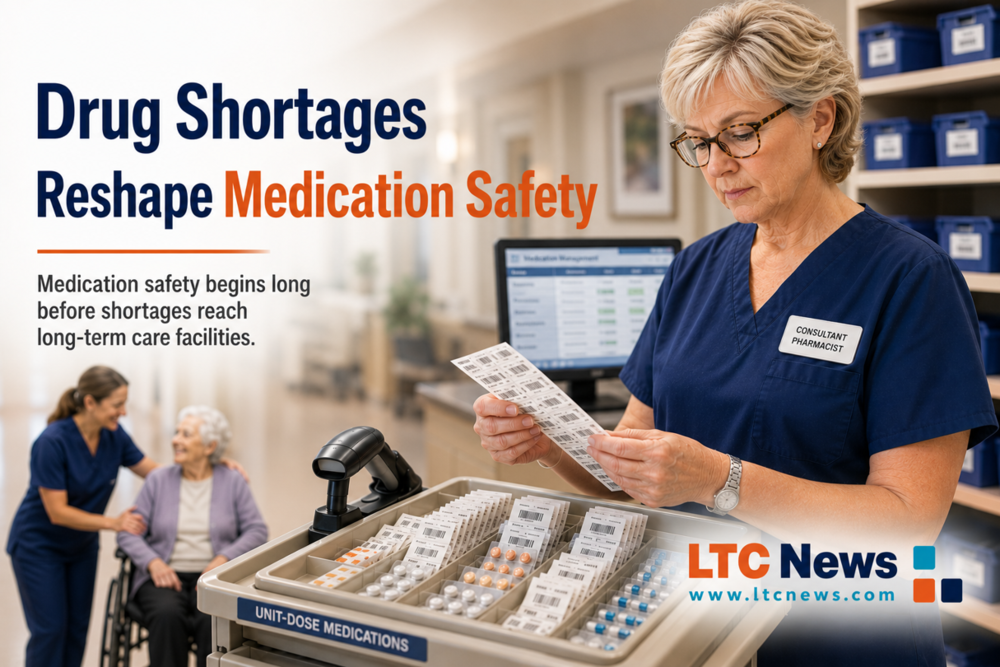
Packaging matters more during a shortage than most people realize. Many nursing homes rely on unit-dose packaging, medication carts, barcode verification, and scheduled administration workflows built to reduce errors. A substitute medication can require new labeling, new barcode data, and staff retraining. Skip that planning, and even a small substitution can create confusion during medication rounds.
Distribution creates its own pressure. Hospitals often keep large on-site inventories. Nursing homes typically rely on scheduled pharmacy deliveries instead. When a shortage hits, pharmacies must adjust purchasing, coordinate supply across regions, or redistribute limited stock so residents keep receiving essential therapies.
The goal is not simply getting the medication in the building. It is getting the right medication to the right resident at the right time, without disrupting care.
Communication Determines How Smooth the Transition Feels
Administrators, directors of nursing, doctors, consultant pharmacists, and frontline nurses all need timely information during a shortage. Waiting until a medication is already unavailable leaves little room to evaluate alternatives or prepare staff.
Organizations that manage shortages well tend to share a few habits: early communication, clear documentation, standardized substitution processes, and steady collaboration between pharmacy and facility leadership. Those habits keep clinical decisions focused on resident care instead of last-minute scrambling.
Questions to Ask Your Long-Term Care Pharmacy Partner
As drug shortages become a recurring part of health care rather than an occasional disruption, it is worth asking your pharmacy partner a few direct questions:
- How do you monitor emerging shortages?
- How early do you notify facilities?
- What clinical support is available when a substitution becomes necessary?
- How do you update packaging, barcode systems, and administration workflows during a change?
- What is your contingency plan if a shortage worsens or spreads?
The answers reveal whether a pharmacy has invested in the operational infrastructure residents need during periods of supply instability.
Preparedness Is What You Can Control
No pharmacy can eliminate drug shortages. Many of the underlying causes, from manufacturing disruptions to raw material shortages to regulatory issues, sit outside anyone's control.
Preparedness is different. Residents should never face unnecessary risk because communication was delayed, a contingency plan was missing, or a system was not ready to adapt. As shortages become a fixture of health care, resilience depends on the strength of the systems working behind the scenes.
For families evaluating a long-term care facility or its pharmacy partner, that means asking how medication continuity is protected, not just how prescriptions are filled. When preparation happens early, and communication stays transparent, even a difficult supply environment can be managed with far less disruption to the residents who depend on it every day.
Question: Have you had a loved one affected by a medication shortage in a nursing home or assisted living community? Understanding how a facility's pharmacy partner handles shortages is one more factor to weigh when evaluating long-term care options. If you are searching for a long-term care facility for a loved one, ask about how they handle medications and medication management. Use the LTC News Caregiver Directory to narrow down your search.
If you manage a home health agency or long-term care facility you can claim your free listing on the LTC News Caregiver Directory and/or upgrade the listing to enhance visibility and highlight your staff and services through the LTC News Directory Business Portal.
About Joel Zupnick: Joel Zupnick is the founder of SpecialtyRx, the largest privately-owned long-term care pharmacy in the nation, serving more than 350,000 patients annually in long-term care facilities. He brings more than 25 years of operational, financial, and strategic leadership experience to long-term care pharmacy services.
Frequently Asked Questions
Can a medication simply be replaced with another drug?
Not usually. Every substitution requires a clinical review to determine whether the alternative is appropriate for the resident's medical condition, current medications, allergies, and treatment goals. Dosages may need adjustment, and physicians must approve many changes before they are implemented.
What role do families play during a medication shortage?
Families should stay informed, ask questions about any medication changes, and communicate concerns with the nursing staff, physician, or pharmacist. Understanding why a medication has changed and what to watch for can help ensure continuity of care.
How do pharmacies help prevent medication errors during shortages?
Long-term care pharmacies coordinate with physicians, nurses, consultant pharmacists, and facility administrators to document medication changes, update dispensing systems, educate staff, and maintain accurate medication records. Strong communication and standardized procedures help reduce the risk of errors.
Can medication shortages affect a resident's health?
Yes. Delays or interruptions in treatment can increase the risk of worsening symptoms, hospitalization, medication errors, or other complications, particularly for residents managing multiple chronic health conditions. That's why proactive planning is so important.
Can drug shortages be prevented?
Individual nursing homes and pharmacies cannot prevent national drug shortages, but they can reduce their impact through advance planning, strong clinical oversight, effective communication, diversified purchasing strategies, and well-developed contingency plans.
Why does packaging matter during a drug shortage?
Most nursing homes use specialized medication packaging, barcode verification systems, and medication administration records designed to reduce errors. When a substitute medication is introduced, packaging, labels, barcode data, and administration procedures often need to be updated to ensure staff administer the correct medication safely.
Why does a pharmacy's approach to shortages matter when choosing a long-term care facility?
Medication management is one of the most important aspects of long-term care. A facility that partners with a pharmacy experienced in anticipating shortages, communicating proactively, and coordinating safe medication substitutions is better positioned to protect residents from unnecessary treatment disruptions and medication-related risks.
How do long-term care pharmacies know a shortage is coming?
Many long-term care pharmacies monitor manufacturer notices, wholesaler inventories, purchasing trends, and national supply data. Early warning allows pharmacists to identify potential alternatives, consult physicians, and prepare facilities before a medication becomes unavailable.
Will my loved one always receive the exact same medication?
Not always. If a medication becomes unavailable, the physician and pharmacist may recommend a clinically appropriate alternative. Any substitution should be carefully evaluated to provide similar therapeutic benefits while minimizing risks.
What causes drug shortages?
Drug shortages can result from manufacturing problems, quality control issues, shortages of raw materials, increased demand, supply chain disruptions, regulatory actions, or a manufacturer discontinuing a product. Often, several of these factors occur at the same time.
Why are drug shortages a bigger concern in nursing homes than in hospitals?
Nursing home residents rely on medications every day to manage chronic illnesses such as heart disease, diabetes, dementia, Parkinson's disease, and mental health conditions. Unlike hospitals, where some procedures or treatments can sometimes be delayed, long-term care facilities must continue administering essential medications on schedule to help residents remain stable and avoid complications.
What questions should families ask a nursing home about medication shortages?
Consider asking:
- How are emerging drug shortages monitored?
- How quickly are physicians and families notified of medication changes?
- Who reviews and approves substitute medications?
- How are medication packaging and barcode systems updated?
- What contingency plans are in place if a shortage becomes prolonged?