How Arizona Cities Are Adapting to an Aging Population Through Better Walkability
About This Article
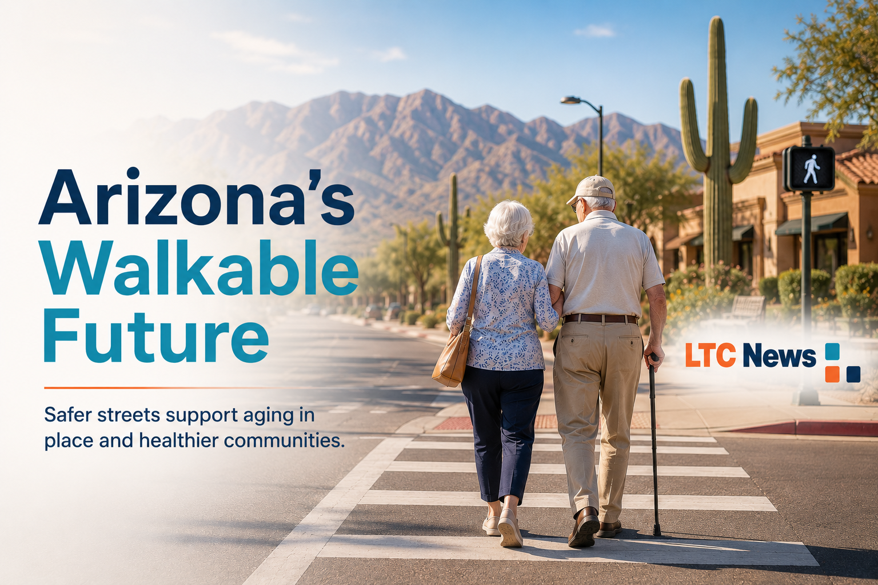
Arizona cities, including Mesa, Scottsdale, and Tucson, are retrofitting sidewalks, crosswalks, and pedestrian signal timing to serve a fast-growing older adult population. These are infrastructure improvements that directly support aging in place and reduce long-term care needs.

Anna Marino
Anna Marino is a seasoned writer specializing in topics related to family, aging, and lifestyle in retirement. She shares advice on intergenerational relationships and strategies for enjoying retirement.
You probably don’t think of a crosswalk as part of retirement planning. But for millions of aging Americans, including you, that painted stretch of pavement becomes a lifeline. As mobility changes and balance grows less certain, the simple act of crossing the street can determine whether someone can still walk to the pharmacy, make it to a doctor’s appointment, or visit a neighbor without fear.
When you’re older, independence isn’t just about finances or where you live; it’s about whether your body can safely carry you through the everyday tasks that once felt effortless. A poorly timed signal, a long stretch without a bench, a curb that’s just a little too high, these become barriers that push people from “living on their own” to “needing daily help.”
This is the quiet truth of aging in America: mobility issues don’t arrive all at once. They creep in. And when they do, the world shrinks — unless you’ve planned for support. That’s why long-term care planning matters long before you need it. It’s not just about nursing homes or home care aides. It’s about preserving the freedom to move, to choose, to stay connected to the life you’ve built.
In Arizona, one of the fastest-growing states for older adults, cities are beginning to take that connection seriously.
The Demographic Shift Behind the Rebuilding
Arizona's population of adults 65 and older has grown for decades, and Sun Belt retirement migration shows no signs of slowing. That demographic weight is now large enough to reshape how city planners think about streets, signals, and sidewalks.
Most older adults want to stay in their homes, yet rising housing costs and limited options create serious barriers. To meet this growing need, leaders at all levels and sectors must prioritize affordable, safe, and accessible housing and communities." — Rodney Harrell, Vice President of Family, Home and Community at AARP.
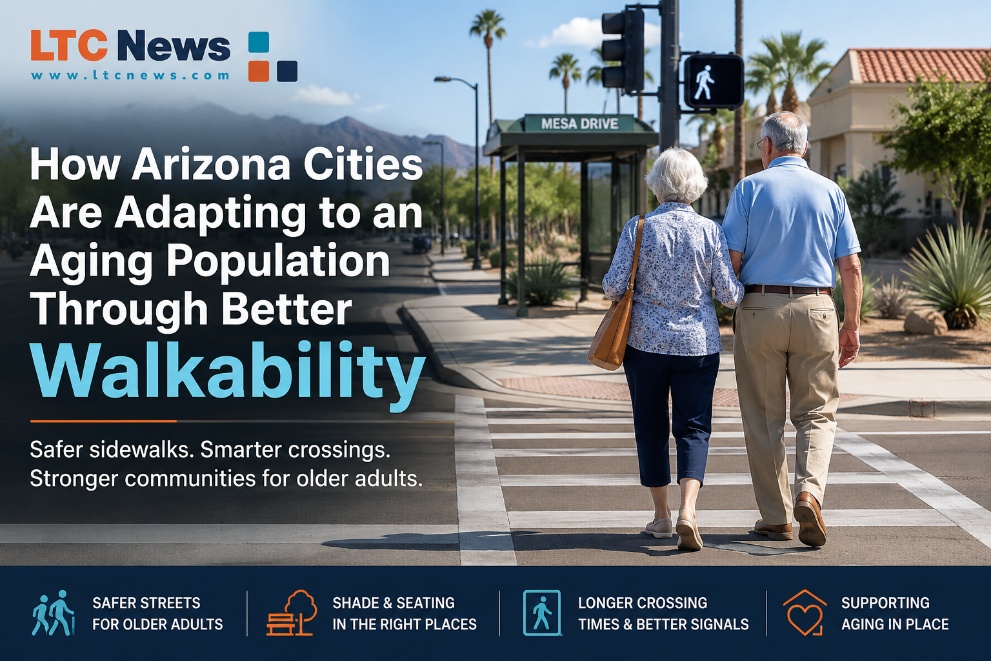
Older adults walk differently from those who are younger. A crossing that feels comfortable at 35 can feel rushed and dangerous at 72. Curb cuts, bench placement, shade structures, and signal timing all take on new meaning when a significant share of pedestrians are managing slower gait speeds, vision changes, or balance challenges.
The street that works fine for a 40-year-old commuter can be a genuine hazard for someone in their mid-seventies using a cane or walker.
Cities are responding, not just because it is the right thing to do, but because the economics demand it. When a large share of residents cannot safely use public sidewalks and crosswalks, the cost shows up in emergency services, hospital admissions, and reduced quality of life across entire neighborhoods.
Gordana “Gordi” Mikalacki, an Arizona attorney, tells LTC News that progress in Arizona is real but uneven. She says that this is concerning since pedestrians are among the most vulnerable road users.
Many Arizona neighborhoods still have stretches of road that are genuinely hostile to pedestrians. Wide arterials with high speed limits, minimal shade, long signal cycles, and infrequent crosswalks create conditions where walking is technically possible but practically dangerous." — Gordana “Gordi” Mikalacki, Elmm Law Group.
What Walkability Actually Means for Aging in Place
Walkability gets discussed in abstract planning terms constantly. For older residents, it comes down to a handful of specific conditions that determine whether they can remain independent.
- Sidewalk Continuity and Surface Quality
A well-maintained path that suddenly ends at a crumbling curb or an uneven driveway apron forces pedestrians into the street. For someone using a walker or cane, that gap is not an inconvenience — it is a fall risk.
Falls are not a minor concern in aging populations.
According to the Centers for Disease Control and Prevention, falls are the leading cause of injury-related death among adults 65 and older, and more than 14 million older adults — 1 in 4 — report a fall each year. Falls are the leading cause of injury-related death among adults 65 and older, and one of the leading causes of need for long-term care services. Infrastructure failures contribute directly to that toll.
- Shade as Safety Infrastructure
Outside of Arizona, shade rarely appears in walkability discussions. In Arizona, it falls into the same category as signal timing and sidewalk width.
Walking a quarter mile in direct summer sun at midday is genuinely dangerous for older adults.
Aging reduces the body's ability to regulate temperature. Older adults generally sweat less and thus dissipate heat less efficiently, which means they accumulate heat faster. Conditions survivable for younger adults can become life-threatening for people over 65." — Jennifer Vanos, Associate Professor, School of Sustainability, Arizona State University.
Cities like Mesa and Tempe have begun incorporating shade structures along key pedestrian corridors, treating them as safety infrastructure, not aesthetic amenities.
Shade lowers radiant heat, which is often the most important contributor to the heat load in hot weather." — Professor Jennifer Vanos, Arizona State University.
- Signal Timing and Crosswalk Design
Pedestrian signal timing in many Arizona intersections was calibrated for younger, faster walkers. Longer crossing phases, audible signals, and clearly marked high-visibility crosswalks are now being installed at intersections near senior centers, medical facilities, and residential areas with high concentrations of older adults.
The difference between a 20-second crossing window and a 30-second one may seem trivial. For someone moving carefully, it determines whether a crossing feels manageable or threatening.
Where Arizona Cities Are Making Progress
Mesa has invested in pedestrian improvements along several corridors serving its large retiree population, including wider sidewalks, better lighting, and accessible pedestrian signals near transit stops and medical centers. The city has also worked to close gaps in its sidewalk network in older neighborhoods where infrastructure was never fully built out.
Scottsdale has focused on shaded walking paths and improved crosswalk visibility near community gathering spaces in its older central districts.
Tucson, which has a strong pedestrian advocacy community, has made progress on protected crossings and traffic calming in high-pedestrian neighborhoods. The city has also worked to address dangerous arterial roads that cut through residential areas and create real barriers for people on foot.
These efforts reflect a growing recognition that walkability and aging in place are connected goals. When older adults can safely walk to a pharmacy, a park, or a bus stop, they maintain independence longer and delay or reduce their need for paid caregiving or assisted living.
The Safety Gap That Still Exists
Progress is real, but it is uneven. Many Arizona neighborhoods still have stretches of road that are genuinely dangerous for pedestrians. Wide arterials with high speed limits, minimal shade, long signal cycles, and sparse crosswalks create conditions where walking is technically possible but practically hazardous.
The NHTSA reports that older adults are disproportionately represented in pedestrian injury and fatality statistics. Adults 65 and older make up 15 percent of the population. Yet, older pedestrians are more likely to die from their injuries when struck due to the inherent fragility associated with aging.
Slower walking speeds, reduced visibility, and longer recovery times from injury all contribute to that pattern. A serious pedestrian crash involving an older adult can quickly cascade into a medical emergency, a significant financial burden, and a long recovery that accelerates the need for long-term care.
The safety gap also reflects how difficult it is to retrofit infrastructure designed around the car. Most of Arizona's suburban road network was built during a period when pedestrians were an afterthought. Changing that requires sustained investment and political will — neither of which comes cheap or quickly.
How Communities Can Push for Safer Streets
Residents and community organizations play a meaningful role in accelerating infrastructure improvements. Cities respond to documented demand, and older adults are among the most politically active demographic groups at the local level.
Several approaches have proven effective:
- Pedestrian safety audits — Organized walks through neighborhoods to identify specific hazards, followed by presentations of findings to city councils or transportation departments
- Safe Routes advocacy — Pushing for designated safe walking routes near senior centers, medical offices, and transit hubs
- Speed reduction campaigns — Supporting lower speed limits on residential streets, which significantly reduces the severity of pedestrian collisions
- Lighting improvements — Flagging poorly lit intersections and crosswalks to public works departments, particularly in areas with evening pedestrian traffic
- Transit connectivity — Advocating for better connections between pedestrian infrastructure and bus or light rail stops, so walking serves a practical purpose beyond recreation.
These are not complicated interventions. They are achievable with existing municipal tools when there is enough community pressure and political support to prioritize them. The hard part, experts say, is sustaining that pressure over years, not weeks.
The Connection to Long-Term Care Planning
Here is something worth understanding as you think about your own future or that of a parent or spouse: walkability is not just a transportation issue. It is a long-term care issue.
Older adults who can safely walk in their neighborhoods tend to stay physically active longer, maintain social connections, and manage health conditions more effectively. All of that contributes to delayed functional decline — and delayed functional decline means delayed or reduced long-term care needs.
For many older adults, the first line of support comes from family members or professional in-home caregivers who can accompany them on walks, help navigate uneven surfaces, and provide a steady hand at busy intersections. That kind of one-on-one assistance makes a meaningful difference, and it is exactly the type of hands-on help that home care aides are trained to provide.
👉 You can search for local home care providers and long-term care facilities in Arizona or anywhere in the United States through the LTC News Caregiver Directory.
But individual support has limits. As mobility challenges progress, even the most attentive caregiver cannot fully compensate for poorly designed streets, absent crosswalks, or relentless summer heat. At some point, and for many families, that point comes gradually; a move to assisted living may better serve an older adult's safety and quality of life.
Well-designed assisted living communities are typically built with walkability in mind from the ground up: smooth pathways, accessible common areas, landscaped courtyards with shade, and staff-supervised group outings that allow residents to stay active and socially connected without the hazards of navigating public streets alone. That built-in structure removes much of the daily risk that defines walking in a car-centric suburban environment.
Understanding when in-home care remains sufficient, and when a different setting better serves safety and independence, is one of the most important and difficult decisions families face. Long-Term Care Insurance has many components that can help fund both options, giving families the flexibility to choose the right level of care at the right time rather than making decisions based solely on what they can afford.
Aging and its consequences are real concerns. According to federal data, 56 percent of Americans turning 65 today will need some form of long-term care at some point in their lives — meaning help with basic daily activities like bathing, dressing, or managing medications, or supervision due to cognitive impairment. For many, that need arrives in the 70s or 80s. A community that supports mobility and independence can significantly extend that timeline.
Long-Term Care Insurance remains one of the most effective tools available for managing the financial risk of care needs. But smart planning starts before you retire, and whether you move to Arizona, elsewhere, or stay at home, thinking about where you live — and whether that environment supports the kind of daily movement that keeps you safe- is something to consider.
Use the LTC News Cost of Care Calculator to understand what extended care actually costs in Arizona communities (or anywhere in the U.S.).
You can also explore resources through the LTC News Learning Center.
Looking Ahead
Arizona cities are moving in the right direction, but the pace of change must keep pace with demographic growth. The older adult population will continue expanding for decades, and the infrastructure serving them—including housing, healthcare, transportation, home care, assisted living, memory care, and skilled nursing services—must be ready before today's gap becomes tomorrow's crisis.
Learn More: Arizona Long-Term Care Information and Resources
Several Arizona communities are experiencing especially rapid growth among retirees and older adults. Goodyear has emerged as one of the fastest-growing retirement destinations in the United States, driven by master-planned active-adult communities.
Peoria continues to attract retirees seeking established neighborhoods, medical services, and recreation opportunities. The city has ranked among the nation's fastest-growing locations for residents age 65 and older.
Surprise remains a major retirement hub thanks to its large active-adult population, continuing residential growth, and established age-restricted communities such as Sun City Grand. Population growth has remained among the strongest in Arizona.
Buckeye is perhaps the state's most closely watched growth market. Already one of America's fastest-growing cities, Buckeye is attracting retirees through communities such as Sun City Festival, Victory at Verrado, and other active-adult developments. Massive master-planned projects are expected to bring hundreds of thousands of additional residents to the area over the coming decades.
Long-established retirement communities including Sun City, Sun City West, and portions of the Northwest Valley continue to grow and age simultaneously, creating increased demand for home care, assisted living, memory care, and skilled nursing services.
Other retirement-oriented growth centers include Queen Creek, Chandler, and Gilbert, where new active-adult communities are expanding alongside younger family populations.
The challenge is clear. Retirement migration and population aging are no longer future concerns. They are happening now. Without substantial investment in healthcare workforce development, senior housing, transportation, and long-term care services, Arizona's fastest-growing retirement destinations could face significant shortages just as the largest generation of older adults reaches advanced age and begins needing more support.
Better walkability is not a niche concern. It benefits everyone who walks, regardless of age, and it makes neighborhoods more livable, more connected, and safer for all. The cities that invest in it now will be far better positioned to support their residents through the decades ahead.
Frequently Asked Questions
When does someone move from home care to assisted living?
There is no single answer. Many people begin with support from family caregivers or professional home care providers. As mobility limitations, safety concerns, or cognitive issues increase, assisted living may offer a safer environment with accessible pathways, supervised activities, and built-in support services.
How does walkability affect aging in place?
A walkable neighborhood allows older adults to remain engaged in daily life, maintain social connections, and stay physically active. These factors support healthier aging and can help individuals remain in their homes longer before needing extensive assistance.
How serious is the fall risk for older adults?
Falls are one of the leading causes of injury and injury-related death among adults age 65 and older. Uneven sidewalks, broken pavement, poor curb design, and other infrastructure issues can increase fall risk and potentially accelerate the need for long-term care services.
Which Arizona cities are making improvements for older pedestrians?
Several communities are investing in age-friendly infrastructure. Mesa has improved sidewalks, lighting, and pedestrian signals. Scottsdale has focused on shaded pathways and safer crossings. Tucson has expanded protected crossings and traffic-calming measures in pedestrian-heavy areas.
How can better sidewalks and crosswalks reduce the need for long-term care?
Safe pedestrian infrastructure helps older adults stay physically active, maintain balance and strength, and continue managing daily activities independently. Remaining mobile longer can delay functional decline and reduce the need for caregiving services or assisted living.
Are older adults at greater risk in pedestrian accidents?
Yes. Older adults are more likely to suffer severe injuries or death when struck by a vehicle due to the physical effects of aging. Slower walking speeds, reduced reaction time, and longer recovery periods contribute to these risks.
What can local residents do to improve walkability in their communities?
Residents can advocate for:
- Pedestrian safety audits
- Safer routes near senior centers and medical facilities
- Lower speed limits on residential streets
- Better lighting at intersections
- Improved transit connections
- Additional crosswalks and pedestrian signals
Community involvement often helps local governments prioritize infrastructure improvements.
Why does walkability matter so much for older adults?
Walkability directly affects independence. Safe sidewalks, accessible crosswalks, adequate lighting, benches, and shade make it easier for older adults to remain active, attend appointments, shop, socialize, and stay connected to their communities. When neighborhoods are difficult to navigate, people may become isolated and require assistance sooner.
Why is shade considered an important safety feature in Arizona?
Arizona's extreme heat creates unique risks for older adults. Aging reduces the body's ability to regulate temperature efficiently, making heat-related illnesses more likely. Shade structures along walking routes help reduce heat exposure and make outdoor mobility safer.
What infrastructure improvements benefit older adults the most?
Some of the most effective improvements include:
- Continuous, well-maintained sidewalks
- Longer pedestrian crossing times
- Audible crossing signals
- High-visibility crosswalks
- Better lighting
- More benches and rest areas
- Shade structures
- Safer access to transit stops and medical facilities
These features help address common challenges such as slower walking speeds, balance concerns, and reduced vision.


Sponsored