Hearing Loss Treatment Linked to Fewer Falls in New Study
About This Article
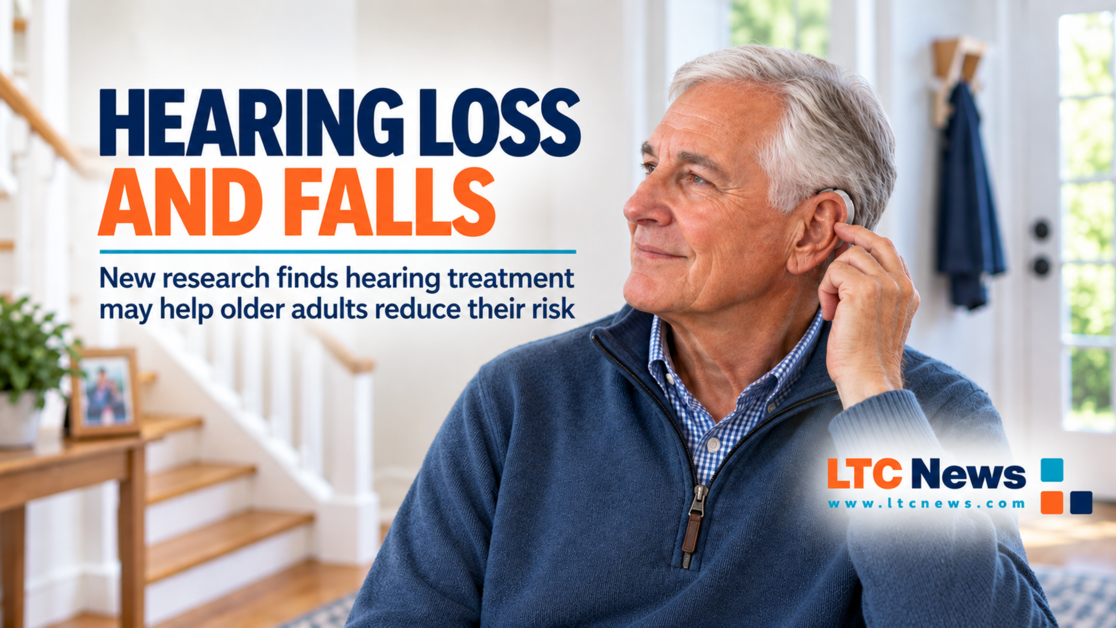
Older adults who received hearing treatment had 27% fewer falls over three years than those in the control group, according to a 2025 analysis of the ACHIEVE clinical trial. Hearing care may complement proven fall prevention steps such as strength and balance exercises, medication reviews and home safety changes.

Anna Marino
Anna Marino is a seasoned writer specializing in topics related to family, aging, and lifestyle in retirement. She shares advice on intergenerational relationships and strategies for enjoying retirement.
You know how a fall can change everything. One day, a parent is living independently. Then comes a fall, a broken hip, a hospital stay, and rehabilitation and even long-term care. Suddenly, your family is talking about home care, assisted living, or whether someone needs to be there with your loved one during the day.
Falls, as you may know, are the leading cause of injury among Americans 65 and older, often leading to hospital stays and long-term care. More than 14 million older adults, about one in four, report falling each year, according to the Centers for Disease Control and Prevention.
That’s why fall prevention deserves a real place in your aging and longterm care plan. And one risk factor is easy to overlook: hearing loss. Even mild hearing changes can affect balance, awareness, and how confidently someone moves through their home. New research shows that treating hearing loss may help reduce falls, a connection many families never consider until after an injury.
More Than a Communication Problem
You may notice a parent's hearing trouble before they do. Maybe Dad keeps turning up the television. Mom asks people to repeat themselves. Restaurant conversations become a struggle, or a parent seems to misunderstand what others are saying.
These changes affect more than communication. Research has also linked hearing loss to a higher risk of falls, hospitalization, social isolation, and cognitive decline.
Several theories may explain the link between hearing loss and falls. When hearing becomes difficult, the brain has to work harder to interpret incomplete sound and speech. That can leave fewer cognitive resources available for balance and navigating your surroundings. Hearing also feeds you information about the world around you, from approaching traffic to a person or pet coming up behind you.
I hear from families all the time about how a parent suffered a fall that led to a rapid decline and the need for longterm care — often the reason they reach out to me about LongTerm Care Insurance. When I ask questions, there’s sometimes a connection between their loved one’s hearing loss and the start of their falling.” — Matt McCann, CLTC, a leading expert on long-term care planning.
Researchers are still studying exactly how hearing loss contributes to falls. New evidence also suggests that treating hearing loss may help reduce that risk.
Hearing Treatment Was Linked to Fewer Falls
A 2025 secondary analysis of the ACHIEVE randomized clinical trial, published in The Lancet Public Health, offers some of the strongest evidence yet.
Researchers followed 977 adults aged 70 to 84 with untreated hearing loss. Participants received either a hearing intervention, which included hearing aids and audiological counseling, or health education about healthy aging.
Over three years, participants who received hearing treatment averaged 1.45 falls, compared with 1.98 falls in the control group. That is a 27 percent reduction in the mean number of falls, in adjusted analyses.
That is encouraging, but it does not prove hearing aids are a standalone fall-prevention treatment.
Falls were an exploratory outcome of the study, and researchers say more work is needed. The U.S. Preventive Services Task Force (USPSTF) says there is currently insufficient evidence to determine the benefits and harms of routinely screening adults age 50 and older who have no signs or symptoms of hearing loss. The guidance does not address people who already have symptoms or concerns about their hearing.
If Your Family Notices Hearing Loss
If you are having trouble hearing, or your adult children keep telling you that you are, do not brush it off as just part of getting older. Experts tell LTC News that you should talk with your doctor or a hearing professional about an evaluation, especially if you have also fallen, feel unsteady, or have other fall-risk factors.
For adult children, the conversation can be delicate. Skip the sales pitch for hearing aids and start with what you’ve noticed:
I’ve noticed you’re having more trouble hearing us lately. Why don’t we get your hearing checked and see what’s going on?”
Getting a hearing evaluation doesn’t automatically mean hearing aids. It simply shows whether hearing loss is present and what options might help.
We understand that hearing loss disrupts, often severely, a person’s ability to follow conversations, and families are usually the first to notice those communication cracks.” — Gael Hannan, HLAA speaker and advocate, Hearing Health & Technology Matters, June 23, 2026.
Hearing Aids Need to Be Used to Help
If hearing aids are recommended, picking a device is only the first step. Adjusting to amplified sound takes time. Proper fitting, follow-up visits, and fine-tuning can help make hearing aids more comfortable and useful.
Dr. Rachel Artsma, lead audiologist at hearing-aid provider hear.com, told LTC News that personalized follow-up matters.
"The best hearing aid experience comes from a combination of advanced technology and personalized care," Artsma said.
Follow-up support and fine-tuning help ensure your hearing aids are optimized for your lifestyle, so you can hear comfortably and confidently in the moments that matter." — Dr. Rachel Artsma.
If you are comparing hearing aid options for yourself or a parent, ask about follow-up care, adjustments, trial periods, and ongoing support, not just features and price.
Not All Hearing Aids Are the Same
Hearing aids come in different styles, and the best choice depends on your hearing loss, comfort, lifestyle, and ability to handle the device.
Behind-the-ear (BTE) models sit behind the ear. In contrast, smaller receiver-in-canal (RIC) models place the speaker inside the ear canal. In-the-ear (ITE) hearing aids fit in the outer ear.
Even smaller in-the-canal (ITC) and completely-in-canal (CIC) devices are less noticeable, but their small size can make them harder to handle for an older adult with arthritis, vision problems, or limited dexterity.
Another important choice is between prescription and over-the-counter (OTC) hearing aids. OTC hearing aids are FDA-regulated devices intended for adults age 18 and older with perceived mild to moderate hearing loss. Prescription hearing aids are obtained through a hearing health professional and can be programmed for an individual's hearing loss.
For older adults, the smallest or least visible device isn't necessarily the best. Comfort, ease of use, rechargeable batteries, follow-up support, and the ability to make adjustments may matter more.
NOTE: Someone with more significant hearing loss, sudden or one-sided hearing changes, ear pain or drainage, or problems with dizziness or balance should seek professional evaluation rather than simply choosing an OTC device.
Hearing Care Is One Piece of Fall Prevention
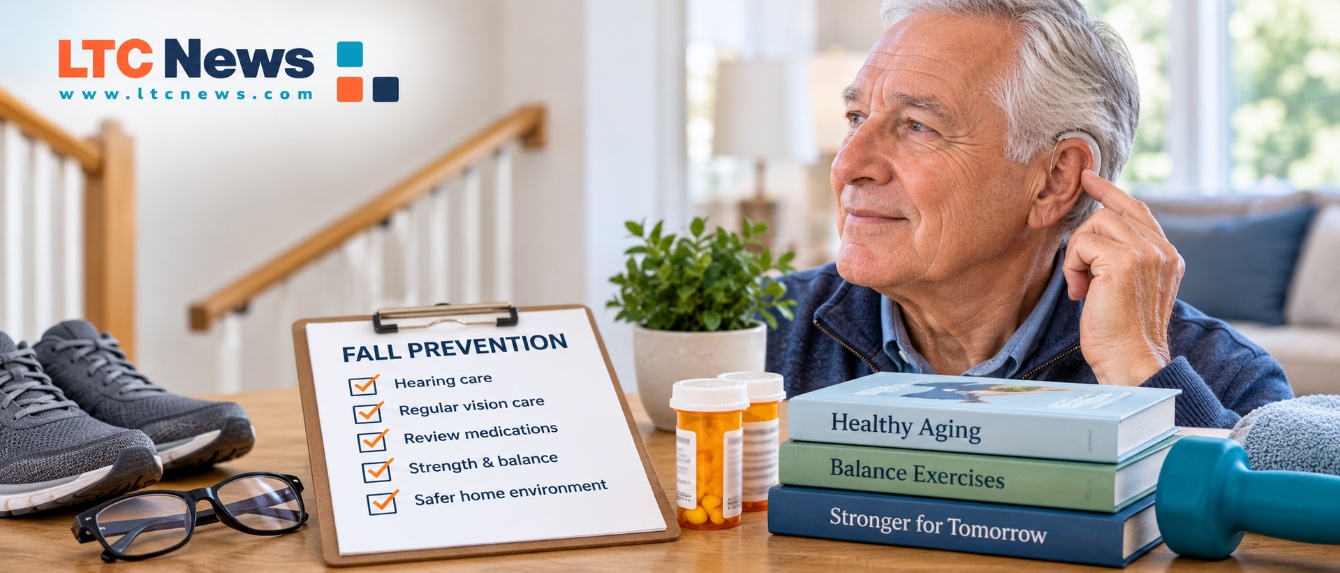
A hearing aid is not a fall-prevention program on its own. If you are concerned about falls, talk with your doctor about your medications, keep vision prescriptions current, address dizziness or blood pressure issues, improve lighting, clear tripping hazards, and consider strength and balance exercises. Hearing may deserve a seat at that table too.
The stakes go beyond an emergency room visit. A serious fall can lead to rehabilitation, greater dependence on family caregivers, paid home care or a move to assisted living or another long-term care setting.
About 56 percent of Americans turning 65 are projected to need some form of long-term services and supports during their lifetime, according to a federal HHS analysis. Medicare pays for short-term skilled care under specific circumstances, not ongoing custodial long-term care. Medicaid can pay for long-term care for people who meet limited financial and eligibility requirements.
HINT: If you are considering adding Long-Term Care Insurance to your retirement plan, or you are now shopping for extended care for a loved one, start your research by using the LTC News Cost of Long-Term Care Services Calculator to see current and projected home care, assisted living, and nursing home costs where you live.
If you are already navigating a parent's changing care needs, the LTC News Caregiver Directory can help you find care options in your area. Our Learning Center covers the basics of long-term care, caregiving, and planning.
You cannot prevent every fall. But protecting independence often comes down to catching manageable risks before a crisis forces your family into a rushed decision. For some older adults, that starts with something as simple as recognizing that they are not hearing as well as they used to.
This article is for informational purposes only and is not a substitute for professional medical advice. Talk with a doctor or qualified hearing professional about your specific situation.
Frequently Asked Questions
Can hearing aids help prevent falls?
Possibly. A 2025 analysis of the ACHIEVE clinical trial found that older adults who received hearing treatment had a 27 percent lower mean number of falls over three years compared with the control group. However, falls were an exploratory outcome of the study, so researchers say more research is needed. Hearing aids should not be considered a standalone fall-prevention treatment.
Why can a serious fall lead to long-term care?
A serious fall can result in fractures, hospitalization, rehabilitation, and a loss of independence. Some older adults may need help at home afterward, while others may require assisted living or another long-term care setting. Planning ahead for both fall prevention and future long-term care can give families more options if health or mobility suddenly changes.
Are over-the-counter hearing aids appropriate for older adults?
They can be. FDA-regulated over-the-counter hearing aids are intended for adults age 18 and older with perceived mild to moderate hearing loss. Someone with more significant hearing loss, sudden or one-sided hearing changes, ear pain or drainage, dizziness, or balance problems should seek professional evaluation rather than relying solely on an OTC device.
What else can older adults do to reduce their risk of falling?
Fall prevention usually involves several strategies. Strength and balance exercises, medication reviews, regular vision care, addressing dizziness or blood pressure problems, and improving lighting and removing tripping hazards can all be important. Hearing evaluation and treatment may be another piece of that larger fall-prevention plan.
Can hearing loss increase the risk of falling?
Research has found an association between hearing loss and a higher risk of falls. Possible reasons include reduced awareness of surrounding sounds and the additional mental effort required to process speech and other sounds. Hearing loss is only one of many factors that can contribute to falls.
What type of hearing aid is best for an older adult?
There is no single best type. Behind-the-ear, receiver-in-canal, and in-the-ear models are among the available options. Comfort, hearing needs, ease of handling, rechargeable batteries, and access to adjustments and follow-up support can be especially important for older adults. Very small devices may be more difficult to handle for someone with arthritis, vision problems, or limited dexterity.
When should an older adult have their hearing checked?
Consider a hearing evaluation if you or a family member notices difficulty understanding conversations, frequently asking people to repeat themselves, turning up the television, or other changes in hearing. A professional evaluation may be particularly important if hearing problems occur along with falls, dizziness, or balance difficulties.


Sponsored