Falling Childhood Vaccination Rates Put Older Adults at Risk
About This Article
Measles and other vaccine-preventable diseases are resurging as childhood vaccination rates drop. Learn what this means for older adults and long-term care residents.

Linda Maxwell
Linda Maxwell is a journalist who writes about aging, health, chronic illness, caregiving, and long-term care issues impacting older adults and their families.
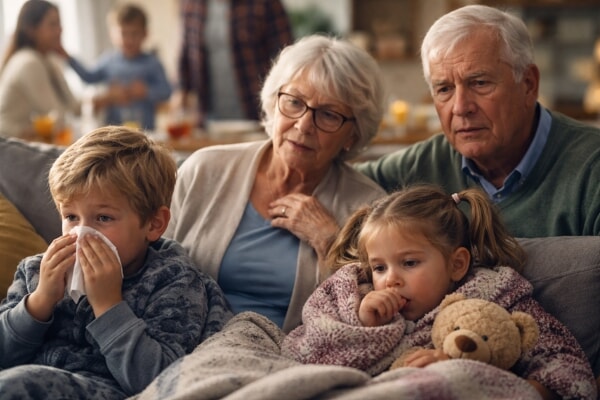
You may do everything right for your own health and still be blindsided by a virus that starts in an under-vaccinated classroom, daycare, or school bus. Your grandkids come by, and it could impact your health.
When fewer children get vaccinated, contagious diseases spread more easily. Those outbreaks do not stop with kids. They reach grandparents, older neighbors, and residents in assisted living and nursing homes.
That reality matters more in 2026 because childhood vaccination rates are down, measles and whooping cough are resurging in parts of the country, and federal guidance on childhood vaccines has changed in ways that have confused many families.
What does all of this mean for you, your parents, and your loved ones who depend on long-term care services? More than you think and being prepared is essential.
Why Childhood Vaccination Rates Affect Older Adults
Vaccines work in two ways. They protect the person who gets the shot, and they reduce how much disease circulates in the community. When vaccination coverage drops, that community protection weakens.
Public health experts call this herd immunity, but families feel it as outbreaks.
When enough people in a community are protected against a vaccine-preventable disease, it becomes far less likely that the infection will spread. This is what we mean by community immunity, or herd immunity — and it’s critical not just for children, but for older adults and people with chronic health conditions. — Dr. Michelle Ortiz, a respiratory health specialist, University of Maryland School of Medicine.
Dr. Ortiz says that this herd immunity reduces the spread of infection in a community, helping protect people who cannot be vaccinated and lowering the risk that illness is brought into the home, which is especially important for older adults and those with weakened immune systems.
Older adults face a higher risk because:
- Immune systems weaken with age.
- Chronic conditions such as heart disease, diabetes, lung disease, kidney disease, and cancer make infections harder to fight.
- Recovery takes longer, and complications are more likely.
A virus that causes a mild illness in a child can lead to pneumonia, hospitalization, or worse in a 75-year-old with heart or lung disease.
Measles is the Warning Light
Measles is not just a childhood rash. It is one of the most contagious viruses known. It spreads through the air and can remain in a room long after an infected person leaves. When vaccination coverage drops below the level needed to block transmission, outbreaks grow fast.
For older adults, measles can cause:
- Severe pneumonia
- Brain inflammation
- Worsening of underlying heart or lung disease
- Longer hospital stays and a higher risk of death
Most people think measles is gone. It is not. It comes back when vaccination gaps appear. We are seeing measles outbreaks in several parts of the country in recent years.
Public health leaders are concerned because they are watching outbreaks accelerate.
National reporting shows how fast outbreaks can grow. A Reuters report dated Jan. 9, 2026, described South Carolina adding 99 new cases in two days, bringing the total to 310.
We are seeing measles outbreaks accelerate across the country as vaccination coverage drops below critical thresholds, and that trend raises the risk of serious illness for people of all ages, especially those who are older or immunocompromised. — Dr. William Moss, professor at the Johns Hopkins Bloomberg School of Public Health.
Dr. Moss says that these patterns underscore the importance of robust community immunity to protect the most vulnerable. Many older adults are considered vulnerable due to age and health issues.
Whooping Cough and Other Respiratory Threats
Pertussis, often called whooping cough, is another example. Adults get it, too. In older adults, it can cause weeks of violent coughing, broken ribs, pneumonia, and heart strain.
Flu and respiratory syncytial virus (RSV) can cause serious illness in older adults, even when children who carry the viruses have only mild symptoms. While many older adults receive flu shots at no cost, the wide range of circulating flu strains means no vaccine offers perfect protection, making community spread an ongoing risk.
When fewer children are vaccinated, all these viruses circulate more widely. That means more exposure for everyone who shares air, space, or family gatherings. A birthday party can become problematic.
National Policy Shift: What Changed and Why It Matters
In early January 2026, federal health officials updated recommendations for childhood vaccines in the United States. The federal government moved several vaccines away from being labeled “routine for all children” and into categories such as high-risk or shared decision-making between parents and doctors.
However, all vaccines currently recommended by the CDC will remain covered by insurance without cost-sharing.
No family will lose access. This framework empowers parents and physicians to make individualized decisions based on risk, while maintaining strong protection against serious disease. — Dr. Mehmet Oz, administrator of the Centers for Medicare & Medicaid Services.
The problem is not new. The rise in measles, whooping cough, and other vaccine-preventable diseases did not suddenly appear in 2026. Public health data show the trend began several years earlier as childhood vaccination rates started to slip.
After the COVID-19 pandemic disrupted routine care and school attendance, many children missed scheduled vaccinations. At the same time, vaccine hesitancy increased in some communities. By 2022 and 2023, CDC data already showed declining coverage for key childhood vaccines such as MMR, DTaP, and polio, with more families claiming exemptions.
Federal leaders said the goal was to:
- Align parts of the U.S. schedule with how some other countries structure vaccine recommendations.
- Give families and doctors more flexibility to individualize decisions.
- Preserve access and insurance coverage for all vaccines.
Supporters say this approach respects personal choice and medical nuance. They also argue that some vaccines may be more critical for certain children than for others.
Many doctors and public health organizations, however, have raised serious concerns.
They warned that:
- Parents often follow what is labeled “routine,” so changing the wording could reduce vaccination even when vaccines remain available.
- Confusion among families and doctors could delay or reduce shots.
- The timing is risky because outbreaks are already underway, and childhood vaccination rates were already falling before the change.
For older adults, the debate is not abstract. If fewer children get vaccinated, more disease circulates. That raises the chance a virus reaches a grandparent, a cancer survivor, or a resident in memory care.
Why Long-Term Care Facilities Face Extra Danger
If your loved one lives in assisted living, memory care, or a nursing home, the stakes are even higher.
These settings bring together:
- Older adults with weaker immune systems
- People with multiple chronic illnesses
- Shared dining rooms, hallways, and activity spaces
- Staff who move between residents and rooms
- Visitors who come from the outside community
A single infected visitor, staff member, or resident can expose dozens of people in a short time.
In long-term care facilities, residents live and interact in close quarters. That means a single contagious person entering the facility can expose many residents and staff in a very short period, amplifying the risk of outbreaks. — Dr. Rochelle Walensky, former CDC Director.
Airborne viruses such as measles are especially dangerous in long-term care. They do not require direct contact. Shared air is enough.
Facilities that are not prepared can see:
- Rapid spread among residents
- Staff shortages due to illness
- Lockdowns that isolate residents from family
- Hospital transfers that can permanently reduce independence
Families should never assume that “someone else” is managing this risk. You have a right to know how a facility protects your loved one.
When researching long-term care providers, be sure to ask the admissions directors about how they address airborne viruses to protect the health of residents. Use the LTC News Caregiver Directory to search for caregivers and facilities by zip code.
If you manage a long-term care facility or home health agency, be sure to claim your free listing on the LTC News Caregiver Directory and/or upgrade the listing to enhance visibility and highlight your staff and services through the LTC News Directory Business Portal.
What Families Should Do Now
You do not need to panic. You do need a plan.
1. Review Adult Vaccines for Your Loved One
Ask a doctor or pharmacist to review:
- Flu
- Pneumococcal
- Shingles
- RSV
- Tdap or Td
- Measles immunity if there is uncertainty or high exposure risk
Keeping these current reduces the chance that an exposure turns into a crisis.
2. Know Your Grandchildren’s Vaccine Status
You do not have to argue about politics. You do need facts. Ask whether children who visit your older loved one are up to date on routine childhood vaccines, especially MMR.
3. Set Clear Rules for Visits
Protecting health is not rude.
- No visits when someone has a fever, cough, rash, vomiting, or diarrhea.
- Consider masks during outbreaks or if your loved one is medically fragile.
- Use video calls if illness is circulating.
4. Demand Answers From Long-Term Care Facilities
Ask these questions directly:
- What vaccines are required or strongly encouraged for staff?
- How are visitors screened during outbreaks?
- What happens when a resident develops a rash, fever, or cough?
- How do you isolate and protect residents if measles or another airborne disease is suspected?
- How do you notify families when there is an exposure?
If you do not get clear answers, push harder. Your loved one’s health depends on it.
5. Prepare for Rapid Decisions
If a disease is reported in your area, time matters. Know who to call, what symptoms to watch for, and how the facility or doctor will respond.
Family Safety Checklist
Use this as a simple guide.
- My loved one’s adult vaccines are reviewed and current
- I know my grandchildren’s vaccination status
- We postpone visits when anyone is sick
- The care facility has clear outbreak and isolation policies
- I know who to call if there is an exposure
- We have a backup plan for virtual visits or temporary distancing
The Bigger Picture
Falling childhood vaccination rates, growing outbreaks, and shifting federal guidance all point to the same truth. You cannot assume protection is automatic anymore. Families need to be more proactive, more informed, and more willing to ask uncomfortable questions.
A serious infection can change a life in days. It can trigger hospitalization, rehabilitation, or a permanent move into higher levels of care.
The Question to Ask Yourself
If a preventable disease enters your community tomorrow, would your family be ready or scrambling?
Protecting older adults now means acting before the outbreak, not after it.
Aging brings many challenges. You prepare for aging before you start getting old. Long-term care services are expensive, and quality extended care is even more so. Health insurance and Medicare only pay for short-term skilled care, and unless you have Long-Term Care Insurance, you will face a tremendous cash flow problem and place a burden on those you love.
Seek expert help from a qualified Long-Term Care Insurance specialist to get accurate quotes and shop for the best coverage at the lowest cost.
Medical Disclaimer: This article provides general information. Always consult a doctor or pharmacist about vaccines and health decisions based on individual medical history and local conditions.

Sponsored