Don't Let Your Dream Vacation End With a Blood Clot: How to Protect Your Legs After 50

About This Article
Travel can enrich your life and help you enjoy your retirement, but long hours sitting in a car, train, or airplane can affect circulation, increase leg swelling, and raise the risk of potentially serious blood clots for some older adults.

Linda Maxwell
Linda Maxwell is a journalist who writes about aging, health, chronic illness, caregiving, and long-term care issues impacting older adults and their families.
Table of Contents
- Travel Is More Popular Than Ever Among Older Americans
- Why Age Changes the Equation
- Why Mobility Matters More Than You May Realize
- Who Should Take Extra Precautions Before Traveling?
- Airplanes Aren't the Only Concern
- Recognizing the Difference Between Normal Swelling and a Medical Emergency
- Movement Is Your Best Travel Medicine
- What Happens Inside Your Legs During Long Trips?
- Travel Means More Than Flying
- Air Travel Introduces Additional Factors
- Five Minutes of Movement Can Make a Difference
- Hydration Supports Healthy Travel
- Should You Take Aspirin Before Flying?
- When Blood Thinners Become Part of the Conversation
- Small Decisions Before Departure Often Have the Greatest Impact
- Mobility Is What You're Really Protecting
- Healthy Travel Begins Long Before You Leave Home
- Common Health Conditions That Affect Travel
- Recovering From Surgery? Timing Matters
- Cancer Survivors Can Continue Exploring the World
- Mobility Challenges Don't Have to End Your Adventures
- Family Vacations Often Reveal Important Changes
- Independence Doesn't Happen by Accident
- Your Travel Health Checklist
- During Your Trip
- After You Arrive Home
- Thinking About Traveling Overseas?
- Medicare Doesn't Usually Travel With You
- Long-Term Care Insurance and Travel
- Enjoy Your Trip
Travel often represents something far greater than simply reaching a destination. It reflects freedom. Freedom to visit grandchildren across the country. Freedom to explore places you've postponed during your working years. Freedom to board a cruise, hike through a national park, or stroll along a European boulevard without worrying about your health limiting your plans.
Maintaining that freedom depends on many aspects of healthy aging, including protecting your heart, muscles, joints, lungs—and one area many travelers overlook entirely: the health of their veins. Travel and your veins go together.
You have finally booked the trip you've talked about for years. Now you finally have time to see Europe and enjoy the European river cruise you dreamt about to celebrate your retirement. Visit grandchildren across the country. Take the Alaska cruise you've always talked about and watch the wildlife and the glaciers at Glacier Bay. The last thing you expect is a swollen leg that sends you to the emergency room.
These experiences depend on more than having enough money or free time. They depend on maintaining the health and mobility that allow you to keep saying "yes" to the next adventure. Yet every year, extended travel quietly contributes to circulation problems that range from temporary swelling to potentially life-threatening blood clots. Fortunately, most are preventable.
According to Campspot’s 2026 Travel Trend Report, 85% of families plan multi-generational trips. International trips and other travel bring families together and create shared experiences that help form memories.
Grandparents want to travel while they are still healthy and active, parents want trips that feel efficient, and everyone wants time together. Also, these days families are more geographically spread out than ever, and intentional trips are one of the few ways everyone can reliably connect." — Josh Steppling, President of TreasureCoast.com.
For millions of Americans, travel is one of the greatest rewards of growing older, whether traveling alone, with a spouse or partner, or with the extended family. Yet many travelers discover an unexpected problem before the vacation is even halfway over. Some travelers develop what doctors call chronic venous insufficiency symptoms without understanding why their legs feel so uncomfortable.
Your shoes suddenly feel tight. Your ankles are swollen. Walking through museums, airports, or historic downtowns feels harder than it did just two days earlier. Then you notice one leg feels heavier than the other.
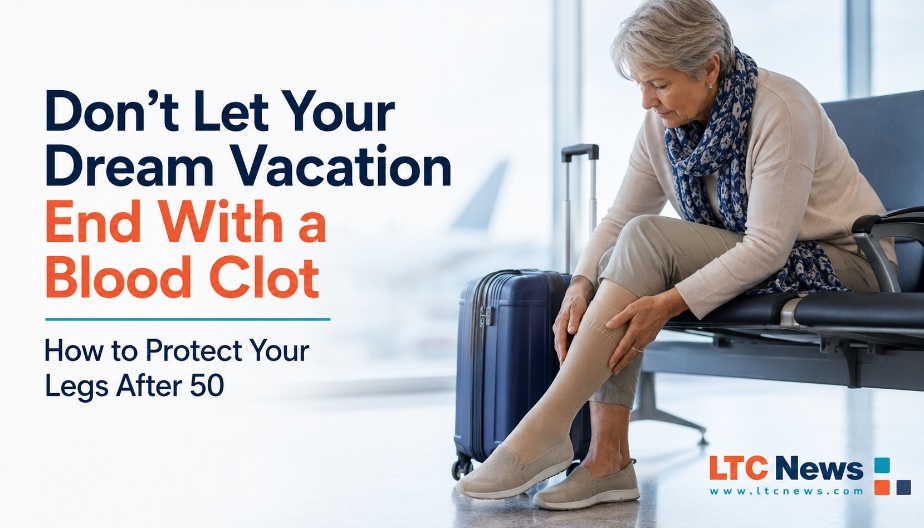
Most people assume they've simply walked too much. Sometimes they're right. Sometimes those symptoms are your body's first warning that hours of prolonged sitting have placed significant stress on your circulation. While temporary swelling is common after long periods of travel, especially by airplane or automobile, swelling in one leg accompanied by pain, redness, or warmth can signal a potentially life-threatening blood clot requiring immediate medical attention.
Few travelers think about their veins before packing a suitcase. Yet healthy circulation plays an essential role in every journey, from walking through airport terminals and climbing onto tour buses to exploring museums, strolling historic streets, or simply standing comfortably while waiting in line.
Protecting your vein health isn't simply about preventing swollen ankles after a long flight. It's about preserving the freedom to travel independently throughout retirement.
For most adults, travel-related circulation problems are preventable. Simple habits such as moving regularly, staying hydrated, exercising your calf muscles, and following your physician's recommendations when you have additional medical risk factors can significantly reduce problems associated with prolonged sitting. Guidance from the Centers for Disease Control and Prevention emphasizes that remaining seated for more than four hours—whether on an airplane, train, bus, or in a car—can increase the risk of travel-associated blood clots, particularly for people with additional risk factors.
Understanding the difference could protect not only your vacation—but your life.
Travel Is More Popular Than Ever Among Older Americans
Americans are traveling longer and farther than ever before, and older adults make up a growing share of those travelers. At the same time, the U.S. population continues to age rapidly. More than 61 million Americans are now age 65 and older, a number projected to grow significantly over the coming decades as the Baby Boom generation continues to age.
That means millions of people each year are taking extended flights, driving cross-country, boarding cruises, or visiting family while managing medical conditions that can affect circulation.
For many, swollen ankles become little more than an inconvenience. For others, prolonged immobility during travel can contribute to serious vascular problems, particularly when additional health risks already exist.
Why Age Changes the Equation
Most younger travelers recover quickly after sitting for several hours. As we age, our circulatory system naturally changes. Vein walls gradually lose elasticity. The tiny one-way valves inside the veins become less efficient. Muscle mass slowly declines—including in the calf muscles, which play a vital role in helping blood defy gravity and move upward from the legs back to the heart, which is why the calf muscles are often called the "second heart".
Imagine those valves as tiny doors. When healthy, they close tightly after blood passes through, preventing it from flowing backward. Over time, those doors may no longer close completely. Blood begins leaking backward instead of continuing upward. Pressure builds inside the veins.
Fluid gradually escapes into nearby tissues. That's why swelling that barely appeared during business travel at age 35 may become much more noticeable after age 65. Fortunately, growing older doesn't mean giving up travel. It simply means understanding how your body changes and taking simple steps to protect your circulation.
Why Mobility Matters More Than You May Realize
For older adults, healthy circulation isn't simply about avoiding swollen feet. Mobility is closely tied to independence. The ability to comfortably walk through an airport, climb the steps onto a cruise ship, explore historic neighborhoods, or keep up with grandchildren helps maintain both physical health and quality of life.
Poor circulation, untreated vein disease, and chronic leg swelling can gradually make walking more difficult, increasing fatigue and limiting activities many retirees enjoy. Maintaining healthy circulation is one small—but important—part of protecting your independence as you age.
Who Should Take Extra Precautions Before Traveling?
Although anyone can experience swollen legs after sitting for hours, some travelers face substantially higher risks. You should discuss extended travel with your physician if you have one or more of the following:
- A previous deep vein thrombosis or pulmonary embolism
- Chronic venous insufficiency or significant varicose veins
- Heart failure or other cardiovascular disease
- Cancer or recent cancer treatment
- Recent surgery or hospitalization
- Obesity
- Diabetes with circulation problems
- Kidney disease
- Limited mobility
- Pregnancy or recent childbirth
- An inherited clotting disorder
- Hormone replacement therapy or estrogen-containing medications
Many of these conditions do not prevent travel. They simply mean your travel plans should include strategies to keep blood moving and reduce unnecessary risk.
Airplanes Aren't the Only Concern
Travel-related blood clots are often associated with long flights, leading to the outdated phrase "economy-class syndrome." Modern research paints a different picture. The primary concern isn't the airplane. It's prolonged immobility.
Any trip lasting more than four hours—including road trips, train travel, motorcoach vacations, and extended flights—may increase the risk of travel-associated venous thromboembolism for susceptible individuals. The longer you remain seated without moving your legs, the more circulation slows.
That means the retired couple driving from Chicago to Phoenix may face many of the same circulation challenges as passengers flying from Dallas to London. The solution begins with movement—not with the mode of transportation.
Recognizing the Difference Between Normal Swelling and a Medical Emergency
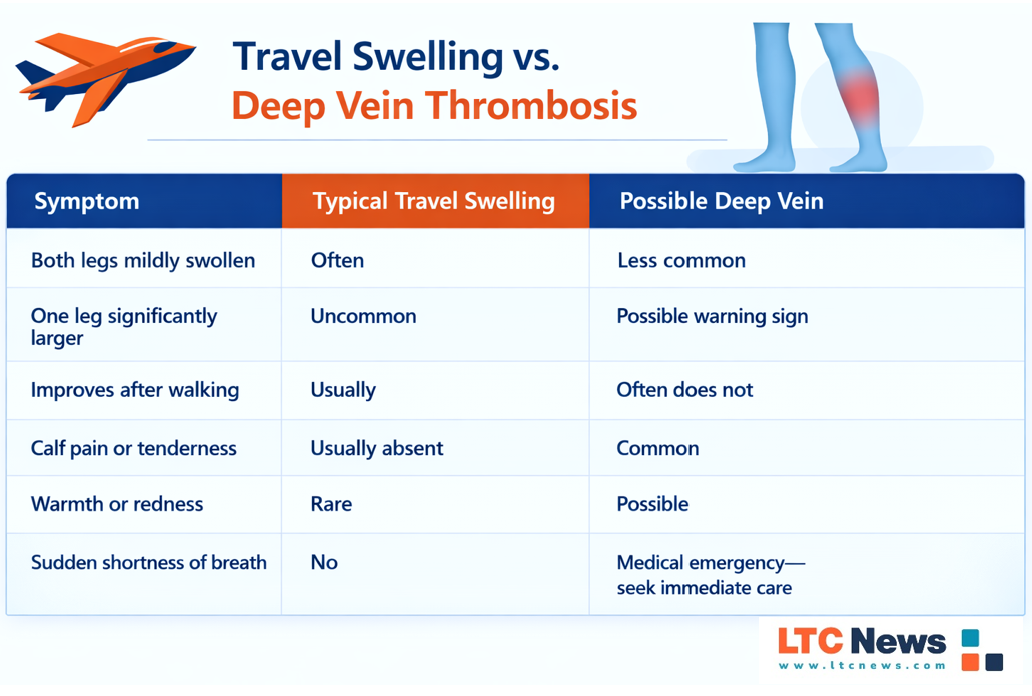
Many travelers notice mild swelling in both ankles after a long day of travel. Gravity naturally allows fluid to collect in the lower legs while you're sitting for extended periods. That swelling often improves after walking, elevating your legs, or getting a good night's sleep.
Certain symptoms require immediate medical attention. Seek prompt medical evaluation if you develop:
- Swelling affecting only one leg.
- Significant calf pain or tenderness.
- Redness or warmth in one leg.
- Sudden shortness of breath.
- Chest pain.
- Coughing up blood.
- Rapid heartbeat accompanied by difficulty breathing.
Those symptoms may indicate a deep vein thrombosis or a pulmonary embolism, both of which require urgent medical care. Early diagnosis and treatment can be lifesaving.
Movement Is Your Best Travel Medicine
Fortunately, protecting your circulation doesn't require expensive equipment or complicated routines. Your body already has an effective circulation system. It simply works best when you use it.
Every time you stand up, walk through an airport terminal, climb a flight of stairs, or take a short walk at a highway rest stop, your calf muscles activate the natural pumping system that returns blood toward your heart.
Even a few minutes of walking can improve circulation after prolonged sitting. That simple habit may be one of the easiest ways to protect both your comfort and your mobility throughout retirement.
What Happens Inside Your Legs During Long Trips?
Most travelers think of sore backs or stiff necks after a long trip. Far fewer realize what's happening inside their veins. When your legs remain motionless for several hours, blood flow slows in the deep veins of the calves and thighs. The longer blood remains relatively stagnant, the greater the risk of swelling and, among people with additional medical risk factors, the formation of a blood clot.
Physicians often explain clot formation using Virchow's triad, a concept dating back more than 150 years. Three conditions make clot formation more likely:
- Slower blood flow.
- Changes that make blood more likely to clot.
- Injury or changes affecting blood vessel walls.
Travel usually affects the first factor: reduced blood flow caused by prolonged sitting. For most healthy people, the body compensates remarkably well. For others—particularly those with several underlying risk factors—that slower circulation may increase the likelihood of developing a travel-associated venous thromboembolism.
Travel Means More Than Flying
Commercial airlines receive most of the attention when travel-related blood clots are discussed. The reality is much broader. Imagine driving from Illinois to Florida.
You leave before sunrise, stop briefly for fuel, eat lunch in the car, and arrive at your hotel ten or eleven hours later. Although you've traveled by car rather than plane, your legs still experienced many of the same circulation challenges.
The same applies to:
- Guided motorcoach vacations.
- Cross-country train travel.
- Recreational vehicle trips.
- Long ferry crossings.
- Cruise vacations that begin with several hours of flying before embarkation.
The common denominator isn't altitude. It's prolonged sitting.
Air Travel Introduces Additional Factors
While sitting remains the primary concern, airplanes create several additional circumstances worth understanding. Cabin humidity is much lower than in most indoor environments, allowing travelers to lose moisture through normal breathing and evaporation.
That doesn't mean dehydration directly causes blood clots. Current research has not established dehydration as an independent cause of travel-related deep vein thrombosis. Remaining well hydrated, however, supports normal body function and helps travelers feel better during long journeys.
Alcohol deserves moderation for several reasons. It can contribute to dehydration, disrupt sleep quality, and make travelers less likely to get up and walk regularly during a flight.
Sedatives present another consideration. Some people take sleep medications before overnight flights. While appropriate under medical supervision in certain circumstances, medications that cause prolonged sleep may reduce opportunities to move around the cabin or perform simple leg exercises.
Discuss those medications with your physician before relying on them during extended travel.
Compression Stockings: Separating Fact from Marketing
Compression stockings have become one of the most visible travel accessories in recent years. Advertisements sometimes suggest everyone should wear them. Medical evidence paints a more balanced picture. Graduated compression stockings apply the greatest pressure at the ankle, with pressure gradually decreasing higher up the leg. That design encourages blood to move upward through the veins while reducing fluid accumulation in the lower legs.
Clinical research consistently demonstrates that graduated compression stockings reduce travel-related leg swelling. High-quality reviews have also found that they reduce the occurrence of symptomless deep vein thrombosis during long flights among travelers with elevated risk.
Symptomatic blood clots remain uncommon, making them difficult to study directly, but current professional guidelines support the use of properly fitted graduated compression stockings for selected higher-risk travelers.
The important phrase is selected higher-risk travelers. Most healthy adults do not need compression stockings simply because they're taking a long flight. People who may benefit include those with:
- Previous deep vein thrombosis.
- Chronic venous insufficiency.
- Significant varicose veins.
- Certain clotting disorders.
- Other physician-identified risk factors.
Proper fit matters. Medical-grade graduated compression stockings should be measured correctly. Stockings that are too loose provide little benefit. Those that are too tight can create discomfort and may not be appropriate for people with certain forms of peripheral artery disease.
Dr. Bruce Tjaden Jr., M.D., now an associate professor of surgery at Cooper Medical School of Rowan University, says that anyone with a higher baseline risk of DVT or pulmonary embolism should wear compression stockings to reduce their risk, especially on long flights.
Some patients are inherently at higher risk of DVT formation than others. These high-risk patients include those who have had a blood clot before, have a blood disorder that predisposes them to clotting, have cancer, have undergone recent surgery, or use tobacco." — Dr. Bruce Tjaden Jr., M.D.
Five Minutes of Movement Can Make a Difference
You don't need to complete a workout during your trip. Regular small movements can keep the calf muscle pump active. While seated:
- Rotate each ankle slowly several times.
- Raise your heels while keeping your toes on the floor.
- Raise your toes while keeping your heels planted.
- Straighten each knee one at a time.
- Tighten your thigh muscles briefly before relaxing.
Whenever it's safe to do so:
- Walk the airplane aisle.
- Stroll through the train.
- Walk around the rest area.
- Take a short walk before boarding rather than sitting at the gate.
Those brief periods of movement add up over the course of a long travel day.
Hydration Supports Healthy Travel
Water won't eliminate the risk of blood clots. It will help replace normal fluid losses during travel and may reduce headaches, fatigue, and the dry mouth many travelers experience during long trips. Carry a reusable water bottle whenever possible. Choose water regularly throughout the day. Balance caffeinated beverages with additional water if you consume them.
Moderate alcohol intake, particularly on longer flights. Hydration supports overall wellness, but it should never be viewed as a substitute for regular movement.
Should You Take Aspirin Before Flying?
It's one of the most common questions physicians hear from travelers. The answer surprises many people. Current medical guidelines do not recommend taking aspirin solely to prevent travel-related deep vein thrombosis.
The reason involves how different types of blood clots develop. Aspirin primarily affects platelets, making it valuable in preventing certain arterial clots associated with heart attacks and some strokes.
Deep vein thrombosis forms through different biological mechanisms. Taking aspirin unnecessarily also increases the risk of stomach irritation and bleeding, particularly among older adults already taking other medications.
Only your physician can determine whether aspirin, or another medication, is appropriate for your individual health history.
When Blood Thinners Become Part of the Conversation
Some travelers face a substantially greater risk of clots than the average vacationer. People with recent major surgery, active cancer, previous deep vein thrombosis, or inherited clotting disorders sometimes require prescription anticoagulant medication before extended travel.
Those decisions should always be individualized. Routine anticoagulant use is not recommended for most travelers because the potential bleeding risks outweigh the benefits. Planning ahead allows your healthcare team to recommend the safest approach based on your medical history.
Small Decisions Before Departure Often Have the Greatest Impact
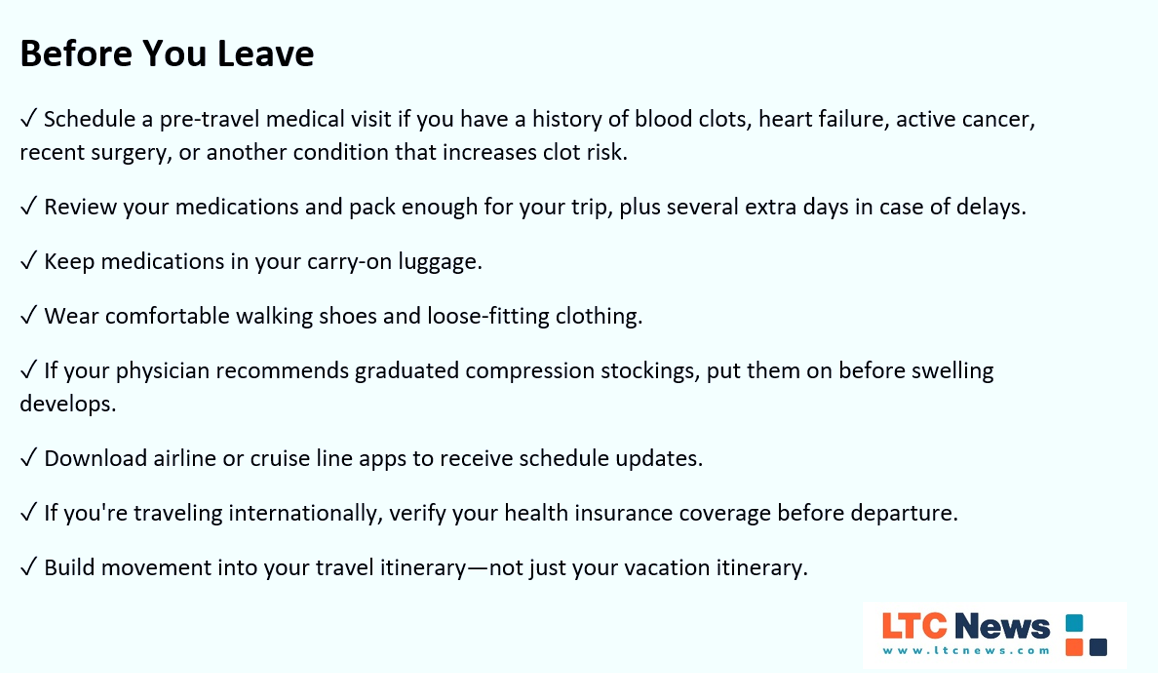
Healthy travel begins several days before your trip. Reserve an aisle seat if walking regularly will be important. Schedule rest stops before a long drive, rather than deciding when you become tired. Wear comfortable shoes designed for walking. If you use graduated compression stockings, put them on before swelling develops.
Most importantly, make movement part of your itinerary. Many experienced travelers set reminders on their smartwatch or smartphone to stand up every hour. That small habit can make the difference between arriving energized—or arriving stiff, swollen, and exhausted.
Mobility Is What You're Really Protecting
The goal isn't simply avoiding swollen ankles. You're protecting something much more valuable. Every walk through an airport terminal strengthens the same muscles that help you remain independent at home. Every sightseeing tour challenges your balance, endurance, and circulation.
Every vacation becomes another reminder that staying physically active keeps retirement full of possibilities rather than limitations. Healthy circulation supports that lifestyle. Protecting your legs today helps protect tomorrow's adventures.
Healthy Travel Begins Long Before You Leave Home
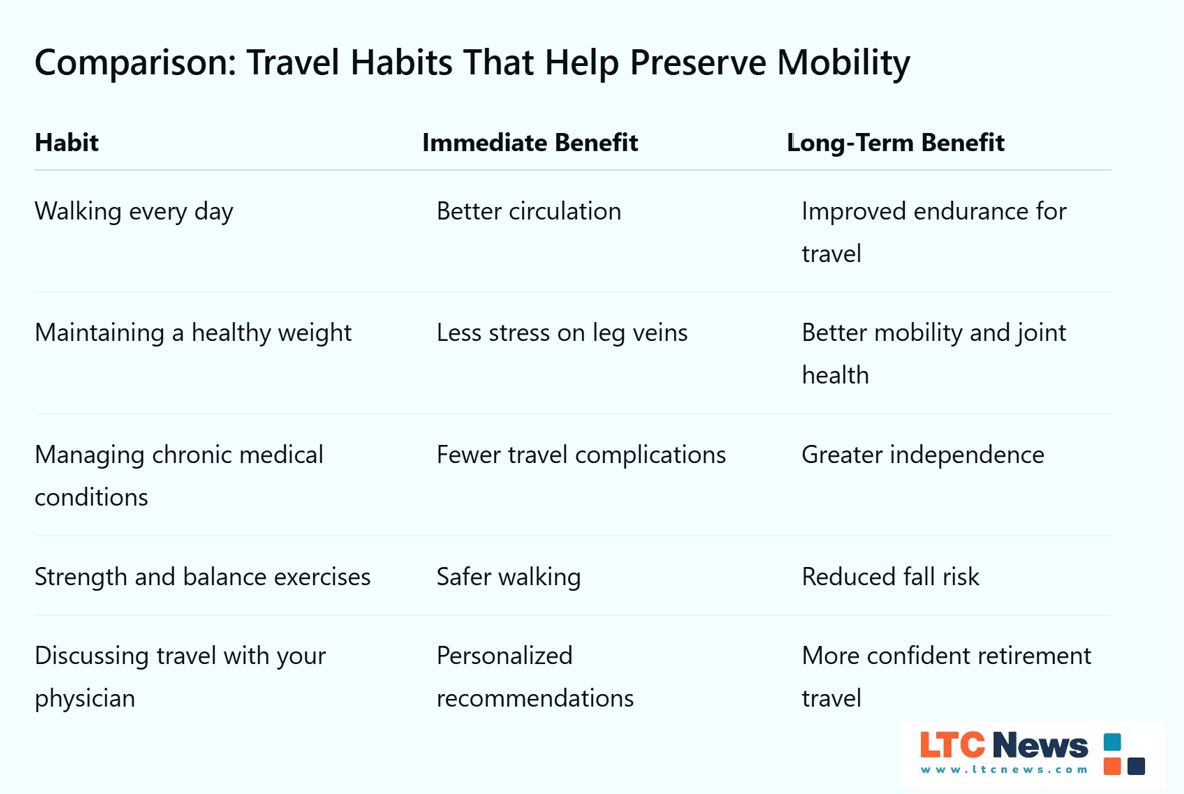
Protecting your circulation doesn't start at the airport. It begins with the choices you make every day. Walking regularly, maintaining a healthy weight, staying physically active, controlling chronic medical conditions, and following your physician's recommendations all contribute to healthier veins and better mobility.
Those same habits also help preserve something even more valuable—the ability to continue traveling independently as you grow older. Many people think of travel as a reward for retirement. In many ways, it also becomes a measure of healthy aging.
If you can comfortably navigate airports, climb onto a tour bus, walk through museums, or spend an afternoon exploring a new city, you're preserving abilities that support independence at home as well.
Common Health Conditions That Affect Travel
Most adults over age 50 manage at least one chronic medical condition. Few of those conditions prevent travel. Many simply require additional planning. Understanding how your health affects circulation allows you and your physician to prepare before a trip rather than respond to problems after they develop.
- Varicose Veins Aren't Just Cosmetic
Many people dismiss varicose veins as little more than a cosmetic concern. They can be much more than that. Varicose veins develop when small valves inside the veins weaken, allowing blood to collect rather than efficiently return to the heart.
Over time, people may experience:
- Aching or heaviness in the legs.
- Swelling after prolonged sitting or standing.
- Nighttime leg cramps.
- Itching around enlarged veins.
- Fatigue in the legs by the end of the day.
Long trips often make those symptoms more noticeable because sitting reduces the natural pumping action of the calf muscles.
Most people with varicose veins travel safely. Walking regularly, elevating your legs after arrival, maintaining a healthy weight, and wearing physician-recommended graduated compression stockings when appropriate may reduce discomfort during longer journeys.
Increasing pain, skin discoloration around the ankles, or sores that fail to heal deserve evaluation by a vascular specialist rather than being dismissed as "normal aging."
- Chronic Venous Insufficiency Can Limit Mobility
Healthy veins move blood efficiently back toward the heart. When vein valves become damaged, blood can remain in the legs longer than it should. Physicians call that condition chronic venous insufficiency.
Common symptoms include:
- Persistent swelling.
- Leg heaviness.
- Aching after standing.
- Skin discoloration.
- Thickened skin near the ankles.
- Venous ulcers in advanced cases.
Travel doesn't cause chronic venous insufficiency. Extended sitting can significantly worsen existing symptoms. Planning additional walking breaks, elevating your legs after arriving, and following your physician's treatment plan often improve comfort during longer vacations.
Many patients get to a point where they think it's normal to have symptoms like leg swelling and pain with no relief and may not know to ask their doctor about options for treatment." — Dr. Cali E. Johnson, M.D., EdD, FACS — Assistant Professor, Division of Vascular Surgery, University of Utah Health.
- Peripheral Artery Disease Requires Different Advice
Not every circulation problem involves the veins. Peripheral artery disease (PAD) affects the arteries that deliver blood to the legs. People with PAD may develop leg pain while walking that improves with rest, slower wound healing, or cool feet.
That distinction matters because compression stockings, which are commonly recommended for vein disease, may not be appropriate for people with significant arterial disease.
Anyone with known PAD should discuss travel plans and compression therapy with their physician before purchasing compression stockings.
- Heart Failure Calls for Careful Planning
Many people living with stable heart failure continue to enjoy travel.
Preparation becomes especially important. Swelling caused by heart failure often affects both legs and may be accompanied by increasing shortness of breath, rapid weight gain, fatigue, or difficulty lying flat.
Before extended travel, ask your cardiologist whether:
- Your medications need adjustment.
- Fluid restrictions should change while traveling.
- Compression stockings are appropriate.
- You should monitor your weight during longer trips.
Stopping prescribed medications because you're on vacation can quickly create much bigger problems.
- Diabetes Makes Foot Care Essential
Diabetes can affect circulation and nerve function in the feet.
Reduced sensation increases the likelihood that blisters or pressure injuries go unnoticed during a long travel day.
Older adults living with diabetes should:
- Wear properly fitted walking shoes.
- Inspect their feet every day during travel.
- Stay hydrated.
- Keep blood glucose supplies readily available.
- Continue moving throughout the day.
International travelers using insulin should also discuss time-zone adjustments with their healthcare team before departure.
Recovering From Surgery? Timing Matters
Many retirees schedule vacations after knee replacements, hip replacements, or other major procedures. Recovery timelines vary significantly.
Recent orthopedic surgery temporarily increases the risk of blood clots, making individualized travel recommendations essential. Your surgeon—not your travel itinerary—should determine when longer trips are appropriate.
Some patients require prescription anticoagulants. Others benefit from compression therapy or specific rehabilitation exercises before traveling.
Following medical advice is considerably safer than relying on general online recommendations.
Cancer Survivors Can Continue Exploring the World
Cancer treatment doesn't necessarily end your travel plans. Millions of cancer survivors continue to visit family, take cruises, and explore new destinations every year. Planning simply becomes more important.
If you're receiving treatment—or recently completed treatment, discuss upcoming travel with your oncology team. Topics should include:
- Blood clot prevention.
- Vaccination recommendations.
- Medication management.
- Access to healthcare while traveling.
- Travel insurance considerations.
Those conversations provide reassurance while helping prevent avoidable complications.
Mobility Challenges Don't Have to End Your Adventures
Many conditions can make travel more physically demanding without making it impossible. Today's travel industry offers far more accessibility than many people realize.
- Airports provide wheelchair assistance.
- Cruise ships include accessible staterooms.
- National parks continue expanding accessible trails and visitor facilities.
- Hotels increasingly offer mobility-friendly accommodations.
Planning often determines whether a trip feels exhausting or enjoyable.
Allow extra time. Request assistance before you need it. Choose realistic daily itineraries. Those decisions allow you to conserve energy for the experiences that matter most.
Family Vacations Often Reveal Important Changes
- Adult children frequently notice subtle health changes while traveling that aren't obvious during holiday visits.
- Mom suddenly needs to stop every few hundred yards. Dad struggles to pull the luggage through the airport.
- A spouse becomes unusually fatigued after climbing one flight of stairs.
- Another family member repeatedly loses balance on uneven sidewalks.
Travel places unique physical demands on the body. Those situations shouldn't necessarily end future vacations. They should encourage conversations with physicians about maintaining strength, improving balance, evaluating circulation, and preserving mobility before those changes become crises.
Despite the challenges, experts say older people should travel and enjoy the many positives travel can bring, no matter your state of health, as long as you abide by travel tips for older adults.
It's not a luxury. It's a source of joy, it's a source of connection, and it's something positive to look forward to."—Lona Choi-Allum, Senior Consumer Insights Manager, AARP Research.
If you travel as an extended family, pay attention to your loved ones. Many families later say they first noticed changes in their family members’ health on vacation, not at home.
Independence Doesn't Happen by Accident
The ability to continue traveling well into your seventies and eighties rarely depends on luck alone. It reflects years of maintaining strength, protecting your cardiovascular health, preserving healthy circulation, and addressing medical problems before they become disabling.
Travel reminds many people why those efforts matter—walking through Rome, exploring Yellowstone, taking grandchildren to Washington, D.C., or boarding a cruise ship without assistance. Those moments represent more than vacations. They represent independence.
Your Travel Health Checklist
The best travel memories usually begin with good preparation. Fortunately, protecting your legs and circulation doesn't require dramatic lifestyle changes. Small habits practiced consistently can make long travel days more comfortable while reducing the risk of preventable complications.
During Your Trip
- Walk every one to two hours whenever practical.
- Perform ankle and calf exercises while seated.
- Drink water regularly throughout the day.
- Avoid remaining seated for extended periods.
- Stretch during layovers instead of sitting at the departure gate.
- Take short walks after arriving at your hotel.
- Pay attention to unusual swelling or pain rather than assuming it's "just travel."
After You Arrive Home
Many travelers unpack their luggage and immediately return to everyday routines. Take one additional step. Evaluate how your body responded to the trip.
- Did you become unusually fatigued?
- Did your legs swell more than expected?
- Did walking become noticeably harder than it was a year ago?
Those observations provide valuable information to discuss with your physician, especially if you're planning additional travel.
Thinking About Traveling Overseas?
International travel often involves longer flights, unfamiliar healthcare systems, language barriers, and greater distances from your regular physicians. Planning becomes even more important.
Carry:
- A current medication list.
- Copies of prescriptions.
- Your physicians' contact information.
- Travel insurance details.
- Long-Term Care Insurance details.
- Emergency contact numbers.
- A summary of significant medical conditions.
Older travelers should also identify nearby hospitals at their destination before departure.
Medicare Doesn't Usually Travel With You
Many retirees are surprised to learn that Original Medicare generally does not pay for routine healthcare received outside the United States, except in a few limited situations. Some Medicare Advantage plans offer limited emergency benefits outside the country, but coverage varies.
Travel medical insurance may help cover unexpected illnesses or injuries while you're abroad. For extended international travel—or retirement overseas—review your health coverage well before departure. Understanding what's covered before an emergency occurs can prevent significant financial surprises.
Long-Term Care Insurance and Travel
Many readers ask whether Long-Term Care Insurance follows them when they travel. If you plan on taking your caregiver on the trip, the policy may still pay benefits while traveling. In some cases, if you need extended care, your policy can pay benefits, even if you are overseas.
Check with the insurance company or your Long-Term Care Insurance specialist before making plans.
Enjoy Your Trip
As you prepare for travel, remember that long trips stress your circulatory system; this isn't dramatic, it's just biology. Understand this reality. Plan accordingly. Move frequently. Compress when sitting. Hydrate constantly. Elevate when resting.
These simple changes transform your experience. You explore more. You enjoy yourself more. You remember the destination, not swollen feet and aching legs. Your next adventure becomes genuinely enjoyable. Not something you endure. Something you actually experience.
NOTE: The information in this article is provided for educational and informational purposes only and is not intended as medical advice, diagnosis, or treatment. Every individual's health situation is different, and recommendations that are appropriate for one person may not be appropriate for another.
Always consult your physician or another qualified healthcare professional before making decisions about medications, compression therapy, travel after surgery or illness, or any strategy to reduce your risk of blood clots or other medical conditions.
Never ignore professional medical advice or delay seeking care because of information you have read in this article. Seek immediate emergency medical attention or call 911 if you experience symptoms such as sudden shortness of breath, chest pain, coughing up blood, fainting, or swelling, warmth, redness, and pain affecting one leg, as these may be signs of a serious medical emergency requiring prompt treatment.
Frequently Asked Questions
I have varicose veins. Can I still travel?
Yes. Most people with varicose veins can travel safely. Walking regularly, avoiding prolonged sitting, elevating your legs after long travel days, and following your physician's recommendations can help reduce discomfort and swelling.
Can travel reveal early signs of declining mobility?
Yes. Airports, hotels, walking tours, and sightseeing often place greater physical demands on the body than everyday routines. Difficulty keeping up during a vacation may signal that it's time to discuss strength, balance, circulation, or other health concerns with a physician.
Does Long-Term Care Insurance cover care while I'm traveling?
Coverage depends on the individual policy. Some Long-Term Care Insurance policies provide limited international benefits or reimburse qualified care received outside the United States under certain conditions. Review your policy or speak with your insurance professional before extended travel abroad.
Are swollen ankles after flying normal?
Mild swelling in both ankles is common after prolonged sitting and usually improves after walking or elevating your legs. Swelling in only one leg—especially if it's accompanied by pain, warmth, or redness—should be evaluated promptly because it could indicate a deep vein thrombosis.
Who is most at risk for travel-related deep vein thrombosis (DVT)?
Risk is higher for people who have had a previous blood clot, recent major surgery, active cancer, certain inherited clotting disorders, heart failure, obesity, pregnancy, hormone therapy, or prolonged immobility. Adults over age 50 should discuss extended travel plans with their healthcare provider if they have one or more of these risk factors.
Should everyone over age 50 wear compression stockings while traveling?
No. Compression stockings are not necessary for every traveler. They may benefit people with chronic venous disease, previous blood clots, or other physician-identified risk factors. Ask your healthcare provider whether graduated compression stockings are appropriate for your specific health situation.
What should caregivers watch for while traveling with an older loved one?
Family caregivers often notice subtle changes during vacations that may not be obvious at home. Watch for increasing fatigue, difficulty walking, frequent rest stops, balance problems, leg swelling, or changes in endurance. Discuss any new concerns with your loved one's healthcare provider after the trip.
Does Medicare cover medical care if I become ill while traveling overseas?
Original Medicare generally does not provide routine coverage for healthcare received outside the United States, except in limited situations. Review your health insurance and consider travel medical insurance before international trips.
What if I have diabetes or heart failure?
People living with diabetes or heart failure should discuss travel plans with their physician before extended trips. Medication adjustments, fluid management, compression therapy, or additional monitoring may be appropriate depending on your health.
How often should I get up and walk during a long flight or road trip?
Aim to stand, stretch, or walk every one to two hours whenever possible. If you cannot leave your seat, perform ankle circles, heel raises, toe raises, and other simple leg exercises to help activate your calf muscles and encourage healthy circulation.
Does travel become more difficult as we age?
Not necessarily. Many adults remain active travelers well into their seventies and eighties. Maintaining strength, balance, cardiovascular health, and healthy circulation can help preserve the mobility needed to continue enjoying travel throughout retirement.
Why is protecting vein health important for healthy aging?
Healthy veins support healthy circulation, and healthy circulation supports mobility. Maintaining mobility helps preserve independence, allowing you to continue traveling, visiting family, participating in favorite activities, and remaining active throughout retirement.
Does drinking more water prevent blood clots?
Staying hydrated supports your overall health and may help reduce travel-related fatigue and dehydration. However, drinking water alone does not prevent deep vein thrombosis. Regular movement remains one of the most important preventive strategies.
Can traveling increase my risk of developing a blood clot?
Yes, but the overall risk remains low for most healthy travelers. Sitting for more than four hours—whether on an airplane, in a car, on a train, or aboard a bus—can slow blood flow in the legs. For people with additional risk factors, prolonged immobility may increase the risk of developing a deep vein thrombosis (DVT). Regular movement and following your physician's recommendations can significantly reduce that risk.
Can compression stockings prevent blood clots?
Graduated compression stockings have been shown to reduce leg swelling during prolonged travel and may reduce the risk of symptomless deep vein thrombosis in selected higher-risk travelers. They should be properly fitted and used according to your healthcare provider's recommendations.
How can I prepare for a healthier trip?
Before you travel:
- Review your medications.
- Stay physically active in the weeks leading up to your trip.
- Wear comfortable walking shoes.
- Plan regular walking breaks.
- Stay hydrated.
- Discuss travel plans with your healthcare provider if you have significant medical conditions.
- Know the warning signs of a blood clot before you leave.
Can I travel if I've had a previous blood clot?
Many people who have experienced a DVT or pulmonary embolism continue traveling safely. Your healthcare provider may recommend compression stockings, prescription blood thinners, or additional precautions based on your medical history and the length of your trip.
What are the warning signs of a blood clot?
Seek immediate medical attention if you develop:
- Swelling affecting only one leg.
- Calf pain or tenderness.
- Redness or unusual warmth in one leg.
- Sudden shortness of breath.
- Chest pain.
- Coughing up blood.
- Rapid heartbeat with difficulty breathing.
A blood clot that travels to the lungs can become a life-threatening pulmonary embolism.
Is it safe to take aspirin before flying?
Not unless your physician recommends it. Medical guidelines do not advise taking aspirin solely to prevent travel-related blood clots because it has not been shown to be effective for that purpose and may increase the risk of bleeding.
What's the single most important thing I can do to protect my legs while traveling?
Keep moving.
Walking regularly, stretching your legs, and avoiding prolonged sitting are among the simplest and most effective ways to support healthy circulation during travel. Combined with good hydration and appropriate medical guidance, movement remains one of the best ways to help protect both your legs and your independence.


Sponsored