Dimora Sacrum Silicone Absorbent Soft Dressing Review: Designed to Help Protect Older Adults from Sacral Pressure Injuries
About This Article
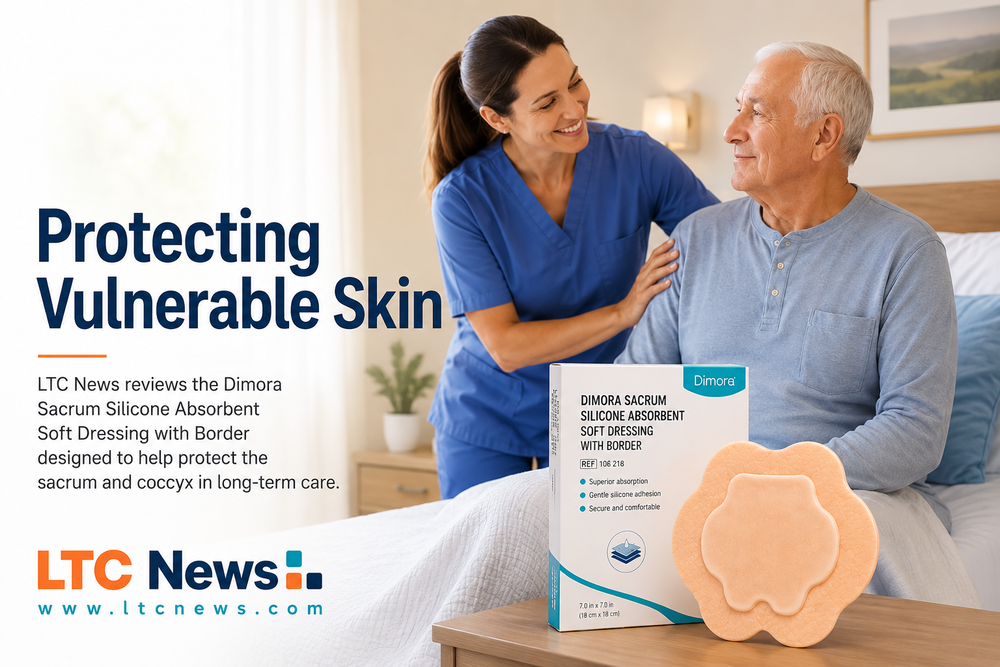
Pressure injuries remain a major challenge for older adults in long‑term care. This LTC News review evaluates the Dimora Sacrum Silicone Absorbent Wound Dressing with Border—its design, performance, caregiver usability, and real‑world feedback—to help families and professionals judge its value for sacral wound care.

James Kelly
LTC News staff writer specializing in long-term care and aging.
Table of Contents
- Why Sacral Pressure Injuries Matter
- Product Overview
- Wider Sacral Tail Improves Protection
- Excellent Absorption for Moisture Management
- Gentle Silicone Adhesive Protects Fragile Skin
- Waterproof Yet Breathable
- Benefits for Long-Term Care Facilities
- Assisted Living and Home Care Applications
- What Users Are Saying
- Good Overall Value
- What the Dressing Does Not Replace
- Potential Limitations
- LTC News Take
Pressure injuries are more than a painful skin condition as they can significantly affect an older adult's health, independence, and quality of life. Healing often requires weeks or months of treatment, and severe wounds may lead to hospitalization, infection, or surgery.
Pressure injuries are far more than a painful skin condition. They occur when prolonged pressure cuts off blood flow to the skin and underlying tissue, causing tissue damage that can progress from mild skin irritation to deep wounds exposing muscle or even bone. For older adults, these injuries can significantly affect overall health, independence, and quality of life. Pain often makes it difficult to sit, walk, or participate in rehabilitation, delaying recovery from illness or surgery.
Open wounds also increase the risk of serious infections, including cellulitis and bone infections (osteomyelitis), particularly in individuals with diabetes, poor circulation, or weakened immune systems. Healing frequently takes weeks or months and requires ongoing wound care, nutrition support, pressure relief, and regular monitoring. In severe cases, pressure injuries may lead to hospitalization, surgical debridement or reconstructive procedures, and, in the most advanced cases, can become life-threatening.
According to the Wound Healing Society's updated pressure ulcer treatment guidelines, pressure injuries create warm, moist environments ideal for bacterial overgrowth and can progress from contamination to serious invasive infection — including life-threatening complications such as sepsis, osteomyelitis, and necrotizing fasciitis. The risks are compounded significantly for individuals with diabetes, poor circulation, or weakened immunity.
Whether someone lives in a nursing home, an assisted living community, or a rehabilitation center, or receives hospice services, selecting the right wound dressing can be an important part of a physician-directed wound care plan.
The Dimora Sacrum Silicone Absorbent Soft Dressing with Border is specifically engineered for wounds involving the sacrum and coccyx—the lower back and tailbone where pressure injuries most commonly develop.
Why Sacral Pressure Injuries Matter
Pressure injuries affect hundreds of thousands of Americans every year, particularly older adults with limited mobility. Residents of nursing homes, assisted living communities, rehabilitation centers, and those receiving skilled nursing care at home face increased risk because they often spend prolonged periods sitting or lying in one position.
Other contributing factors include:
- Limited mobility
- Diabetes
- Poor circulation
- Malnutrition
- Incontinence
- Fragile aging skin
The sacrum and coccyx experience constant pressure when lying on the back, making these areas among the most common locations for pressure injuries.
The National Pressure Injury Advisory Panel (NPIAP) emphasizes that prevention remains the best treatment. Proper repositioning, pressure-relieving mattresses, skin assessments, nutrition, moisture management, and appropriate dressings all work together to reduce complications.
No dressing alone can prevent or heal a pressure injury.
Product Overview
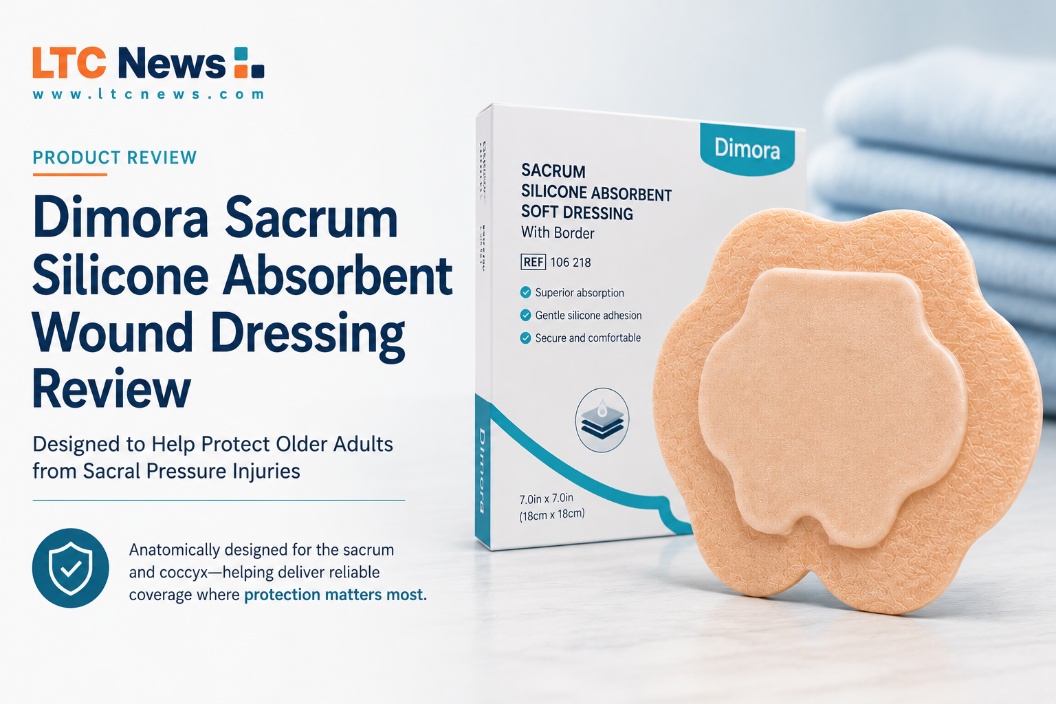
Unlike standard square foam dressings, Dimora designed this product specifically to fit the anatomy of the lower spine.
Key features include:
- Anatomically shaped sacral dressing
- Wider coccyx "tail" for improved coverage
- SAP-composite absorbent core
- Gentle medical-grade silicone border
- Waterproof yet breathable outer layer
- Flexible construction that conforms to body contours
The dressing is intended for moderate to heavily draining wounds while helping protect surrounding skin from additional damage.
Wider Sacral Tail Improves Protection
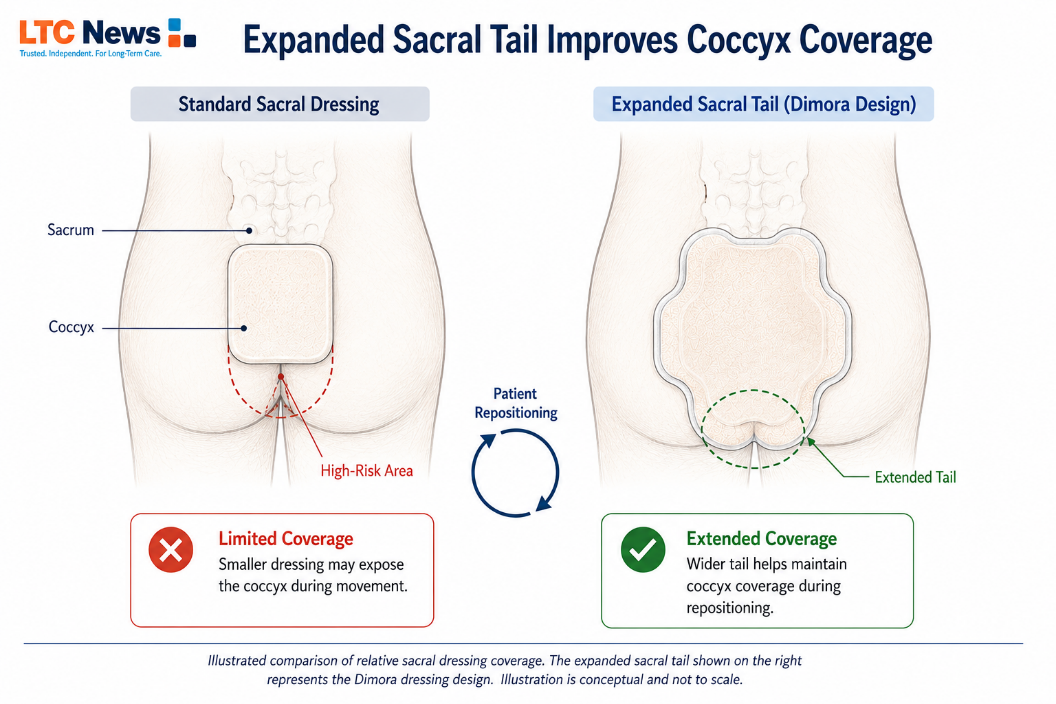
One of the product's most noticeable design improvements is its expanded lower section. Traditional foam dressings often fail to adequately cover the coccyx, particularly when patients move frequently or require repositioning every two hours.
Dimora's wider tail helps maintain protection over this high-risk area while reducing the chance of the dressing lifting prematurely. For nursing staff and family caregivers, maintaining secure coverage can mean fewer unnecessary dressing replacements.
Excellent Absorption for Moisture Management
One of Dimora's strongest selling points is its SAP-composite absorbent core. According to the manufacturer, the dressing absorbs more than 20 times its own weight in wound exudate.
Managing drainage is essential because excessive moisture can:
- Delay healing
- Increase skin breakdown
- Cause painful maceration
- Increase bacterial growth
Patients with moderate or heavy drainage may benefit from fewer dressing changes, depending on the physician's recommendations and wound condition. Fewer dressing changes may also improve comfort while reducing nursing workload.
Gentle Silicone Adhesive Protects Fragile Skin
Many older adults have delicate skin that tears easily. Unlike traditional adhesives that may damage healthy skin during removal, medical-grade silicone generally provides secure adhesion while minimizing trauma.
Dimora's silicone border is designed to:
- Reduce pain during removal
- Lower the risk of skin tears
- Maintain patient comfort
- Allow careful repositioning if necessary
This feature can be especially beneficial for residents receiving long-term wound care.
Waterproof Yet Breathable
The dressing's outer layer helps protect wounds from urine, stool, and outside moisture while remaining breathable enough to allow water vapor to escape.
Maintaining a balanced, moist wound environment supports healing while reducing excessive moisture accumulation. For patients with urinary or fecal incontinence, this added protection can be especially valuable.
Benefits for Long-Term Care Facilities
Staff members in nursing homes and rehabilitation centers often manage multiple complex wounds during every shift. Products that remain securely in place and absorb effectively may help reduce the time nurses spend on dressing changes.
Potential benefits include:
- Improved sacral coverage
- Better moisture management
- Less leakage
- Reduced skin trauma
- Increased patient comfort
- Simplified wound care
Every wound is different, and dressing selection should always follow the physician's or certified wound-care specialist's recommendations.
Assisted Living and Home Care Applications
Many assisted living residents receive wound care through visiting nurses or home health agencies. Family caregivers frequently become involved in dressing changes after receiving instruction from healthcare professionals.
Because the dressing is anatomically shaped and includes an adhesive border, many caregivers may find it easier to position than traditional foam dressings. Its waterproof backing may also make bathing easier while protecting the wound.
What Users Are Saying
Reviews cannot replace clinical evidence, but they can provide valuable insight into day-to-day use. Overall, feedback for the Dimora Sacrum Silicone Absorbent Soft Dressing has been largely positive, especially among family caregivers and individuals managing chronic wounds at home.
Several common themes emerge.
- Comfortable Removal
Many reviewers praised the silicone adhesive for being noticeably gentler than traditional medical tape.
A wound care nurse told LTC News that the silicone border makes the bandage pain-free to remove. The padding is excellent and very absorbent.
One of the biggest concerns during dressing changes isn't just treating the wound—it's protecting the healthy skin around it. Older adults often have very fragile skin, and repeated removal of aggressive adhesives can cause additional injury and pain. Silicone-bordered dressings are designed to adhere securely while releasing more gently, which can make dressing changes less stressful for both patients and caregivers. When a patient is more comfortable during wound care, they're often less anxious about future dressing changes, and caregivers can perform necessary treatments more effectively.
Several caregivers noted that older adults tolerated dressing changes much better because removal caused less discomfort.
- Excellent Cushioning
Comfort was another recurring theme among users. Several caregivers said the dressing's thick foam construction provided noticeable cushioning over the sacrum and coccyx, helping make prolonged sitting or lying in bed more comfortable for older adults with prominent bony areas.
Silicone foam dressings are not a substitute for pressure-redistributing mattresses, wheelchair cushions, or regular repositioning schedules. One wound care nurse in a nursing home told LTC News that additional cushioning may help reduce discomfort for individuals who spend extended periods in bed or seated.
For many older adults, particularly those who have lost muscle mass or body fat, the sacrum and tailbone have very little natural padding. A well-designed silicone foam dressing can provide an additional layer of cushioning while helping manage moisture and protect vulnerable skin from friction and shear. It's important to remember that these dressings work best as part of a comprehensive pressure injury prevention plan that includes frequent repositioning, pressure-relieving support surfaces, good nutrition, and routine skin assessments.
- Strong Absorption
Numerous reviewers told LTC News that the dressing handled drainage well.
One of the goals in wound care is selecting a dressing that stays securely in place while effectively managing drainage. Dressing changes should always be based on the amount of wound exudate and the condition of the dressing, not simply on a preset schedule. Products that maintain their integrity while keeping the wound environment balanced can support both patient comfort and the healing process.
- Adhesion May Vary
Not every review was completely positive. Some users reported that adhesion was less effective on patients with excessive moisture or frequent movement.
Caregivers should remember that moisture, body contours, perspiration, and skin preparation can all affect how well any adhesive dressing remains in place.
Good Overall Value
Several caregivers acknowledged that advanced silicone foam dressings typically cost more than traditional gauze and tape. However, many felt the added comfort, absorbency, secure fit, and reduced skin trauma made the additional investment worthwhile. Numerous reviewers also indicated they would purchase the dressing again based on their overall experience.
When evaluating wound care products, the purchase price is only one part of the equation. A dressing that stays in place, effectively manages drainage, protects fragile skin, and may require fewer changes can improve patient comfort while reducing caregiver time and the overall burden of wound management. Looking at the total value, not just the initial cost, is often the best approach.
What the Dressing Does Not Replace
No wound dressing, regardless of quality, replaces comprehensive wound management. Successful treatment typically includes:
- Scheduled repositioning
- Pressure redistribution mattresses
- Good nutrition
- Adequate protein intake
- Blood sugar management
- Moisture and incontinence control
- Infection monitoring
- Physician and wound-care specialist oversight
Dressings represent one important component—not the entire treatment plan.
Potential Limitations
The Dimora dressing may not be appropriate for every wound. It may not be suitable for:
- Dry wounds with little drainage
- Deep tunneling wounds
- Untreated wound infections
- Wounds requiring specialized antimicrobial therapy
- Patients with silicone allergies
Caregivers should always follow recommendations from physicians, nurses, or certified wound-care specialists.
LTC News Take
The Dimora Sacrum Silicone Absorbent Soft Dressing with Border stands out because it addresses one of the most difficult areas of the body to protect.
Its anatomically shaped sacral design, expanded coccyx coverage, highly absorbent foam core, gentle silicone adhesive, and waterproof breathable backing combine to create a dressing that appears well-suited for long-term care environments.
Based on its design, features, and consistently favorable customer feedback, it represents a strong option for nursing homes, rehabilitation centers, assisted living communities, hospice providers, home healthcare agencies, and family caregivers managing sacral wounds under medical supervision.
Its biggest strengths are comfort during dressing changes, excellent absorption, and thoughtful sacral coverage. The primary limitation is one shared by nearly every silicone-bordered dressing: adhesion can vary depending on moisture, body shape, and patient movement.
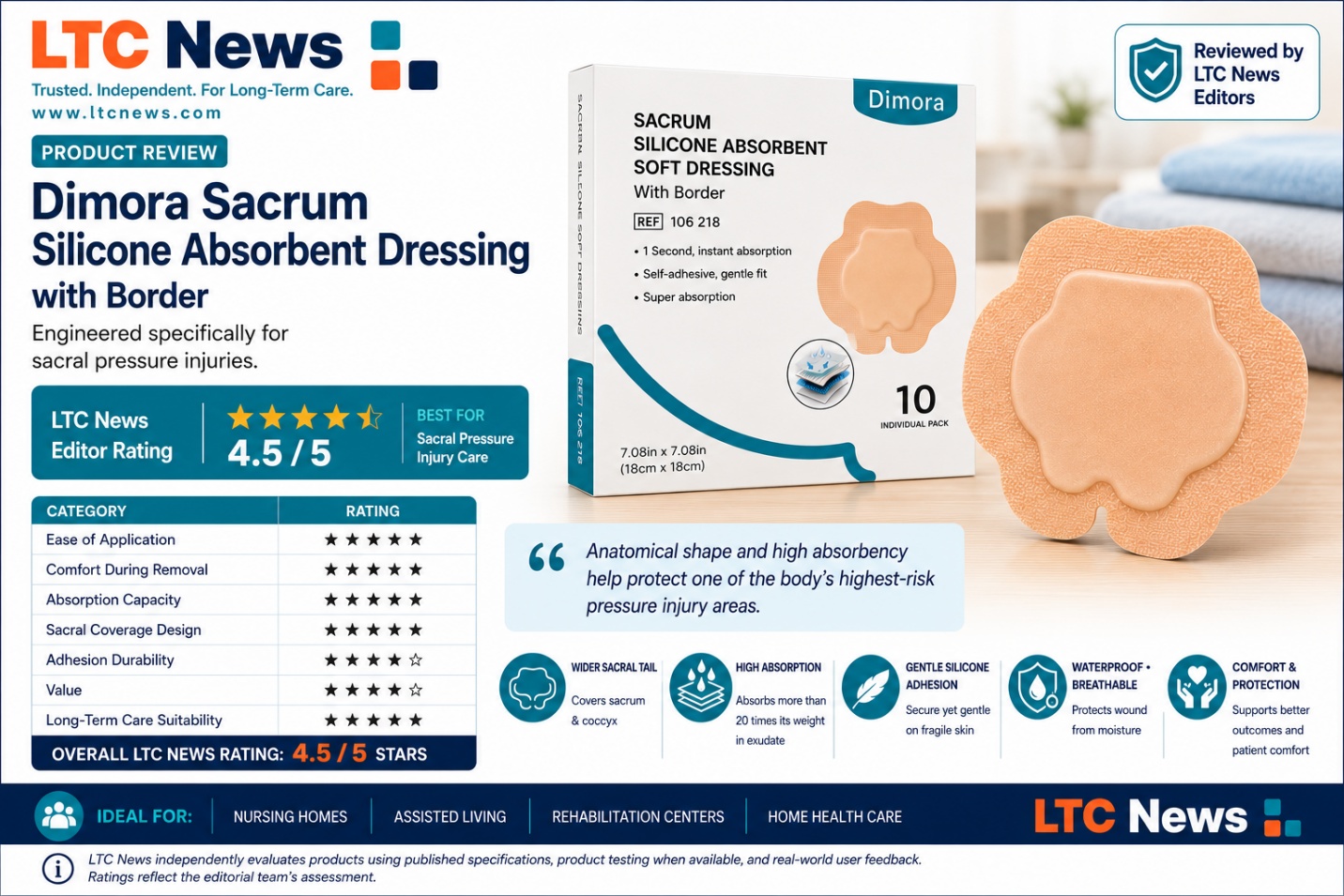
Overall, the Dimora Sacrum Silicone Absorbent Soft Dressing earns the LTC News Editor's Rating of 4.5 out of 5 stars and deserves consideration as part of a comprehensive pressure injury management program directed by qualified healthcare professionals.
If you have a product that you wish LTC News to review, contact LTC News for requirements and then send it to us, along with press material:
LTC NEWS, LLC
521 S. La Grange Rd
Suite 207
LaGrange, IL 60525
Frequently Asked Questions
Is the dressing waterproof?
Yes. The outer layer is designed to keep outside moisture away from the wound while remaining breathable. This helps maintain an appropriate wound-healing environment and can provide added protection for individuals dealing with urinary or fecal incontinence.
Can family caregivers use this dressing at home?
Yes, many family caregivers use advanced wound dressings under the direction of physicians or home health nurses. Anyone performing wound care should receive proper instruction on dressing changes and monitor the wound for signs of infection or other complications.
Can this dressing prevent pressure injuries?
No. No wound dressing alone can prevent a pressure injury. Prevention requires a comprehensive care plan that includes regular repositioning, pressure-relieving mattresses or cushions, good nutrition, moisture management, daily skin inspections, and prompt treatment of any skin changes.
How often should the dressing be changed?
There is no universal schedule. Dressing changes depend on factors such as the amount of wound drainage, the condition of the dressing, and the treatment plan established by the physician or wound-care specialist. Heavy drainage may require more frequent changes than wounds with minimal exudate.
How absorbent is the Dimora dressing?
According to the manufacturer, the absorbent foam core can absorb more than 20 times its own weight in wound drainage (exudate). Managing excess moisture helps protect surrounding skin and supports an environment that promotes healing.
Is this dressing appropriate for every wound?
No. While it may be suitable for many sacral pressure injuries and moderately to heavily draining wounds, it may not be appropriate for dry wounds, untreated infections, deep tunneling wounds, or wounds requiring specialized antimicrobial treatment. A healthcare professional should determine the most appropriate dressing for each patient.
Why are pressure injuries so common in older adults?
Older adults often have reduced mobility, thinner skin, poorer circulation, and chronic health conditions that make their skin more vulnerable. Spending long periods in bed or sitting without regular repositioning increases pressure on the sacrum and tailbone, reducing blood flow and causing tissue damage.
What is the Dimora Sacrum Silicone Absorbent Wound Dressing designed to treat?
The dressing is designed primarily for pressure injuries and other wounds affecting the sacrum and coccyx—the lower back and tailbone. Its anatomical shape provides broader coverage than many traditional foam dressings, helping protect one of the body's most common pressure injury sites.
What makes a silicone-bordered dressing different from traditional gauze?
Silicone-bordered dressings are designed to remain securely in place while being gentler on fragile skin during removal. Unlike traditional tape, medical-grade silicone may reduce discomfort and help minimize skin tears, an important benefit for many older adults.


Sponsored