Daily Habits That Help Older Adults Recover Faster After a Fall or Injury
About This Article
One unexpected fall can change your life in seconds. For many older adults, what happens during the weeks that follow determines whether they regain their independence—or require ongoing assistance at home or in a care facility.

Linda Maxwell
Linda Maxwell is a journalist who writes about aging, health, chronic illness, caregiving, and long-term care issues impacting older adults and their families.
Table of Contents
- Falls Are More Common—and More Serious—Than You Realize
- Why Recovery Takes Longer as You Age
- Daily Movement Is One of the Most Powerful Recovery Tools
- Physical Therapy Removes the Guesswork
- Protein Becomes Even More Important During Recovery
- Sleep Is When Much of the Healing Happens
- Hydration Supports Recovery
- Manage Pain Carefully
- Make Your Home Safer Before Another Fall Happens
- Recovery Is Emotional, Too
- When Home Recovery Isn't Enough
- Family Caregivers Become Part of the Recovery Team
- Planning Protects Both Independence and Retirement Savings
One unexpected fall can change your life in seconds. While all of us can suffer from a fall, when we are older, the consequences of falling are more substantial. For those older adults, what happens during the weeks that follow determines whether they regain their independence—or require ongoing assistance at home or in a care facility.
When an older family member suffers an injury following a fall, their recovery isn't simply about waiting for a broken bone, strained muscle, or surgical incision to heal. Daily habits such as safe movement, proper nutrition, quality sleep, hydration, pain management, and home safety all influence how successfully you recover. Understanding these habits can help you or someone you love heal more safely while reducing the risk of another fall.
If you or a loved one is recovering from a fall or injury after age 60, your daily routine can significantly influence how quickly and safely you heal. Regular movement, adequate protein intake, quality sleep, hydration, effective pain management, and home safety all help reduce complications and lower the risk of another fall.
Recovery can sometimes take longer than expected, especially if you are older when it happens. Paying for that care can be problematic, since health insurance and Medicare cover only 100 days of skilled care, including rehabilitation, and provide no coverage for custodial long-term care, leaving many families responsible for arranging and financing additional support.
Falls Are More Common—and More Serious—Than You Realize
According to the U.S. Centers for Disease Control and Prevention (CDC), more than one in four Americans age 65 and older experience a fall each year, yet fewer than half discuss it with their physician. The agency also reports that experiencing one fall approximately doubles the likelihood of falling again.
Falls are the leading cause of injury among older Americans. While many result in bruises or sprains, others cause serious injuries that require surgery, rehabilitation, or months of recovery and even long-term care.
Common injuries include:
- Hip fractures
- Wrist fractures
- Shoulder injuries
- Head injuries
- Spinal compression fractures
- Torn ligaments and other soft tissue injuries
Beyond the physical injury, many older adults begin limiting their activities because they fear another fall. Reduced activity weakens muscles, balance, and endurance, ultimately increasing—rather than decreasing—the risk of another fall.
Why Recovery Takes Longer as You Age
Healing naturally slows with age. Several factors contribute:
- Age-related muscle loss (sarcopenia)
- Reduced bone density
- Slower tissue repair
- Chronic medical conditions
- Multiple prescription medications
- Reduced cardiovascular endurance
Even a few days of inactivity can noticeably reduce muscle strength in older adults, making it harder to regain mobility. Setting realistic expectations is important. Recovery after age 60 often takes longer than it would for a younger adult, but consistent daily habits can significantly improve outcomes.
Daily Movement Is One of the Most Powerful Recovery Tools
Rest is important immediately after an injury, but prolonged inactivity often delays recovery. Once your physician says it's safe, regular movement helps:
- Preserve muscle strength
- Improve circulation
- Reduce joint stiffness
- Lower the risk of blood clots
- Improve balance
- Restore confidence
Activities may include:
- Short walks around the home
- Seated exercises
- Range-of-motion activities
- Balance exercises
- Gentle stretching
- Supervised physical therapy
Recovery isn't about pushing through severe pain. Instead, the goal is to find the appropriate amount of movement that supports healing without causing additional injury.
Physical Therapy Removes the Guesswork
A physical therapist at a Rehabilitation Clinic can assess the specific injury and build a day-by-day progression, so movement increases at a pace that supports healing instead of risking a setback, removing the guesswork that leads many people to either overdo it or avoid movement altogether.
Every injury is different. A licensed physical therapist develops an individualized rehabilitation plan based on:
- Your injury
- Your overall health
- Existing strength and balance
- Surgical procedures
- Mobility limitations
- Recovery goals
Professional guidance helps patients avoid doing too little—or too much—during recovery.
Protein Becomes Even More Important During Recovery
Many older adults lose their appetite after an injury. Unfortunately, healing requires additional nutrition. Protein supports:
- Muscle rebuilding
- Tissue repair
- Immune function
- Wound healing
Recommendations from the PROT-AGE Study Group, an international panel of geriatric nutrition experts, suggest older adults recovering from illness or injury generally benefit from consuming approximately 1.2 to 1.5 grams of protein per kilogram of body weight each day, with some individuals requiring more under medical supervision.
Good protein sources include:
- Eggs
- Fish
- Chicken
- Greek yogurt
- Cottage cheese
- Beans
- Lentils
- Lean meats
Smaller protein-rich meals throughout the day are often easier than three large meals when appetite is reduced. Protein is only one part of recovery.
Sleep Is When Much of the Healing Happens
During deep sleep, the body performs many of its most important repair functions. Poor sleep has been linked to:
- Increased pain sensitivity
- Fatigue
- Slower tissue repair
- Increased inflammation
Simple strategies include:
- Supporting the injured area with pillows
- Elevating an injured limb when appropriate
- Keeping the bedroom cool and dark
- Avoiding caffeine later in the day
- Limiting screen time before bedtime
Hydration Supports Recovery
Older adults often become dehydrated without realizing it because the sensation of thirst naturally decreases with age. Proper hydration supports:
- Healthy circulation
- Joint function
- Skin health
- Tissue repair
- Overall energy levels
Keeping a water bottle nearby throughout the day makes hydration easier.
Manage Pain Carefully
Pain deserves treatment, but some medications can increase the risk of another fall. Certain medications may cause:
- Dizziness
- Drowsiness
- Confusion
- Balance problems
Review pain medications with your physician or pharmacist, particularly if you take several prescriptions.
Non-medication approaches may also help:
- Ice during early recovery
- Heat after swelling subsides
- Elevation
- Compression when appropriate
- Gentle therapeutic exercise
Keeping a simple pain journal can help your physician evaluate whether treatment is working.
Make Your Home Safer Before Another Fall Happens
Your home may present new hazards during recovery. Simple improvements include:
- Removing loose rugs
- Improving lighting
- Installing grab bars
- Clearing walking paths
- Using non-slip bath mats
- Keeping frequently used items within easy reach
- Keeping a phone nearby
Small changes can significantly reduce the risk of another fall.
Recovery Is Emotional, Too
Temporary loss of independence affects emotional well-being as much as physical health. Many older adults experience:
- Anxiety
- Frustration
- Depression
- Social isolation
Helpful daily habits include:
- Staying connected with family and friends
- Setting realistic daily goals
- Celebrating small improvements
- Practicing relaxation techniques
- Continuing enjoyable hobbies whenever possible
Emotional recovery deserves as much attention as physical healing.
When Home Recovery Isn't Enough
Some injuries require additional support. Depending on your condition, rehabilitation may include:
- Home health care
- Outpatient rehabilitation
- Inpatient rehabilitation hospitals
- Skilled nursing facilities
- Occupational therapy
- Speech therapy
Many families discover an important reality only after a prolonged recovery begins: Medicare and traditional health insurance were never designed to pay for ongoing custodial care.
Medicare generally pays only for medically necessary skilled care under specific conditions and for limited periods. It does not pay for ongoing assistance with bathing, dressing, transferring, supervision because of dementia, or other custodial services. Medicaid may provide coverage for those who qualify financially.
Family Caregivers Become Part of the Recovery Team
Family members usually take on the role of caregiver first, especially when the care recipient's spouse is older. Family caregivers often assist with:
- Transportation
- Meal preparation
- Medication reminders
- Personal care
- Household tasks
- Medical appointments
As recovery continues, caregiver stress often increases. These family caregivers usually minimize the impact their job has on them, their jobs, and their loved ones.
Recovery after a fall isn't measured only by whether an injury heals. Success means regaining confidence, mobility, and independence whenever possible. Small daily habits can make an enormous difference in health outcomes got s loved one. Using LTC Insurance benefits as soon as a loved one qualifies is usually always the best option." — Matt McCann, CLTC.
The LTC News Caregiver Directory helps families locate qualified home care agencies, assisted living communities, memory care providers, rehabilitation centers, and nursing homes across the United States when additional assistance becomes necessary.
Planning Protects Both Independence and Retirement Savings
A prolonged recovery often reveals how expensive ongoing care can become. For an older adult, it is often too late, especially after they already need extended care. For this reason, most people consider adding Long-Term Care Insurance to their retirement plan before retirement.
Tax-qualified Long-Term Care Insurance helps pay for qualified care received:
- At home
- Adult day care centers
- Assisted living communities
- Memory care communities
- Rehabilitation facilities
- Nursing homes
If you are helping a loved one who already owns Long-Term Care Insurance, LTC News also provides free claims assistance, helping policyholders and their families access benefits when care becomes necessary. LTC News partners with Amada Senior Care to provide that free claim support with no cost or obligation — File a Long-Term Care Insurance Claim.
If your loved one does not have an LTC policy and is finding it difficult to pay for extended care, but they do have a life insurance policy, they might have a source of funds to pay for their care. They could sell their life insurance policy now and use the proceeds to pay for extended care — through a Life Settlement.
After a fall, it’s essential that older loved ones follow every recommendation from their doctors and physical therapists—not just attend appointments but truly commit to the work of recovery. Healing takes effort, consistency, and professional guidance, and the goal is always the same: helping them regain as much strength, confidence, and independence as possible.
If they begin to struggle with exercises, daily tasks, or safety at home, encourage them to seek the support they need, whether that’s inhome professional caregivers or, when necessary, a move to assisted living. Getting the right help isn’t a failure, it’s a proactive step toward living safely, comfortably, and with dignity.
Frequently Asked Questions
Can dehydration slow recovery?
Yes. Dehydration can contribute to fatigue, dizziness, muscle weakness, and delayed healing. Because older adults often experience a reduced sense of thirst, drinking fluids consistently throughout the day is important during recovery.
What exercises are safest during recovery?
The safest exercises depend on the injury. Many recovery programs include short walks, range-of-motion exercises, gentle stretching, balance training, and strengthening exercises supervised by a physical therapist. Always follow your physician's or therapist's recommendations before beginning an exercise program.
What foods help healing after a fall or injury?
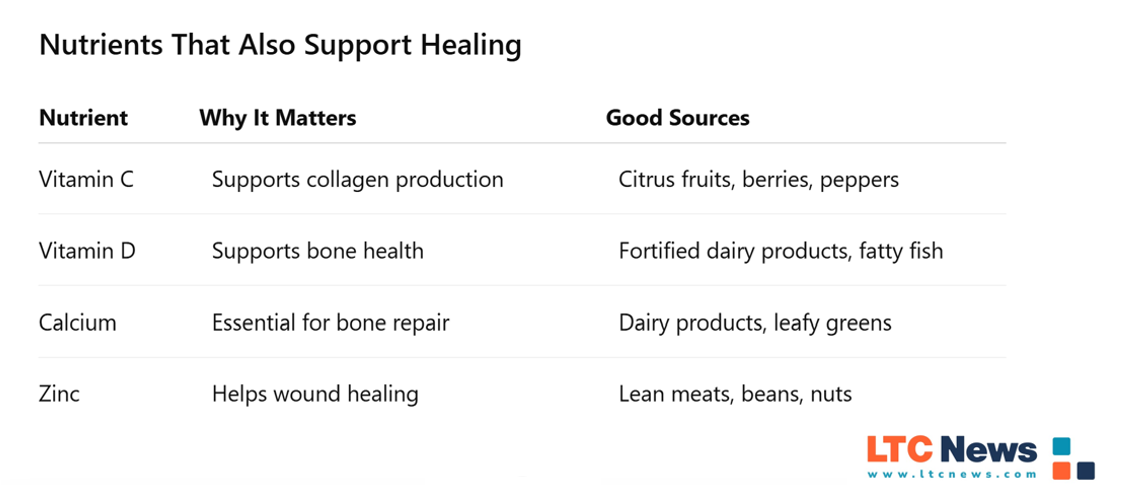
A balanced diet that includes lean protein, fruits, vegetables, whole grains, dairy products or fortified alternatives, and healthy fats provides nutrients needed for recovery. Protein, vitamin C, vitamin D, calcium, and zinc all play important roles in tissue repair, muscle rebuilding, and bone health.
How important is sleep during recovery?
Sleep is one of the body's most important healing tools. During deep sleep, the body repairs tissues, regulates inflammation, and supports immune function. Poor sleep may slow healing and increase pain sensitivity.
Why do older adults recover more slowly than younger people?
As people age, muscle mass naturally declines, bones become less dense, and tissue repair slows. Chronic medical conditions and multiple medications can also affect healing. Even a short period of inactivity may lead to noticeable muscle weakness, making rehabilitation especially important.
How can family caregivers support recovery after a fall?
Family caregivers often help with transportation, meal preparation, medication reminders, personal care, mobility assistance, household chores, and medical appointments. Caregivers should also watch for signs of depression, isolation, or declining mobility and seek professional assistance when additional support is needed.
How can someone lower the risk of another fall?
Reducing future fall risk involves several strategies, including staying physically active, improving strength and balance, reviewing medications with a physician, removing home hazards, installing grab bars where appropriate, improving lighting, and wearing supportive footwear.
How much protein should older adults eat while recovering?
The PROT-AGE Study Group recommends that many older adults recovering from illness or injury consume approximately 1.2 to 1.5 grams of protein per kilogram of body weight each day, although individual needs vary. Your physician or a registered dietitian can recommend an appropriate intake based on your health and recovery goals.
Should an older adult stay in bed after a fall?
Not usually. While brief rest may be necessary immediately after an injury, prolonged bed rest often leads to additional muscle loss, stiffness, and balance problems. Once approved by a physician, gentle movement and physical therapy generally support a faster and safer recovery.
Does Medicare pay for rehabilitation after a fall?
Medicare may cover medically necessary rehabilitation, physical therapy, skilled nursing care, or home health services under qualifying circumstances. Coverage depends on medical necessity and specific eligibility requirements.
When should someone consider Long-Term Care Insurance?
The best time to consider Long-Term Care Insurance is before significant health issues develop. Most people who purchase coverage do so between ages 47 and 67, when they are generally more likely to qualify medically and obtain more affordable premiums.
When should someone seek immediate medical attention after a fall?
Emergency medical evaluation is recommended after any fall involving a head injury, loss of consciousness, severe pain, inability to bear weight, obvious deformity, heavy bleeding, or confusion. People taking blood-thinning medications should contact a physician promptly after any head injury, even if symptoms initially appear mild.
Does Medicare pay for long-term care after an injury?
Generally, no. Medicare is designed to cover short-term medically necessary skilled care. It does not typically pay for ongoing custodial assistance with activities such as bathing, dressing, eating, transferring, or supervision because of cognitive impairment. Long-term care expenses are often paid through personal savings, Medicaid for those who qualify financially, or Long-Term Care Insurance.
What resources can help families during recovery?
Families recovering from a serious injury often benefit from professional home care, rehabilitation services, support groups, and educational resources. The LTC News Caregiver Directory helps families locate qualified home care agencies, assisted living communities, memory care providers, rehabilitation centers, and nursing homes nationwide. The LTC News Cost of Care Calculator also helps families understand the financial impact of long-term care should additional assistance become necessary.
How long does it usually take an older adult to recover after a fall?
Recovery depends on the severity of the injury and the person's overall health. Minor sprains may improve within a few weeks, while fractures, joint replacement surgery, or serious soft tissue injuries can require several months of rehabilitation. Following a physician's treatment plan, staying active within safe limits, and maintaining good nutrition can help support recovery.


Sponsored