Can You Get LASIK After 50? Aging Eyes, Cataracts, and Vision Risks Explained
About This Article
Many adults over 50 mistakenly assume laser eye surgery is no longer an option. Aging affects vision, and older adults may still qualify for LASIK or PRK when cataract surgery or refractive lens exchange becomes more appropriate.

Linda Maxwell
Linda Maxwell is a journalist who writes about aging, health, chronic illness, caregiving, and long-term care issues impacting older adults and their families.
Table of Contents
- LASIK After 50: Is It Still Possible?
- Why Vision Changes After 40
- LASIK, PRK, Cataract Surgery, and RLE Explained
- Dry Eye Problems Become More Common with Age
- Glaucoma Often Has No Early Symptoms
- Macular Degeneration Is a Major Threat to Vision After 50
- Diabetes Can Damage Vision Quietly
- Floaters, Flashes, and Retinal Detachment Warning Signs
- Vision Warning Signs Families Should Not Ignore
- When To Seek Immediate Medical Attention
- Vision Loss Can Affect Independence and Cognitive Health
- Better Vision Helps Support Aging in Place
- Why Long-Term Care Planning Still Matters
Night driving becomes stressful. Restaurant menus blur in dim lighting. Reading medication labels takes more effort. Maybe your adult children quietly notice scratches on the car or that you avoid driving after dark altogether.
For many older adults, changes in vision feel like an unavoidable part of aging. But modern eye care offers more options than many people realize.
Today, adults in their 50s, 60s, and beyond may still qualify for procedures like LASIK, PRK, cataract surgery, or refractive lens exchange (RLE), depending on overall eye health. The key is understanding that different procedures treat different parts of the eye—and that age alone rarely determines candidacy.
For families, declining eyesight is about more than inconvenience. Vision problems can increase fall risk, affect driving safety, reduce independence, and add caregiving pressures. In some cases, worsening eyesight becomes one of the earliest signs that an older adult may struggle to age safely at home.
LASIK After 50: Is It Still Possible?
Yes, some adults over 50 still qualify for LASIK or PRK. For many adults over 50, the main benefit of LASIK is clearer distance vision that can improve driving, daily independence, and overall quality of life while reducing dependence on glasses or contact lenses.
Eye surgeons typically evaluate:
- Prescription stability
- Corneal thickness
- Cataract development
- Tear production
- Retinal health
- Overall eye health
A healthy 58-year-old with stable vision and healthy corneas may still be a good LASIK candidate. However, after age 60, cataracts and lens changes increasingly make lens-based procedures like cataract surgery or RLE more appropriate than corneal laser surgery.
That distinction matters because LASIK reshapes the cornea, while cataract surgery and RLE replace the eye’s aging lens.
Why Vision Changes After 40
One of the earliest age-related vision changes is presbyopia. This occurs when the eye’s natural lens gradually stiffens, making it harder to focus on nearby objects. That is why reading glasses suddenly become necessary for many adults in their 40s.
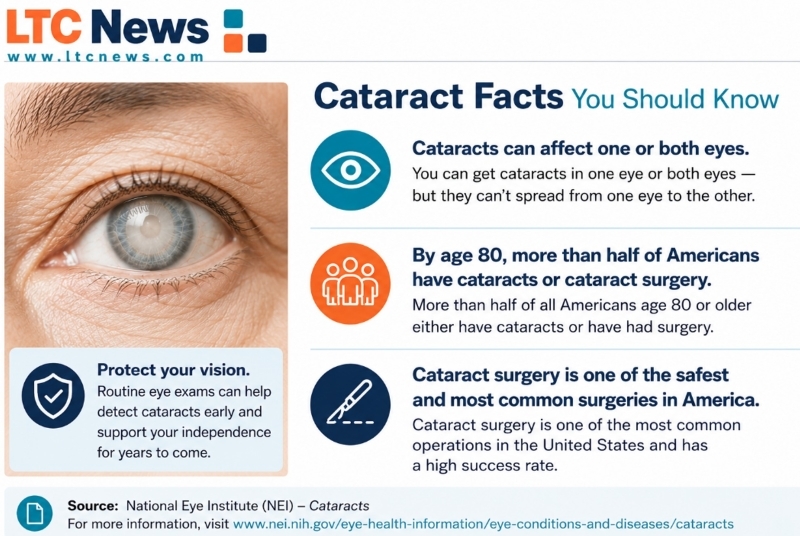
LASIK corrects refractive errors like nearsightedness and astigmatism by reshaping the cornea. However, it does not stop the lens itself from aging. Later in life, cataracts often become more of a problem. According to the National Eye Institute, more than half of Americans age 80 or older either have cataracts or have undergone cataract surgery.
There is little doubt that cataract surgery is very likely to improve a person’s vision, which can allow people to stay active and independent. If you can’t do things for yourself because you can't see well, it's easy to fall into a depression and withdraw from activities. — Dr. Thomas L. Steinemann, ophthalmologist and Professor of Ophthalmology at Case Western Reserve University in Cleveland, Ohio.
LASIK, PRK, Cataract Surgery, and RLE Explained
LASIK
LASIK reshapes the cornea to improve vision. Recovery is usually fast, with many patients noticing improvement within 24 to 48 hours.
PRK
PRK, or photorefractive keratectomy, also reshapes the cornea but does not create a corneal flap. Recovery takes longer than LASIK. Initial healing often requires three to seven days, while full visual stabilization may take one to three months.
PRK may be a safer option for adults with thinner corneas or surface irregularities.
PRK can be considered when corneal thickness or surface irregularities make LASIK less suitable. The recovery is longer, but the visual outcomes are comparable in the right candidate.
Both LASIK and PRK fall under modern laser vision correction, and the choice between them typically depends on corneal anatomy rather than age alone.
Monovision LASIK
Some adults choose monovision LASIK, where one eye is corrected for distance and the other for near vision.
Monovision can work very well for the right patient, but it requires careful testing beforehand because some people simply do not adapt comfortably. The Cleveland Clinic notes that doctors often recommend a trial period before permanent monovision procedures.
Some people have trouble adjusting, or can’t adjust at all, to using one eye for up-close focus and the other for far-away focus. — Cleveland Clinic’s monovision overview.
Cataract Surgery and RLE
Cataract surgery removes the eye’s clouded natural lens and replaces it with an artificial intraocular lens (IOL) designed to improve vision. Refractive lens exchange (RLE) works similarly but may be performed before cataracts become advanced.
Today’s lens implant options are far more advanced than many older adults realize. Some modern IOLs can improve distance vision, reduce dependence on reading glasses, and help correct astigmatism.
Dr. Sumitra Khandelwal, professor of ophthalmology at Baylor College of Medicine, discussed how newer intraocular lens technologies continue expanding vision correction options for older adults undergoing cataract surgery or refractive lens exchange.
Medicare generally covers medically necessary cataract surgery. However, patients often pay additional out-of-pocket costs for premium multifocal or toric lens upgrades that provide expanded vision correction benefits.
Dry Eye Problems Become More Common with Age
Dry eye becomes increasingly common after 50 and can affect laser surgery candidacy. LASIK may temporarily worsen dry eye symptoms because corneal nerves are affected during surgery. Some studies estimate 20% to 40% of patients experience increased dry eye symptoms after LASIK.
According to the American Academy of Ophthalmology, untreated dry eye can interfere with healing and surgical outcomes.
Glaucoma Often Has No Early Symptoms
Glaucoma remains one of the leading causes of blindness worldwide, especially among older adults. The condition damages the optic nerve, often slowly and painlessly. Many people experience no symptoms until vision loss has already occurred.
Risk factors include:
- Age
- Diabetes
- Family history
- High eye pressure
- African American or Hispanic heritage
While glaucoma damage cannot be reversed, early detection and treatment may significantly slow progression.
Macular Degeneration Is a Major Threat to Vision After 50
Age-related macular degeneration (AMD) is one of the leading causes of vision loss among older adults in the United States. AMD affects central vision, making activities like reading, driving, and recognizing faces increasingly difficult.
We are able to help patients much more effectively than we were only a few years ago. — Dr. Philip Ferrone, discussing advances in retinal treatment in Retina Today.
He added that newer treatments help many patients maintain independence and avoid vision loss.
Wet AMD may progress rapidly, but can sometimes be slowed with anti-VEGF injections. Dry AMD progresses more slowly and currently has no cure, though lifestyle changes and monitoring may help reduce progression risk.
Smoking remains one of the biggest preventable AMD risk factors.
Diabetes Can Damage Vision Quietly
Diabetic retinopathy develops when high blood sugar damages blood vessels inside the retina. Many adults experience few symptoms early on, which makes regular eye exams especially important for people with Type 2 diabetes.
Without treatment, diabetic retinopathy can eventually lead to blindness.
Floaters, Flashes, and Retinal Detachment Warning Signs
Many adults over 50 notice floaters or flashes of light as the eye’s vitreous gel changes with age. Often, these changes are harmless. However, sudden increases in floaters, flashing lights, or a dark curtain across vision may signal a retinal tear or retinal detachment.
Adults with severe nearsightedness are at increased risk of retinal detachment as they age.
Vision Warning Signs Families Should Not Ignore
Older adults experiencing worsening vision may:
- Avoid driving at night
- Fall more frequently
- Miss medication instructions
- Squint constantly
- Withdraw from hobbies or social activities
- Develop new dents or scratches on the car
According to the Centers for Disease Control and Prevention, falls remain the leading cause of injury-related death among adults 65 and older. Vision impairment substantially increases fall risk.
When To Seek Immediate Medical Attention
Some eye symptoms require emergency evaluation.
Seek immediate care for:
- Sudden vision loss
- Flashing lights
- Severe eye pain
- Sudden large increases in floaters
- A curtain or shadow across vision
- Sudden double vision
These symptoms may signal retinal detachment, glaucoma emergencies, stroke, or other serious medical conditions.
Vision Loss Can Affect Independence and Cognitive Health
Vision problems affect much more than eyesight. Poor vision can contribute to falls, medication mistakes, driving accidents, depression, isolation, reduced mobility, and increased caregiving burdens.
Research published in JAMA Ophthalmology has also identified associations between vision impairment and increased dementia risk.
According to research highlighted by UW Medicine, vision impairment may contribute to reduced social engagement and physical activity, both important factors in healthy aging and dementia prevention.
Better Vision Helps Support Aging in Place
Clearer vision helps many older adults remain independent longer. Better eyesight supports safer driving, medication management, cooking safety, mobility, and social engagement.
Families can also improve safety by:
- Increasing home lighting
- Removing loose rugs
- Using larger medication labels
- Adding contrasting stair markings
- Scheduling regular eye exams
These changes may help reduce injuries and caregiving stress.
Why Long-Term Care Planning Still Matters
For most older adults, independence is not just a practical matter — it is deeply personal. The ability to drive to a doctor's appointment, read a grandchild's birthday card, or safely navigate the kitchen after dark represents far more than convenience. It represents dignity and self-sufficiency. Vision loss, when left unaddressed, has a way of quietly dismantling that independence piece by piece. Night driving becomes frightening, then avoided altogether. Familiar spaces grow hazardous as contrast fades and depth perception dims. Medications get misread. Meals become harder to prepare safely. Each limitation may seem small on its own, but together they add up to a life that requires increasing amounts of outside help.
That help, once needed, often begins with a family, a spouse managing medications, an adult child taking over driving, a neighbor checking in more frequently. But as vision-related limitations compound, the need for more structured support can grow.
Professional home care aides, assisted living communities, or memory care settings sometimes become necessary not because of cognitive decline or major illness, but because untreated sensory loss made living safely alone no longer realistic. It is a trajectory that comprehensive vision care — and early, honest conversations about eye health — can often slow or redirect entirely.
Remember, severe vision loss alone may not require long-term care, but vision decline often overlaps with mobility problems, frailty, chronic illness, or cognitive decline that eventually increase care needs.
Medicare generally covers medically necessary cataract surgery but does not pay for most long-term custodial care services, including extended in-home assistance, assisted living, memory care, or nursing home care.
Long-Term Care Insurance will provide tax-free benefits to ensure access to quality care services, even at home. Generally, you add an LTC policy before you retire, most people do so between the ages of 47 and 67.
If you are seeking help for a loved one, you can search from over 80,000 caregivers and long-term care facilities with the free LTC News Caregiver Directory.
Frequently Asked Questions
What is the biggest benefit of LASIK for older adults?
For many adults over 50, the main benefit of LASIK is clearer distance vision that improves driving, daily independence, and quality of life while reducing dependence on glasses or contact lenses.
What eye conditions become more common after age 50?
Several age-related eye conditions become more common after 50, including cataracts, glaucoma, macular degeneration, dry eye syndrome, diabetic retinopathy, and retinal detachment risks.
Why do older adults suddenly need reading glasses?
Many adults develop presbyopia after age 40. This happens when the eye’s natural lens stiffens over time, making it harder to focus on close objects.
What is refractive lens exchange (RLE)?
Refractive lens exchange (RLE) is a procedure similar to cataract surgery where the eye’s natural lens is replaced before cataracts become severe. It may improve distance vision and reduce dependence on reading glasses.
What are the warning signs of serious eye problems?
Symptoms requiring immediate medical attention may include:
- Sudden vision loss
- Flashing lights
- Severe eye pain
- Sudden floaters
- A curtain or shadow across vision
- Sudden double vision
These symptoms may signal retinal detachment, glaucoma emergencies, or stroke.
Does Medicare cover LASIK or cataract surgery?
Medicare generally covers medically necessary cataract surgery. However, Medicare typically does not cover elective LASIK procedures and may not fully cover premium multifocal or toric lens upgrades.
What is the difference between LASIK and cataract surgery?
LASIK reshapes the cornea to improve vision, while cataract surgery removes the eye’s clouded natural lens and replaces it with an artificial intraocular lens (IOL).
Can Long-Term Care Insurance help if vision loss contributes to care needs?
Yes. Long-Term Care Insurance provides tax-free benefits that can help pay for quality care services at home, assisted living, memory care, or nursing homes if aging, frailty, or chronic health conditions eventually require long-term support.
Can vision loss affect cognitive health?
Research published in JAMA Ophthalmology has identified associations between vision impairment and increased dementia risk, social isolation, and reduced physical activity in older adults.
Can poor vision increase fall risk in older adults?
Yes. Vision impairment significantly increases the risk of falls, injuries, medication mistakes, and driving accidents among older adults.
Does LASIK prevent cataracts?
No. LASIK reshapes the cornea to improve refractive errors, but it does not stop the eye’s natural lens from aging or prevent cataracts from developing later in life.
What can families do to help protect an older adult’s vision?
Families can help by encouraging regular eye exams, improving home lighting, removing loose rugs, increasing contrast on stairs, and monitoring for changes in driving ability or medication management.
How does vision loss affect independence?
Untreated vision problems can make driving, cooking, medication management, mobility, and daily activities more difficult. Over time, vision loss may increase caregiving needs and reduce the ability to age safely at home.
Can you still get LASIK after age 50?
Yes. Many adults over 50 may still qualify for LASIK or PRK if they have healthy corneas, stable prescriptions, and limited cataract development. Eye surgeons evaluate overall eye health rather than age alone.

Sponsored