Can Massage Chairs Relieve Chronic Pain After 50? Benefits, Risks, and What to Know

About This Article
Massage chairs can help reduce muscle tension, improve circulation, and ease chronic pain in adults over 50. While not a replacement for medical care, they may support mobility, comfort, and independence when used safely as part of a broader pain management plan.

Anna Marino
Anna Marino is a seasoned writer specializing in topics related to family, aging, and lifestyle in retirement. She shares advice on intergenerational relationships and strategies for enjoying retirement.
Table of Contents
- Why Chronic Pain Increases After 50
- Can Massage Therapy Help?
- Where Massage Chairs Fit In
- Why This Matters to You
- Are Massage Chairs Safe for Older Adults?
- What Massage Chairs Can—and Cannot—Do
- Bigger Issue: Pain, Mobility, and Long-Term Care
- What Medicare Covers—and What It Doesn’t
- Long-Term Care in Canada
- Where Long-Term Care Insurance Fits
- Alternatives You Should Consider for Managing Pain
- Understanding the Cost—and the Bigger Financial Picture
- Comfort Today, Independence Tomorrow
Do you think you are the only one waking up stiff in the morning? Your back tightens before you even get out of bed. Maybe your shoulders ache, or your legs feel heavy after sitting too long. You think to yourself, “Wow, I feel like I'm 80, but I'm 55, will this feel like this forever?"
Whether it’s the heavy ache in your shoulders or the stubborn pull in your lower back, if you are like many people after age 50, you may feel like your body is aging at double speed. But there is a significant difference between "getting older" and living with chronic tension.
You don't have to "live with it," It’s time for a second opinion on what your future looks like because you may have options to make you feel better.
Why Chronic Pain Increases After 50
As you age, your body changes in ways that directly affect how you feel each day. Muscle strength declines, joints wear down, and recovery takes longer. Over time, these changes can lead to persistent discomfort that interferes with daily life.
Key contributors include:
- Muscle loss (sarcopenia): Weakens support around joints
- Joint degeneration: Osteoarthritis becomes more common
- Reduced circulation: Slows muscle recovery
- Loss of flexibility: Increases stiffness and injury risk
The National Institute on Aging notes that chronic pain is one of the most common conditions affecting older adults, contributing to reduced mobility and increased risk of disability. As we age, our muscles tend to lose mass and strength, leading to stiffness and reduced mobility. Staying active and maintaining muscle function is key to preserving independence.
As we age, our muscles get tighter, our tendons and ligaments become less flexible. — Dr. Donald Ford, a family medicine physician with the Cleveland Clinic.
Left unmanaged, pain can limit movement, which accelerates physical decline and raises your risk of needing long-term care.
Can Massage Therapy Help?
Massage therapy is often recommended as part of a broader approach to managing chronic pain. It targets muscles and soft tissue to improve circulation and reduce tension, helping you feel more relaxed and mobile.
According to the Mayo Clinic, getting a massage may:
- Reduce muscle tension
- Improve circulation
- Promote relaxation
- Enhance overall well-being
Geriatric care specialists often emphasize that consistent, low-impact therapies—such as massage, stretching, and guided movement—can help reduce chronic pain and improve daily function when used together.
Through techniques like manual therapy, stretching, and strengthening exercises, physical therapists can help alleviate pain and improve the overall quality of life for older adults. — National Aging Resource Center.
However, regular sessions can be costly and difficult to maintain over time, especially if mobility or transportation becomes a challenge.
Where Massage Chairs Fit In
Massage chairs offer a way to bring some of these benefits into your home. Instead of relying on appointments, you can use them on your schedule, which makes consistency easier.
Many modern chairs are designed to simulate aspects of professional massage using built-in technology, including:
- Zero-gravity positioning: Zero-gravity multi-function massage chair helps reduce pressure on the spine
- Body scanning technology: Adjusts massage to your body shape
- Air compression systems: Supports circulation
- Heat therapy: Relaxes tight muscles
- Foot rollers: Target lower body fatigue
These features help create a more personalized and comfortable experience.
Why This Matters to You
Consistency is one of the most important factors in managing chronic pain. Having access to a tool at home can make it easier to stay on track.
- You can use it daily
- You control intensity and duration
- It may help maintain comfort and mobility
Ask yourself: Are you managing your pain consistently—or only reacting when it becomes unbearable?
Are Massage Chairs Safe for Older Adults?
Safety should always come first, especially when underlying health conditions are involved. Massage chairs can be helpful, but they are not appropriate for everyone.
Before using one, understand the potential risks and take proper precautions.
You should consult a physician if you have:
- Severe osteoporosis
- Blood clotting conditions
- Cardiovascular disease
- Neuropathy
- Recent surgery or injuries
The Arthritis Foundation advises that massage can benefit some individuals, but excessive pressure or improper use may worsen symptoms.
To reduce risk, follow these basic safety practices:
- Use moderate settings
- Limit session length
- Ensure stable placement
- Be cautious getting in and out
What Massage Chairs Can—and Cannot—Do
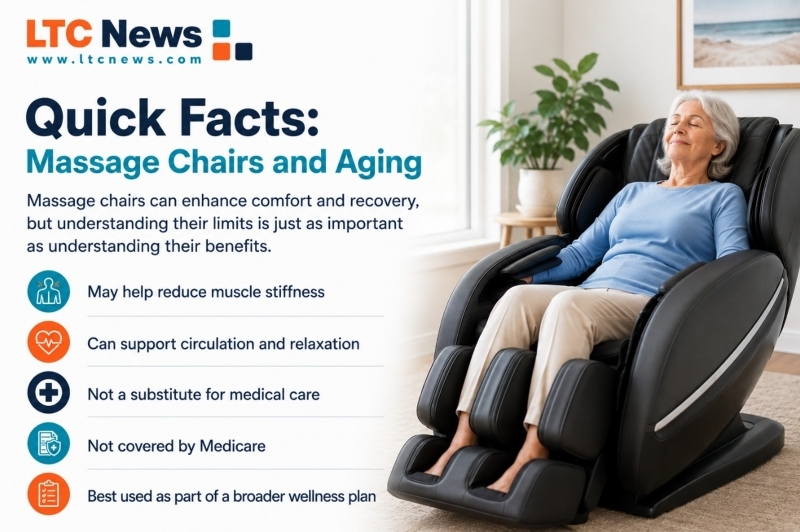
Massage chairs can provide comfort and short-term relief, but they are not a cure for chronic conditions. Understanding both their benefits and limitations helps set realistic expectations.
They may help with:
- Temporary pain relief
- Reduced muscle tension
- Improved circulation
- Relaxation and stress reduction
However, they also have limitations:
- They do not replace medical care
- Results vary depending on the condition
- They can be expensive
- They require space in your home
They work best as part of a broader strategy.
Key Health Benefits of Massage Chairs
- Chronic Back and Neck Pain: By targeting the paraspinal muscles, massage chairs help alleviate tension that contributes to lower back pain and "tech neck." Heat functions also help increase blood flow to stiff tissues.
- Stress and Anxiety: Mechanical massage triggers the release of endorphins and dopamine while lowering cortisol levels. This shift helps the body move from a "fight or flight" state to a "rest and digest" state.
- Poor Circulation: Many chairs feature "Zero Gravity" positioning, which elevates the legs above the heart, assisting with venous return and reducing the workload on the heart, potentially reducing swelling (edema) in the lower extremities.
- Tension Headaches: By relaxing the muscles in the neck, shoulders, and base of the skull, massage chairs can reduce the frequency and intensity of headaches caused by muscle tightness.
- Post-Workout Recovery: Compression therapy and percussive rolling help flush lactic acid from muscles, reducing Delayed Onset Muscle Soreness (DOMS) and improving flexibility.
- Sleep Disorders: Regular use before bed can help regulate the circadian rhythm by lowering the heart rate and inducing physical relaxation, making it easier to fall into a deep sleep.
Bigger Issue: Pain, Mobility, and Long-Term Care
Chronic pain affects more than how you feel—it affects how you live. It can slowly take away the routines and independence you once took for granted.
When your pain limits movement, it often leads to a gradual loss of strength, balance, and confidence. Over time, this can increase your need for help with everyday activities. As we get older, our need for help with everyday living activities increases. We become dependent on others, or we must pay for professional caregivers to assist, which is costly unless you have Long-Term Care Insurance.
Managing pain and maintaining mobility can help you:
- Stay independent longer
- Reduce caregiver burden
- Delay the need for extended care
What Medicare Covers—and What It Doesn’t
In the United States, many people assume health insurance will cover most care needs as they age. In reality, coverage is limited. Medicare only covers short-term skilled care following a qualifying hospital stay. It does not pay for ongoing custodial care or supervision related to aging or chronic illness.
Key limitations include:
- Coverage is limited to up to 100 days under strict conditions
- No coverage for long-term custodial care
- No coverage for massage chairs
Understanding these gaps is essential for planning ahead.
Long-Term Care in Canada
The Canada Health Act ensures that medically necessary hospital and physician services are free, and long-term care is considered an "extended health service" and is not fully covered by the federal government.
In Canada, long-term care is primarily a provincial and territorial responsibility. In all provinces, the government subsidizes the cost of care (nursing, therapy, and medical supplies), but residents are typically responsible for "room and board" (accommodation and meals).
Care recipients in Canada will pay the full cost of a private facility. Private or semi-private rooms require unsubsidized daily premiums above the standard rate. For in-home care, public support is often limited; 24/7 professional care is generally an out-of-pocket or private Long-Term Care Insurance expense.
Where Long-Term Care Insurance Fits
Because of these coverage gaps, planning becomes critical. Long-Term Care Insurance in both the U.S. and Canada is designed to help cover services that Medicare or, in Canada, the government does not.
A policy may help pay for:
- In-home care
- Assisted living
- Memory care
- Nursing home services
Benefits are typically tax-free and can reduce reliance on savings or family caregiving. Without Long-Term Care Insurance, many families must rely on personal savings or unpaid care from loved ones, which can create financial and emotional strain.
Planning now, before you start getting older and experiencing chronic health and age issues, gives you more choices and better access to coverage.
Alternatives You Should Consider for Managing Pain
Massage chairs are just one option. A well-rounded approach to managing pain often includes multiple strategies working together.
You may benefit from:
- Physical therapy
- Regular exercise
- Stretching programs
- Heat and cold therapy
- Occupational therapy
Combining these approaches can improve results and support long-term mobility.
Understanding the Cost—and the Bigger Financial Picture
Massage chairs can range from a few hundred to several thousand dollars. While that may seem significant, it is modest compared to the cost of long-term care services.
The LTC News Cost of Long-Term Care Services Calculator is one of the most accurate tools available. It surveys providers nationwide, incorporates real Long-Term Care Insurance claims data, and projects future costs based on labor and economic trends.
Understanding these costs early allows you to make informed decisions before care becomes urgent. Being proactive with your health may delay your need for help and improve your quality of life and independence.
Comfort Today, Independence Tomorrow
Massage chairs may help reduce discomfort and support relaxation. For some people, they offer a convenient way to manage daily aches and maintain mobility. But they are only one piece of the puzzle.
Your long-term independence depends on staying active, managing chronic conditions, and planning for future care needs well before you need them.
Ask yourself: Are you taking steps today to protect your health, independence, and finances in the future?
Frequently Asked Questions
Are expensive massage chairs worth the cost?
That depends on your health needs, frequency of use, and budget. Higher-end chairs often include more customization, better ergonomics, and additional therapy features. However, even premium massage chairs cost far less than long-term care services or ongoing in-home assistance.
Can massage chairs help reduce chronic pain after 50?
Massage chairs may help ease muscle tension, stiffness, and everyday aches associated with aging. Many people use them to support relaxation, circulation, and comfort at home. They are not a cure for chronic pain but can be part of a broader wellness and mobility plan.
Are massage chairs good for arthritis and stiffness?
Some people with arthritis or age-related stiffness report temporary relief from gentle massage and heat therapy. However, excessive pressure may worsen symptoms for some individuals. Moderate settings are usually safest.
Can massage chairs replace physical therapy or medical treatment?
No. Massage chairs are not a substitute for medical care, physical therapy, or physician-directed treatment. They may provide temporary comfort and relaxation but should be used alongside proper medical guidance when chronic pain or mobility issues are involved.
Do massage chairs improve circulation?
Some massage chairs use air compression systems, heat therapy, and zero-gravity positioning that may help promote circulation and reduce muscle tightness. Improved blood flow can help support relaxation and recovery.
Are massage chairs safe for older adults?
Massage chairs are generally safe for many healthy adults when used properly. However, you should speak with your physician before using one if you have osteoporosis, blood clotting disorders, neuropathy, cardiovascular disease, recent surgery, or other serious medical conditions.
Can massage chairs help with sleep problems?
Relaxation and reduced muscle tension may help some people unwind before bed and improve sleep quality. Massage therapy may help lower stress and encourage relaxation, which can support healthier sleep patterns.
What features should older adults look for in a massage chair?
Helpful features may include:
- Zero-gravity positioning
- Adjustable intensity settings
- Heat therapy
- Easy-to-use controls
- Foot and calf massage
- Body scanning technology
- Easy entry and exit design
Does Medicare pay for massage chairs?
No. Medicare does not cover massage chairs because they are considered personal comfort items rather than medically necessary durable medical equipment.

Sponsored