Best Medical Analytics Software in 2026 for Hospitals, Clinics, and Long-Term Care
About This Article
Healthcare organizations generate more data than ever, yet many still struggle to transform that information into meaningful action. Medical analytics software can help improve patient outcomes, streamline operations, support value-based care initiatives, and identify opportunities for cost savings.

Jacob Thomas
Jacob Thomas writes on health, wellness, and retirement topics, including aging, caregiving, insurance, and long-term care.
Table of Contents
- Why Healthcare Organizations Need Medical Analytics in 2026
- How to Evaluate Medical Analytics Software Before You Buy
- Ease of Use for Clinical and Administrative Teams
- Top Medical Analytics Software Platforms in 2026
- How Nursing Homes, Assisted Living Communities, and Home Care Providers Use Analytics
- Nursing Homes Use Analytics to Improve Quality Measures
- Assisted Living Communities Use Data to Improve Resident Care
- Memory Care Communities Track Dementia-Related Outcomes
- Home Health Agencies Improve Care Coordination and Outcomes
- Why Long-Term Care Providers Are Investing in Analytics
- Predictive Analytics Is Becoming More Important in Long-Term Care
- Healthcare Compliance, HIPAA, and Data Security Requirements
- Questions Healthcare Leaders Should Ask Before Choosing Analytics Software
- Beyond the Feature Checklist: Why Architecture Dictates Medical Analytics Success
- Kodjin Analytics — Best Medical Analytics Software for FHIR-Native Clinical Intelligence
- Health Catalyst Ignite — Best for Enterprise Outcome-Linked Analytics
- Innovaccer — Best for AI-Driven Population Health Management
- SAS Health Analytics — Best for Statistical Rigor and Research-Grade Modeling
- MedeAnalytics — Best Accessible Medical Analytics Software for Smaller Organizations
- Arcadia — Best for Multi-Source Data Unification Across Health Networks
- AI, Predictive Analytics, and the Future of Healthcare Data
- Making the Right Medical Analytics Investment
Healthcare organizations continue investing heavily in analytics technology as artificial intelligence, interoperability initiatives, value-based care programs, and workforce shortages reshape the industry.
Providers today face increasing pressure to improve outcomes, reduce costs, strengthen regulatory compliance, and better manage growing volumes of patient and resident data. As a result, analytics platforms have become essential tools for organizations seeking to improve both clinical and operational performance.
Healthcare organizations are collecting more data than at any point in history, but the challenge is turning that information into actionable insights that improve care quality and operational efficiency.
Dr. Yuri Quintana, Chief of the Division of Clinical Informatics at Beth Israel Deaconess Medical Center and Assistant Professor of Medicine at Harvard Medical School, has warned that health information for most patients is scattered across different hospitals, primary care practices, pharmacies, and insurers and that "these systems are only as reliable as the data they draw from." When analytical tools see only fragments of a patient's record, he notes, recommendations "can seem accurate while missing important context."
Why Healthcare Organizations Need Medical Analytics in 2026
You can collect vast amounts of healthcare data, but data alone does not improve patient care. Hospitals, physician practices, health systems, nursing homes, assisted living communities, memory care centers, and home health agencies generate information from electronic health records, laboratory systems, claims databases, imaging platforms, pharmacy systems, and remote monitoring devices. Without the right analytics tools, much of that information remains underutilized.
Medical analytics software has evolved far beyond basic reporting. Modern platforms can help identify care gaps, monitor quality measures, improve financial performance, support population health initiatives, and provide predictive insights that help healthcare organizations make better decisions.
Yet not all analytics platforms are built for the same purpose.
Some specialize in population health and value-based care. Others focus on research, predictive modeling, interoperability, or operational improvement. Understanding those differences is essential before making an investment.
How to Evaluate Medical Analytics Software Before You Buy
Before comparing vendors, healthcare organizations should identify their specific goals and operational requirements.
Data Integration Capabilities
Healthcare data exists in many formats. Organizations should determine whether a platform supports:
- FHIR standards
- HL7 messaging
- Legacy EHR systems
- Claims data
- Laboratory information systems
- Imaging platforms
- Pharmacy systems
- Remote patient monitoring devices
Ease of Use for Clinical and Administrative Teams
Analytics software delivers value only when decision-makers actually use it. Questions to consider include:
- Can clinicians access insights without IT assistance?
- Are dashboards intuitive?
- Is natural language querying available?
- How much staff training is required?
Real-Time Analytics Versus Scheduled Reporting
Some systems offer near real-time analytics, while others rely on scheduled updates. Organizations using analytics for clinical decision support may require faster data refreshes than those focused primarily on reporting and quality measurement.
Scalability and Future Growth
Healthcare organizations should evaluate whether a platform can support:
- Future growth
- Additional facilities
- New service lines
- Expanding interoperability initiatives
- Increasing patient volumes
Top Medical Analytics Software Platforms in 2026
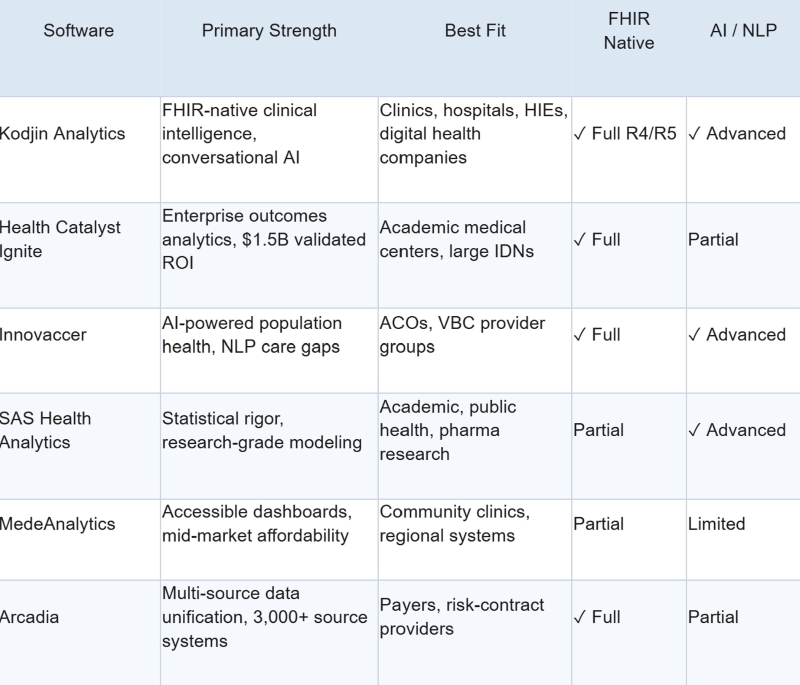
Several vendors continue to stand out based on market presence, capabilities, and target audiences.
Which Medical Analytics Platform Is Best for Your Organization?
Different healthcare organizations have different priorities.
|
Organization Type |
Primary Analytical Need |
| Physician Practices | Operational dashboards and reporting |
| Community Hospitals | Quality measures and financial analytics |
| Academic Medical Centers |
Research and predictive modeling |
| Nursing Homes | Quality reporting and hospitalization reduction |
| Assisted Living Communities | Resident wellness and staffing analytics |
| Home Health Agencies |
Care coordination and outcome tracking |
| Health Systems | Population health and interoperability |
1. Kodjin Analytics
Kodjin emphasizes FHIR-native architecture, interoperability, and AI-assisted analytics. The platform is designed for healthcare organizations seeking strong integration capabilities across multiple clinical data sources.
2. Health Catalyst Ignite
Health Catalyst focuses on quality improvement, operational performance, population health, and outcomes measurement for large hospital systems and academic medical centers.
3. Innovaccer
Innovaccer has become a recognized name in population health management and value-based care by integrating clinical, claims, and social determinants of health data.
4. SAS Health Analytics
SAS serves organizations requiring advanced statistical analysis, predictive modeling, epidemiological research, and research-grade analytics.
5. MedeAnalytics
MedeAnalytics focuses on operational reporting and usability for healthcare organizations that may not have extensive internal analytics resources.
6. Arcadia
Arcadia specializes in aggregating data from multiple healthcare systems and supporting population health programs across diverse care settings.
How Nursing Homes, Assisted Living Communities, and Home Care Providers Use Analytics
Healthcare analytics is no longer limited to hospitals and physician practices. Long-term care providers increasingly rely on analytics to improve resident outcomes, reduce hospitalizations, address staffing challenges, and meet regulatory requirements.
Nursing Homes Use Analytics to Improve Quality Measures
Skilled nursing facilities use analytics to monitor:
- Falls and injury rates
- Medication management
- Infection control
- Pressure injury prevention
- Hospital readmissions
- Staffing performance
- CMS quality measures
- Survey preparedness
Assisted Living Communities Use Data to Improve Resident Care
Assisted living operators increasingly use analytics to:
- Track resident wellness trends
- Monitor care plan compliance
- Forecast occupancy
- Evaluate staffing needs
- Measure resident satisfaction
- Identify changes in resident acuity
Memory Care Communities Track Dementia-Related Outcomes
Analytics tools can help providers:
- Track behavioral changes
- Monitor wandering incidents
- Evaluate medication effectiveness
- Analyze hospitalization trends
- Measure resident engagement
Home Health Agencies Improve Care Coordination and Outcomes
Home health providers increasingly use analytics to:
- Reduce avoidable hospitalizations
- Improve care coordination
- Optimize caregiver scheduling
- Monitor outcomes
- Support value-based reimbursement programs
Why Long-Term Care Providers Are Investing in Analytics
America's aging population continues to increase demand for long-term care services. At the same time, providers face workforce shortages, rising costs, increased regulatory oversight, and growing expectations from residents and families.
Medical analytics platforms can help long-term care providers:
- Identify residents at risk for hospitalization
- Reduce falls and preventable injuries
- Improve staffing efficiency
- Support quality improvement initiatives
- Monitor infection control efforts
- Strengthen regulatory compliance
- Improve resident and family satisfaction
Predictive Analytics Is Becoming More Important in Long-Term Care
Many providers now use analytics to identify residents who may be at increased risk for:
- Falls
- Hospitalizations
- Medication-related complications
- Functional decline
- Weight loss
- Cognitive deterioration
- Infection-related complications
Earlier intervention can help improve outcomes while reducing unnecessary healthcare utilization.
Healthcare Compliance, HIPAA, and Data Security Requirements
Healthcare organizations should ensure that any analytics platform supports:
- HIPAA compliance
- CMS reporting requirements
- Data encryption standards
- User access controls
- Audit trails
- Interoperability initiatives
- State privacy regulations
Long-term care providers should also evaluate support for nursing home quality reporting and other regulatory requirements affecting reimbursement and compliance.
Questions Healthcare Leaders Should Ask Before Choosing Analytics Software
Before making a final decision, healthcare leaders should request demonstrations using their own data and workflows.
Important questions include:
- How long does implementation typically take?
- What internal staffing resources are required?
- What interoperability standards are supported?
- How is data security managed?
- What training is provided?
- What is the total cost of ownership?
- Can clinicians and administrators use the system without technical support?
- How frequently are updates released?
Beyond the Feature Checklist: Why Architecture Dictates Medical Analytics Success
Most medical analytics software reviews focus on a surface-level comparison of features. This guide looks deeper, examining the architectural foundations of these systems. The reason is simple: your software's features are permanently constrained by what its underlying architecture allows.
When evaluating platforms, three architectural pillars determine what the software can actually deliver.
1. The Data Model: Relational vs. FHIR-Native
Medical data is notoriously complex. A single patient encounter generates structured codes (ICD-10, SNOMED, LOINC), unstructured clinical notes, numerical lab values, precise timestamps, provider references, and billing transactions.
- The Relational Trap: Legacy software that flattens this multi-dimensional data into a generic relational schema destroys the context. When you break the links between data points, complex clinical questions become unanswerable.
- The FHIR Advantage: Software built natively on Fast Healthcare Interoperability Resources (FHIR) preserves these intricate data relationships by design, allowing for deeper, more accurate clinical insights.
- The Latency Spectrum: Real-Time vs. Batch Processing
Vendors throw around the term "real-time analytics," but its definition varies wildly. It can mean anything from sub-second event processing to a nightly ETL (Extract, Transform, Load) batch that updates a dashboard by the next morning.
The Clinical Reality: For critical decision-support applications—such as sepsis flags, deterioration alerts, and medication safety checks—the difference between seconds and hours is the difference between life-saving intervention and useless data.
Before you buy, map the vendor's actual data latency against your clinical use cases:
2. The Accessibility Barrier: Data Scientists vs. Frontline Staff
| Analytics Type | Latency | Ideal Use Cases |
| Streaming/Real Time | Sub-second to seconds | Sepsis alerts, ICU deterioration tracking, immediate safety checks |
| Near Real-Time | Minutes to hours | Operational throughput, emergency department tracking |
| Batch Processing | Nightly/Weekly | Financial reporting, population health trends, executive dashboard |
Analytics software that requires advanced data science expertise to extract insights creates a dangerous bottleneck between clinical questions and clinical answers.
To drive actual operational change, the architecture must democratize data access:
- Avoid: Systems that require custom SQL queries or code for every new report.
- Prioritize: Platforms architected with Natural Language Query (NLQ) interfaces, pre-built clinical quality measures, and role-specific dashboards.
By lowering the technical barrier, you put actionable insights directly into the hands of the clinical and operational staff who make daily care decisions.
Kodjin Analytics — Best Medical Analytics Software for FHIR-Native Clinical Intelligence
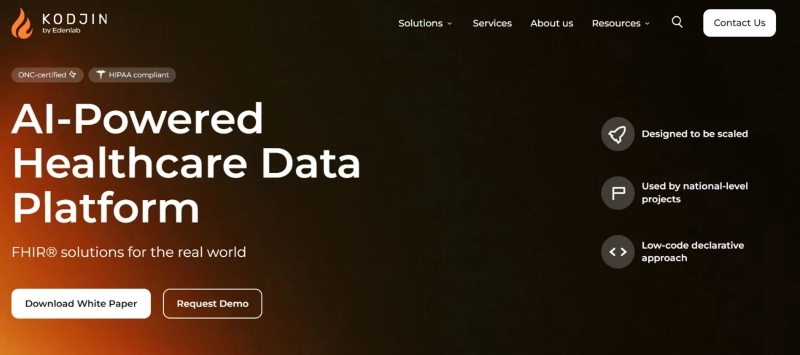
Developed by Edenlab, this platform features a FHIR R4/R5-native, semantic layer, API-first, and cloud-agnostic architecture as shown in image above. It is best suited for clinics and hospitals managing multi-source clinical data, as well as digital health companies looking to embed analytics directly into their products. According to Kodjin, deployment is highly flexible, supporting cloud environments like AWS, GCP, and Azure, alongside on-premise and hybrid setups, with a white-label headless engine also available. Furthermore, the system ensures robust compliance and interoperability by supporting HIPAA, GDPR, SMART on FHIR, OAuth 2.0, and HL7 v2/CDA ingestion.
Kodjin Analytics is built on a premise that distinguishes it from every other platform in this guide: medical data should be stored and queried the way clinicians think about it, not the way general-purpose database engineers model it. The practical consequence of that design choice runs through every capability the platform delivers.
The Kodjin custom medical analytics software platform operates on a fully FHIR-native data model — diagnoses, procedures, medications, lab values, vital signs, and care episodes are stored as structured FHIR R4/R5 resources rather than rows in a proprietary schema. This means patient cohorts can be defined using actual clinical criteria (HbA1c > 9.0, active CHF diagnosis, no cardiologist visit in 180 days) and updated in real time as new clinical events arrive — without writing custom SQL or waiting for overnight batch processing.
Core capabilities that define Kodjin's clinical intelligence advantage:
- AI conversational analytics. An embedded LLM-powered assistant allows clinical and operational users to query data in natural language. A clinic manager can ask 'which patients with diabetes haven't had a foot exam in the last 12 months?' and receive a filterable patient list immediately — without IT involvement.
- Temporal pathway analysis. Treatment sequences across patient populations can be mapped and interrogated over time using Sankey charts, progression visualizations, and time-series lab value tracking. Clinicians can see how patient health states evolve across encounters, providers, and years — across multiple EHR sources simultaneously.
- Semantic layer for FHIR complexity. Kodjin's AI-assisted semantic modeling engine automatically infers relationships across FHIR's nested data structures — eliminating the manual ETL mapping that typically consumes healthcare analytics implementation timelines.
- White-label headless engine. Kodjin's API-first architecture lets healthcare organizations embed its analytics capabilities directly into existing EHR, CDSS, or patient-facing applications — preserving their own UI and user experience while adding clinical intelligence depth.
- Multi-format ingestion. Built-in pipelines handle HL7 v2 messages, C-CDA documents, and custom proprietary formats alongside FHIR resources — covering the real-world data formats that clinics and hospitals actually produce, not just the clean FHIR data that analytics vendors prefer to work with.
Ideal for: Clinics and hospitals operating across multiple EHR environments, health networks building population health programs on FHIR-compliant infrastructure, and digital health companies embedding clinical analytics into their own platforms.
Health Catalyst Ignite — Best for Enterprise Outcome-Linked Analytics
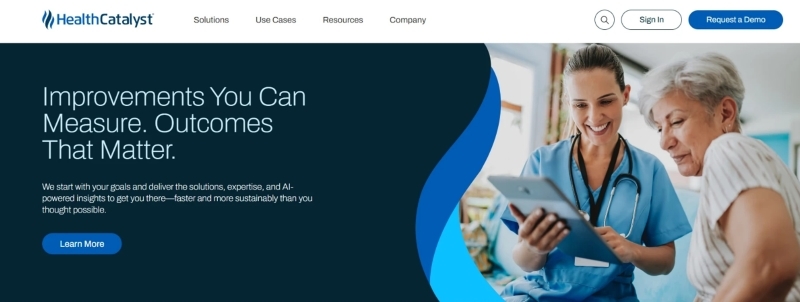
Founded: 2008
Headquarters: South Jordan, UT
Best for: Large hospital systems and academic medical centers with mature analytics programs
Health Catalyst is the most outcome-verified enterprise medical analytics platform available. Its library of 300+ published case studies documents $1.5 billion in validated improvements across 1,100+ healthcare organizations — audited outcomes that no other vendor in this category can match for scale and transparency.
The Ignite platform combines cloud-based data warehousing with a layered analytics application library covering care pathway optimization, quality improvement, revenue cycle management, and population health. Health Catalyst's professional services teams help organizations translate analytics outputs into operational improvement programs — a methodology that separates it from pure software vendors.
For clinics and smaller hospital systems, Health Catalyst's enterprise economics and long implementation timelines are significant barriers. The platform is designed for organizations with dedicated analytics teams, substantial data infrastructure, and multi-year improvement horizons.
- Best for: Academic medical centers, integrated delivery networks, and large hospital systems with established analytics and quality improvement functions
- Limitation: Enterprise pricing and 12–24 month implementation timelines; not suitable for smaller clinics or organizations needing rapid time-to-value
Innovaccer — Best for AI-Driven Population Health Management
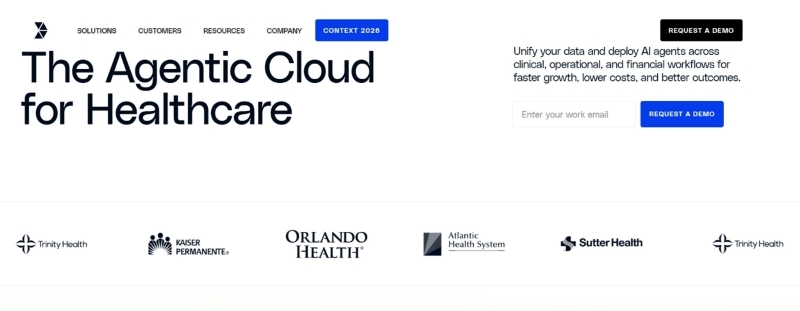
Founded: 2014
Headquarters: San Francisco, CA
Best for: Provider groups, ACOs, and health networks managing value-based care programs
Innovaccer's Data Activation Platform applies generative AI to population health management in ways that have genuinely advanced what medical analytics software can do for clinical teams. Its natural language querying of population data — available since 2025 — lets clinicians interrogate care gap data, risk stratification outputs, and population health metrics without leaving the EHR workflow.
For three consecutive years, Innovaccer has ranked #1 in population health management by Black Book and earned top KLAS recognition. Its platform connects clinical, claims, and social determinants of health data into a unified patient record, then surfaces care gaps before they become costly complications or missed quality incentive payments.
Where Innovaccer is strongest — VBC population management, care gap automation, and SDOH integration — it is difficult to match. Where it is weaker is in the kind of deep temporal clinical pathway analysis and FHIR-native data modeling that Kodjin delivers, particularly for research-grade clinical questions.
- Key capabilities: NLP care gap identification, SDOH integration, generative AI care documentation, VBC performance dashboards
- Best for: ACOs, provider groups, and health networks with value-based care contracts that need population-level analytics and AI-assisted care management
SAS Health Analytics — Best for Statistical Rigor and Research-Grade Modeling
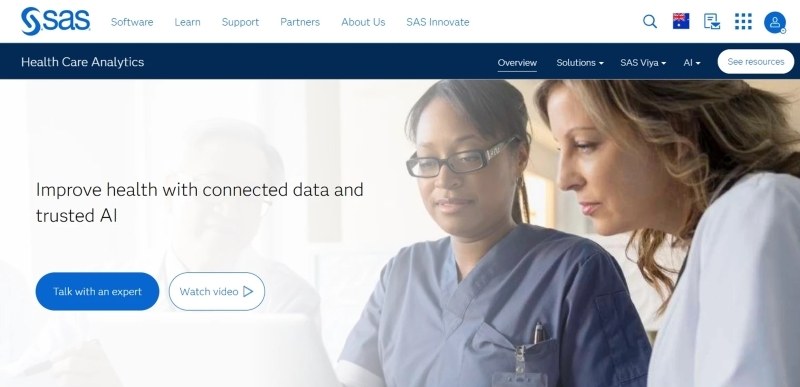
Founded: 1976
Headquarters: Cary, NC
Best for: Academic medical centers, public health agencies, and health systems with epidemiology and clinical research requirements
SAS has been building statistical analysis infrastructure for longer than most medical analytics software companies have existed. In healthcare, their platform supports disease surveillance, fraud detection, population health forecasting, clinical trial analytics, and complex statistical modeling at a depth that pure-play healthcare vendors rarely match.
The SAS Viya platform — now the primary healthcare-facing product — combines traditional statistical programming capabilities with modern AI/ML tools and cloud-native architecture. For healthcare organizations that need to build validated predictive models, epidemiological analyses, and regulatory-grade statistical reporting, SAS delivers a statistical depth that BI-oriented platforms cannot replicate.
For clinical teams needing accessible dashboards and operational analytics, SAS requires significant technical expertise to extract value. The platform rewards organizations with dedicated data science teams but creates barriers for clinical staff who need self-service analytics access.
- Best for: Academic medical centers, public health agencies, research institutions, and pharmaceutical organizations needing statistically validated, auditable analytics
- Limitation: High technical bar for everyday use; not designed for clinical staff self-service or real-time clinical decision support
MedeAnalytics — Best Accessible Medical Analytics Software for Smaller Organizations
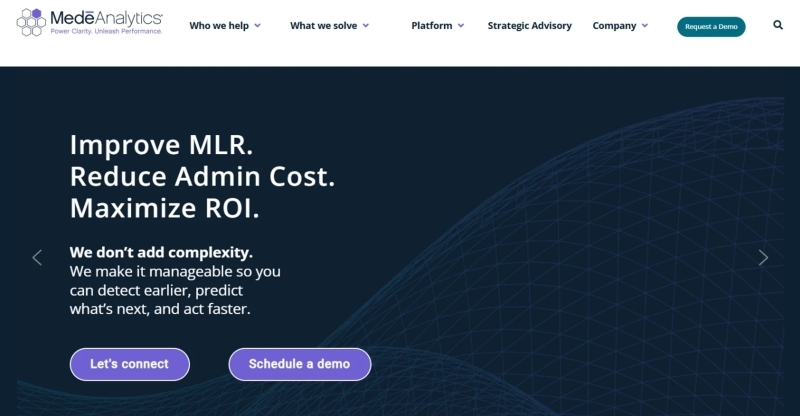
Founded: 1999
Headquarters: Emeryville, CA
Best for: Community clinics, regional health networks, and smaller provider organizations
MedeAnalytics serves the segment of the medical analytics market that enterprise platforms consistently underserve: organizations with genuine analytics needs but without the resources, technical teams, or implementation budgets that Health Catalyst or Kodjin require for full deployment.
The platform's design priority is adoption: getting clinical staff, operations managers, and financial leaders to actually use analytics data in their daily workflows. KPI dashboards, care management monitoring, quality reporting, and financial performance tracking are all accessible from a single interface designed for operational users rather than data scientists.
For community health centers, rural hospital systems, and smaller specialty clinics, MedeAnalytics provides a faster path to analytics value than enterprise platforms. The tradeoff is depth: complex temporal analysis, FHIR-native data modeling, and real-time clinical alerting are outside its current design scope.
- Best for: Community clinics, FQHCs, rural hospital systems, and smaller provider organizations needing accessible analytics without dedicated data science teams
- Limitation: Limited FHIR-native capability; not suited for complex multi-system data environments or research-grade analytics
Arcadia — Best for Multi-Source Data Unification Across Health Networks
Founded: 2002
Headquarters: Burlington, MA
Best for: Health networks managing population data across diverse EHR environments and payer relationships
Arcadia's defining capability is data unification at scale. Its platform integrates data from over 3,000 distinct source systems — including more than 50 EHR vendors — into a single analytics environment without requiring the source systems to conform to a common standard first. For health networks operating across diverse, heterogeneous IT environments, that integration capability is rare and commercially valuable.
For medical analytics use cases centered on population health management, risk adjustment, and value-based care performance, Arcadia delivers data unification depth that most competitors cannot match. Managing analytics for over 170 million patients across 200+ provider and payer organizations, its operational scale is genuine.
For individual-patient clinical decision support and real-time alerting, Arcadia's design center is population-level analytics and risk stratification — which informs care management programs — rather than real-time bedside intelligence.
- Best for: Health networks and payers managing population health across multiple EHR environments, particularly for VBC contracts and Medicare Advantage programs
- Notable recognition: Everest Group Healthcare Data Management Platforms PEAK Matrix Major Contender, 2025
AI, Predictive Analytics, and the Future of Healthcare Data
Artificial intelligence, predictive modeling, natural language processing, and interoperability initiatives continue to reshape healthcare analytics. Healthcare organizations increasingly use analytics to identify patients and residents at risk for hospitalization, falls, medication-related complications, functional decline, and cognitive deterioration.
As providers face workforce shortages and financial pressures, data-driven decision-making is expected to become even more important.
Making the Right Medical Analytics Investment
Whether you operate a hospital, physician practice, nursing home, assisted living community, memory care center, or home health agency, choosing the right analytics platform can affect care quality, operational efficiency, compliance, and financial performance for years to come.
No single analytics platform is right for every organization.
Large academic medical centers often prioritize advanced research capabilities and enterprise-scale data management. Community hospitals may place greater value on usability and implementation speed. Organizations focused on value-based care frequently seek population health tools, while long-term care providers often prioritize quality reporting, resident outcomes, staffing analytics, and hospitalization reduction.
Healthcare analytics is becoming essential across the entire continuum of care.
Organizations that focus on interoperability, usability, security, and measurable outcomes will be best positioned to transform healthcare data into better decisions, improved efficiency, and higher-quality care.
Editorial Note: Inclusion in this article does not constitute an endorsement by LTC News of any vendor. Healthcare organizations should conduct independent evaluations, verify capabilities, and request demonstrations before selecting an analytics platform.

Sponsored