5 Illinois Law Firms Handling Nursing Home and Long-Term Care Abuse Cases
About This Article
Illinois has more than 1,600 regulated long‑term care facilities. While most caregivers strive to deliver quality care, cases of abuse, neglect or preventable harm still happen. Families must know their rights and how to seek help when something goes wrong.

James Kelly
LTC News staff writer specializing in long-term care and aging.
Table of Contents
- Illinois Has One of the Nation's Largest Long-Term Care Systems
- When Something Goes Wrong in Long-Term Care
- 5 Illinois Law Firms Handling Nursing Home Abuse and Neglect Cases
- 1. Ankin Law, LLC
- 2. Strong Law Offices
- 3. Goldberg & Goldberg, LLC
- 4. Chute O'Malley Knobloch & Turcy LLC
- 5. DePaolo Zadeikis & Pino
- Nursing Homes and Assisted Living Communities Have Different Legal Requirements
- What Families Should Do When They Suspect Abuse or Neglect
- Where to Report Long-Term Care Abuse in Illinois
- How to Choose a Nursing Home Abuse Attorney
- Checking a Facility's Quality and Inspection History
- Protecting Residents While Supporting Quality Long-Term Care
Every single day, thousands of families hand over the keys to their loved ones’ safety, placing unwavering trust in long-term care communities. They trust that the people who raised them, loved them, and built their lives will be protected when they are at their most vulnerable. And while countless dedicated caregivers work tirelessly under exhausting conditions to deliver quality and compassionate extended care, a alarming crisis is unfolding behind closed doors.
Too often, that sacred trust is shattered. A call button rings unanswered into the night. A dramatic shift in condition goes unnoticed. A preventable decline is brushed aside. While not every setback stems from wrongdoing, the line between an unavoidable accident and devastating neglect is being crossed far too frequently, and the toll is measured in human suffering. When care fails, vulnerable lives hang in the balance, and heartbreak turns into outrage. Families cannot afford to wait any longer; they deserve immediate, unvarnished answers.
Federal and state laws protect the rights, safety, and dignity of residents in nursing homes, assisted living communities, and other long-term care settings across the United States. When abuse, neglect, or preventable harm is suspected, attorneys experienced in long-term care cases can help families investigate what happened, determine whether a facility or individual failed to meet applicable standards of care, and understand their legal options.
Illinois has one of the largest long-term care systems in the United States and, as a result, the number of abuse allegations has increased over the years. According to the Illinois Department of Public Health's 2025 Long-Term Care Annual Report, the state's Central Complaint Registry processed 13,098 complaints involving alleged abuse, neglect, assault, and other concerns in 2024.
The Illinois Long-Term Care Ombudsman Program also reported closing 5,575 cases during fiscal year 2025, helping residents address complaints involving care, services, and residents' rights.
These figures do not mean that every complaint involved abuse or that every allegation was substantiated. Some complaints concern other aspects of facility operations or resident care, and investigations may determine that no violation occurred. However, the volume of complaints underscores the importance of effective oversight, prompt investigations, and giving residents and families a way to raise concerns without fear of retaliation.
When a resident suffers an unexplained injury or experiences a troubling change in care, families should seek answers. In some cases, regulatory intervention may resolve the problem. In others, legal assistance may be appropriate when evidence suggests negligence or abuse caused harm.
Illinois law provides protections for residents of nursing homes and other long-term care settings. Attorneys who handle abuse and neglect cases can help families determine whether a facility or individual failed to meet applicable legal obligations.
The following five Illinois law firms handle nursing home and long-term care abuse matters. They are presented as options for families researching legal representation, not as an independently ranked list.
Illinois Has One of the Nation's Largest Long-Term Care Systems
Illinois has a substantial network of residential care facilities serving older adults and people with disabilities. According to the Illinois Department of Public Health's fiscal 2025 annual report, the department regulates 1,629 long-term care facilities representing more than 140,000 beds.
The total includes several types of facilities, including skilled nursing, intermediate care, sheltered care, assisted living, and specialized residential services. The department's 2025 Long-Term Care Annual Report identifies 516 licensed assisted living and shared housing establishments under the Illinois Assisted Living and Shared Housing Act. That report primarily describes 2024 regulatory activities.
Illinois also has one of the nation's largest numbers of federally certified nursing facilities. According to KFF's July 2025 data, Illinois had 674 federally certified nursing facilities, ranking fifth nationally.
For comparison:
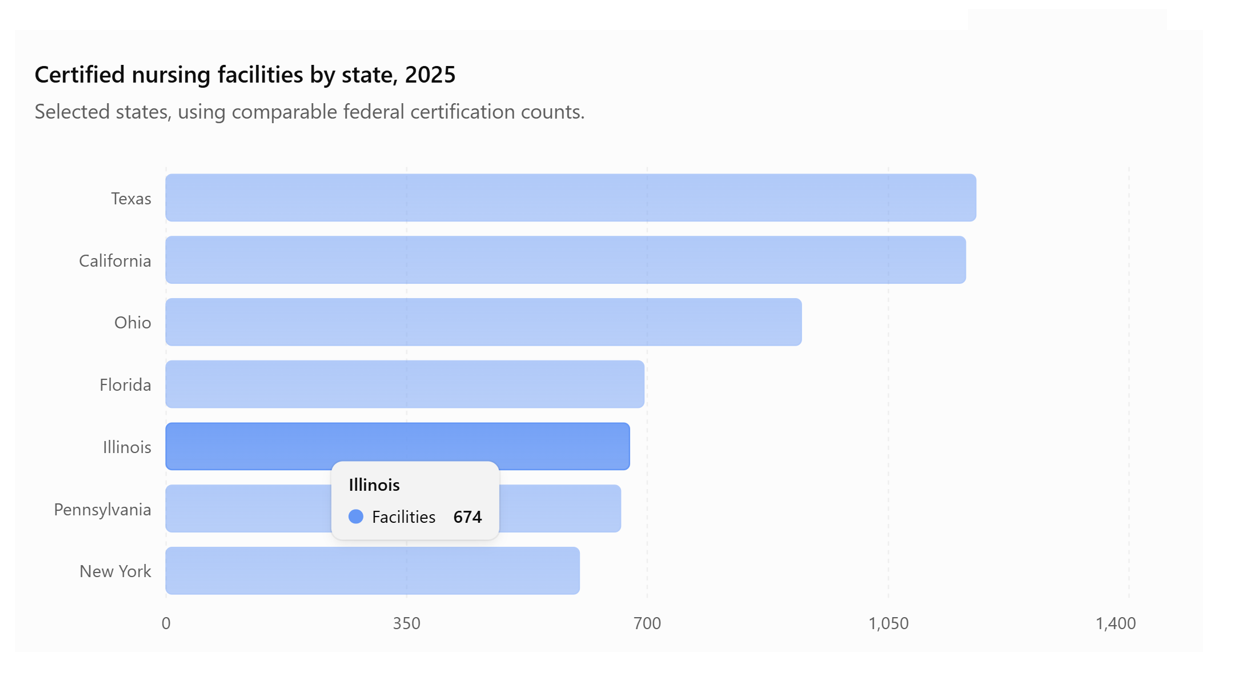
These figures represent different facility categories. Federal nursing facility counts are not interchangeable with state licensing totals, and you should not add the categories together.
The size of Illinois' long-term care system highlights the importance of maintaining quality standards, protecting residents' rights, and ensuring that families know how to raise concerns.
When Something Goes Wrong in Long-Term Care
Caring for older adults can be complicated. Many residents live with dementia, heart disease, diabetes, limited mobility, or other conditions that require close attention. Caregivers may assist with bathing, dressing, meals, medications, transfers, and other daily needs. Some residents require round-the-clock nursing care, while others need occasional help in an assisted living community.
Most long-term care professionals take their responsibilities seriously. Many form close relationships with residents and their families. Nevertheless, even a well-run facility cannot prevent every fall, illness, or medical complication. The concern becomes more serious when a resident's needs are ignored, staff fail to follow established care plans, necessary treatment is delayed, or someone deliberately mistreats a resident.
Potential warning signs include:
- Unexplained bruises, fractures, or repeated injuries.
- New or worsening pressure injuries that raise questions about prevention or treatment.
- Significant weight loss, dehydration or poor hygiene without an adequate explanation.
- Medication errors or missed treatments.
- Sudden fearfulness, withdrawal or unusual behavior around particular individuals.
- Missing money, personal belongings or suspicious financial transactions.
- Repeated complaints about unanswered requests for assistance.
These signs do not automatically prove abuse or neglect. Medical conditions, accidents, and other circumstances may explain some changes. However, families should not dismiss concerns simply because a resident is older, frail, or living with dementia.
A timely medical evaluation, careful documentation, and appropriate reporting can help establish what happened.
5 Illinois Law Firms Handling Nursing Home Abuse and Neglect Cases
1. Ankin Law, LLC
Ankin Law, LLC is a Chicago-based personal injury law firm that handles nursing home abuse and neglect matters. Cases may involve injuries from inadequate supervision, failure to provide necessary care, medication mistakes, or other potentially negligent conduct.
Investigating these claims often requires reviewing medical records, care plans, incident reports, and communications between facility staff and family members. Families considering Ankin Law can ask how the firm investigates nursing home injuries, identifies potentially responsible parties, and evaluates available legal remedies.
2. Strong Law Offices
Strong Law Offices handles personal injury litigation, including nursing home abuse and neglect cases. A central issue in many long-term care claims is whether the facility provided care appropriate to the resident's individual needs.
For example, a resident with mobility limitations may require assistance transferring from a bed to a wheelchair. A person with dementia may need additional supervision because of wandering or other safety risks. When an injury occurs, an attorney may examine whether the facility recognized those risks and followed an appropriate care plan.
Families can ask Strong Law Offices about its experience investigating similar incidents and handling disputes involving long-term care providers.
3. Goldberg & Goldberg, LLC
Goldberg & Goldberg, LLC is a Chicago-based law firm handling medical malpractice, personal injury and nursing home abuse and neglect matters.
Some long-term care cases involve questions about medical treatment rather than intentional mistreatment. Delayed treatment, medication errors, inadequate wound care, or a failure to recognize a serious change in a resident's condition may require closer examination. Such cases can involve detailed medical records and opinions from qualified healthcare professionals.
Families considering the firm can discuss whether the circumstances suggest a failure to meet applicable standards of care and what evidence may be needed.
4. Chute O'Malley Knobloch & Turcy LLC
Chute O'Malley Knobloch & Turcy LLC is an Illinois personal injury law firm handling nursing home abuse and neglect matters. Long-term care injuries can involve questions about supervision, environmental safety, and whether residents received appropriate assistance with daily activities.
For example, repeated falls may warrant an examination of the resident's fall-risk assessment, care plan, and the assistance actually provided. Families considering the firm should ask how its attorneys investigate these circumstances and evaluate whether a facility's actions contributed to an injury.
5. DePaolo Zadeikis & Pino
DePaolo Zadeikis & Pino is a Chicago personal injury law firm handling nursing home abuse and neglect cases. Potential claims may involve inadequate supervision, unsafe conditions, improper care, or other alleged failures that result in harm.
An investigation may require witness statements, medical documentation, facility records, and evidence connecting the alleged conduct to the resident's injuries. Families considering the firm can ask about its approach to evaluating cases, communicating, negotiating settlements, and litigating when responsibility is disputed.
Nursing Homes and Assisted Living Communities Have Different Legal Requirements
Illinois regulates long-term care settings under different laws. The Illinois Nursing Home Care Act establishes protections for residents of covered nursing homes and certain other facilities. These include important rights involving dignity, personal care, safety, and the ability to raise complaints.
Assisted living and shared housing establishments operate under the separate Assisted Living and Shared Housing Act. Illinois' Supportive Living Program, which provides a Medicaid-supported residential care option for eligible individuals, operates under a different regulatory framework.
Nursing homes, assisted living communities, and other licensed settings may offer memory care. Applicable legal requirements depend on the facility type and services provided. Federal nursing home regulations also protect residents of facilities participating in Medicare or Medicaid.
These differences matter when determining which standards apply, which agency oversees the facility, and whether a particular incident supports legal action. A regulatory violation does not automatically establish all the elements of a civil lawsuit. Likewise, an injury does not necessarily mean that negligence occurred.
What Families Should Do When They Suspect Abuse or Neglect
When a resident may have been harmed, immediate safety comes before questions about legal responsibility.
- Get medical attention. Seek emergency care when necessary. An independent medical evaluation may help identify injuries or treatment needs.
- Document what happened. Record dates, observations, conversations, and changes in the resident's condition. Preserve photographs and available records.
- Speak with the resident. When possible, ask open-ended questions privately. Avoid suggesting answers or pressuring the person to describe events in a particular way.
- Raise concerns with the facility. When safe and appropriate, ask the administrator or care team for an explanation. Ask whether the care plan needs to change and document the response.
- Report suspected mistreatment. Contact the appropriate state agency, long-term care ombudsman, or law enforcement.
- Consider other care arrangements. If safety remains a concern, evaluate whether additional support or a transfer is necessary.
- Seek legal advice when appropriate. An attorney can help assess possible claims, preserve evidence, and explain applicable filing deadlines.
Families should avoid confronting a suspected abuser in a way that could place the resident at further risk.
Where to Report Long-Term Care Abuse in Illinois
Families do not need to hire an attorney before filing a complaint.
- Illinois Department of Public Health
The Illinois Department of Public Health investigates complaints involving facilities under its regulatory authority. Central Complaint Registry: 800-252-4343. The department lists telephone complaint assistance Monday through Friday, 8:30 a.m. to 4:30 p.m. Complaints may also be submitted online through its Office of Health Care Regulation portal.
Families should provide the facility's name, the resident's information, relevant dates, and a factual description of the concerns.
- Illinois Long-Term Care Ombudsman Program
The Illinois Long-Term Care Ombudsman Program provides free advocacy for residents of long-term care facilities. Ombudsmen help residents understand their rights, address complaints, and work toward solutions consistent with residents' wishes.
They are not emergency responders. If your loved one is in immediate danger or requires emergency medical attention, call 911 right away. Suspected criminal conduct may also warrant contacting law enforcement.
- Illinois Supportive Living Program
You can direct complaints involving providers participating in Illinois' Supportive Living Program to the Illinois Department of Healthcare and Family Services. Supportive Living Program complaint hotline: 844-528-8444. The department also accepts complaints by email at HFS.SLF@illinois.gov.
How to Choose a Nursing Home Abuse Attorney
Not every personal injury attorney has the same experience with long-term care cases.
Before retaining a lawyer, families should consider five questions:
- Relevant experience: Has the attorney handled nursing home or assisted living abuse and neglect cases involving similar circumstances?
- Investigation: How will the firm obtain and evaluate medical records, care plans, witness accounts, and other evidence?
- Communication: Who will handle the case, and how often will the family receive updates?
- Fees: Does the firm use a contingency-fee agreement? What expenses might the client be responsible for?
- Legal strategy: What are the potential strengths and challenges of the case, and how will the attorney evaluate settlement or litigation options?
Many personal injury firms handle these matters on a contingency-fee basis, but arrangements vary. Families should review the written agreement carefully and understand how fees and expenses are calculated.
No attorney can guarantee a particular outcome.
Checking a Facility's Quality and Inspection History
Families can review information about Medicare-certified nursing homes through the federal government's Medicare Care Compare website. The tool includes nursing home quality information, staffing measures, and inspection findings. These records can help families identify issues worth investigating, but a rating does not guarantee that every resident receives appropriate care.
Families evaluating alternative arrangements can also use the LTC News Caregiver Directory to research care services and the LTC News Cost of Long-Term Care Services Calculator to compare local long-term care costs. Neither tool replaces a medical assessment, an inspection report, or professional legal advice. Always visit potential facilities before moving a loved one into the facility.
Protecting Residents While Supporting Quality Long-Term Care
Most families choose long-term care services because someone they love needs more help than they can safely provide at home. They depend on caregivers who often perform physically demanding, emotionally challenging work. Many of those professionals provide exceptional support and make a meaningful difference in residents' lives.
Recognizing their dedication does not mean overlooking situations in which care falls short. When an injury, unexplained change in health, or allegation of mistreatment raises concerns, families have a right to ask questions and seek answers.
Sometimes an investigation reveals an unavoidable complication. In other situations, it may uncover failures that should have been prevented. Residents and families have access to regulatory agencies, independent advocates, and attorneys who can help them understand their options.
The five law firms discussed in this article are a great starting point for families researching legal representation. Whatever course a family chooses, the priority remains the same: protecting the resident's safety, dignity, rights, and well-being.
This sponsored article is provided for general informational purposes and does not constitute legal advice.
Frequently Asked Questions
What compensation may be available?
Depending on the claim and applicable law, recoverable damages may include medical expenses, additional care costs, pain and suffering, and other losses. Separate legal claims may be available when abuse or neglect contributes to a resident's death.
Compensation is not guaranteed.
What if the resident has dementia?
A person with dementia retains legal protections. When the resident cannot provide a complete account, medical records, observations, witness statements, and other documentation may help establish what happened.
A legally authorized representative may be able to act on the resident's behalf, depending on the circumstances.
Does a fall or pressure injury prove negligence?
No. Falls, pressure injuries and medical complications can occur despite appropriate care. An investigation considers the resident's condition, the care required, the actions taken, and whether a failure contributed to the injury.
Can families report suspected abuse without an attorney?
Yes. Families can contact the appropriate state regulatory agency, the Long-Term Care Ombudsman Program, or law enforcement when necessary. Reporting suspected abuse and pursuing a civil lawsuit are separate processes.
Can abuse occur without physical injuries?
Yes. Emotional mistreatment, intimidation, and financial exploitation may occur without obvious physical injuries. Changes in behavior, unexplained financial activity, or statements from the resident may warrant investigation.
What qualifies as nursing home abuse?
Abuse can include physical, emotional, sexual, or financial mistreatment. Neglect may involve a failure to provide necessary care, supervision, nutrition, hygiene, or medical treatment. Whether conduct violates the law depends on the circumstances and applicable legal requirements.
How long do families have to file a lawsuit?
Illinois imposes deadlines on personal injury, negligence, and related legal claims. The applicable deadline may vary based on the legal theory, the resident's circumstances, and possible exceptions.
Families should seek legal advice promptly rather than assume every case has the same filing period.
Can families sue a nursing home or assisted living facility for neglect?
Legal action may be possible when negligence or other unlawful conduct causes harm. The applicable law and the person authorized to bring a claim depend on the facility, the resident's circumstances, and the nature of the allegations.


Sponsored