Why Storing and Tracking Blood Pressure Medication Matters After Online Refills

About This Article
Learning how to store and track blood pressure medication after online refills to protect effectiveness, improve consistency, and support long-term control is key to your or your loved ones' health.

Linda Maxwell
Former journalist who now enjoys writing about topics she is interested in.
You rely on your blood pressure medication to protect your heart, brain, and long-term health. Many people today love the option to refill blood pressure medication online, which can improve convenience while reducing delays.
When prescriptions are refilled online, access becomes easier, especially if you have limited time, transportation challenges, or gaps in insurance. But convenience alone does not guarantee results.
What happens after the refill matters just as much as getting the prescription approved. Improper storage can weaken medication over time. Missed or inconsistent doses reduce blood pressure control.
Because high blood pressure is usually silent, it is easy to underestimate. But unmanaged hypertension is a major reason you may lose independence later in life.
Consistent treatment helps reduce the risk of:
- Stroke and heart attack
- Cognitive decline
- Kidney failure
- Hospitalizations that trigger long-term care needs
Medication is one tool. Proper storage, accurate tracking, and long-term planning are what make that tool effective.
If you or a loved one is managing high blood pressure, the goal is not just lower numbers. It is protecting health, independence, and quality of life for the years ahead.
What High Blood Pressure Is and What Medication Really Does
High blood pressure, also called hypertension, occurs when the force of blood pushing against your artery walls stays consistently too high. Over time, that pressure damages blood vessels and organs, especially the heart, brain, kidneys, and eyes.
Blood pressure is measured using two numbers:
- Systolic pressure, the top number, reflects pressure when the heart beats.
- Diastolic pressure, the bottom number, reflects pressure when the heart rests between beats.
When either number remains elevated, the heart has to work harder. That strain often goes unnoticed for years because high blood pressure usually causes no symptoms until damage is already underway.
According to the American Heart Association, uncontrolled hypertension is a leading risk factor for heart attack, stroke, heart failure, kidney disease, and vascular dementia.
Why Blood Pressure Medication Manages—but Does Not Cure—the Condition
Blood pressure medication does not cure hypertension. Instead, it helps manage the condition by lowering pressure to safer levels and reducing stress on the cardiovascular system.
If you stop taking medication without medical guidance, your blood pressure typically rises again. That is because the underlying causes of hypertension often remain. For many people, treatment is lifelong, especially as aging naturally stiffens blood vessels.
Consistency matters. Medication works only when taken as prescribed, stored properly, and used daily.
Common Types of Blood Pressure Medications
Many people require one medication. Others need a combination. Providers choose drugs based on your age, overall health, other conditions, and how your body responds.
Common medication classes include:
- Diuretics (water pills): Help your body remove excess sodium and fluid, lowering pressure.
- ACE inhibitors: Relax blood vessels by blocking hormones that cause tightening.
- ARBs (angiotensin II receptor blockers): Work similarly to ACE inhibitors but through a different pathway.
- Calcium channel blockers: Prevent calcium from tightening heart and blood vessel muscles.
- Beta blockers: Slow the heart rate and reduce the force of each heartbeat.
Each class manages blood pressure in a different way. That is why tracking, correct dosing, and regular provider review are essential, especially if you take more than one medication.
Why People Develop High Blood Pressure
High blood pressure develops for different reasons, and often for more than one reason at the same time.
Common contributing factors include:
- Family history and genetics
- Aging and stiffening of blood vessels
- Excess sodium intake
- Being overweight or inactive
- Chronic stress
- Smoking or excessive alcohol use
- Diabetes, kidney disease, or sleep apnea
In many cases, no single cause can be identified.
Types of High Blood Pressure, Including Essential Hypertension
There are two main categories of hypertension.
Essential (Primary) Hypertension
The most common type of high blood pressure, essential hypertension, accounts for the vast majority of cases.
- Develops gradually over many years
- Has no single identifiable cause
- Often influenced by genetics, lifestyle, and aging
Most adults with high blood pressure fall into this category. Management typically involves long-term medication combined with lifestyle adjustments.
Secondary Hypertension
This type results from an underlying medical condition or medication, such as:
- Kidney disease
- Hormonal disorders
- Certain prescription or over-the-counter drugs
- Obstructive sleep apnea
Treating the underlying cause can sometimes improve or resolve secondary hypertension, but medication is often still required.
Understanding how you can safely store and track blood pressure medication will help you manage the condition and promote your good health.
Proper Handling Matters
Blood pressure medications depend on steady, daily use. Each dose helps keep pressure within a safe range. When pills lose potency or doses are skipped, blood pressure becomes unstable.
Once an online refill is approved, pharmacies ensure accurate dispensing, and licensed providers review safety. From that point forward, success depends on you. Proper storage preserves medication strength. Reliable tracking supports adherence. Both are essential for long-term control.
How to Store Blood Pressure Medication Safely at Home
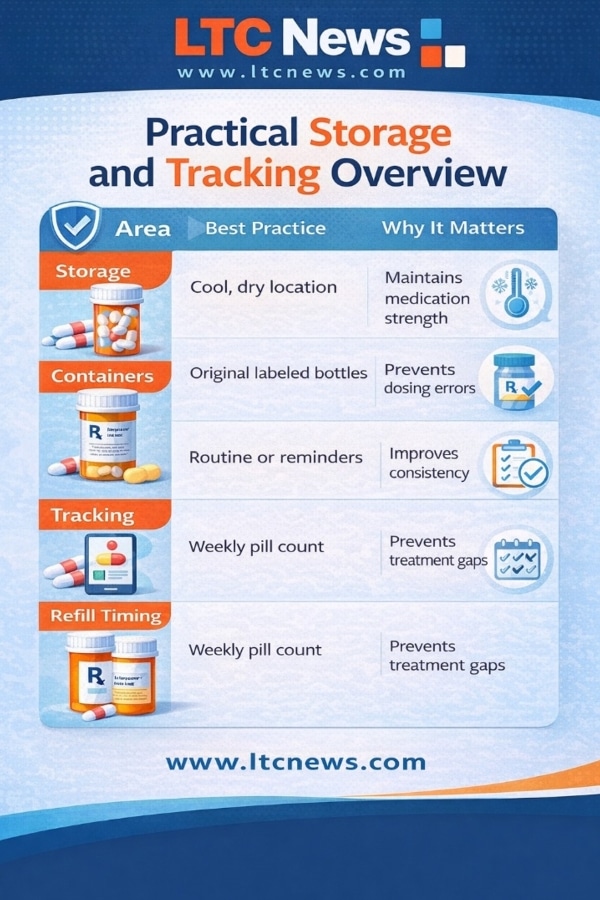
Most blood pressure medications are designed to be stored at room temperature, away from excess heat, light, and moisture. Over time, exposure to these elements can degrade the active ingredients and reduce their effectiveness.
Best storage practices include:
- Choose a cool, dry location, such as a bedroom drawer or hallway cabinet.
- Avoid bathrooms, where humidity is high.
- Avoid kitchens, where heat from appliances fluctuates.
- Keep medication away from windows and direct sunlight.
Always store medication in its original pharmacy container. These bottles include:
- Exact dosing instructions
- Expiration dates
- Drug name and strength
Keeping medication in labeled containers reduces confusion, especially if you take more than one prescription.
Common Medication Storage Mistakes to Avoid
Some habits seem harmless but quietly undermine treatment.
Avoid these common errors:
- Combining multiple medications in one container
- Removing pills from labeled bottles for long-term storage
- Keeping expired medication "just in case"
Expired medication may not work as intended. Reduced potency can weaken blood pressure control without obvious warning signs. Checking expiration dates regularly is a simple way to avoid preventable risk.
If you are taking your medication correctly, you should never have "extra" medication.
How to Track Blood Pressure Medication Effectively
Consistency protects your health. Tracking helps make consistency automatic.
Taking medication at the same time each day builds a reliable routine. Many people connect doses to daily habits:
- Morning doses after brushing your teeth
- Evening doses after dinner or before bedtime
Digital tools can help:
- Smartphone alarms
- Medication reminder apps
- Calendar alerts
Low-tech options still work well:
- Written logs
- Checklists
- Weekly pill organizers
Choose a method you will actually use. The best system is the one that fits your daily life.
Why Tracking Supports Better Blood Pressure Control
Missed doses often go unnoticed until blood pressure rises. Tracking helps identify problems early, before complications develop.
Accurate records also improve care quality. During telehealth visits or in-person appointments, you can report adherence clearly. This allows providers to make safer refill decisions and adjust treatment when needed.
For adults over 40, consistent blood pressure control reduces the likelihood of strokes, heart failure, kidney disease, and future care needs that can strain both finances and family caregivers.
Managing More Than One Blood Pressure Medication
Many people require more than one medication to control blood pressure. This adds complexity and increases the risk of dosing errors.
Helpful strategies include:
- Keeping medications in separate, clearly labeled containers
- Grouping doses by time of day
- Using weekly pill organizers while retaining original bottles for reference
If you ever feel unsure about which medication to take or when, pause and verify rather than guessing.
When to Contact Your Doctor
Certain situations require professional guidance. Contact your doctor if you experience:
- New or worsening symptoms, such as dizziness or weakness
- Significant changes in blood pressure readings
- Missed doses and uncertainty about next steps
- Accidental extra doses
Timely communication helps prevent complications and keeps treatment safe.
How Online Refills Fit into Safe Medication Use
Online refills can make it easier to stay on blood pressure medication, especially for routine conditions like hypertension. They support continuity of care by reducing delays, but they do not replace medical oversight. Licensed providers still review each refill request to confirm safety and appropriateness.
Once a refill is approved, results depend largely on your daily habits. Proper storage helps preserve medication strength. Consistent tracking helps ensure doses are not missed.
Even with online refills, regular medical follow-up remains essential. Your doctor will typically schedule in-person or telehealth visits at least once a year, and often twice, to review blood pressure readings, assess how well medication is working, and order lab tests when needed. These checkups help confirm treatment remains safe and effective over time.
Practical Storage and Tracking Overview
Why This Matters as You Age
High blood pressure is one of the most common drivers of heart disease, stroke, and disability later in life. Poor control often leads to hospitalizations and, eventually, the need for long-term care services that Medicare and health insurance do not cover beyond short-term skilled care.
Managing medication correctly today protects not just your health, but your independence and your family's future.
How Long-Term Care and Home Health Providers Help Manage Medications
When a loved one needs extended care, medication management often becomes part of daily support. In long-term care facilities and through home health care, trained professionals help ensure medications are taken correctly, on schedule, and stored safely.
Care providers typically handle tasks such as organizing medications, administering doses, monitoring for side effects, and communicating changes to nurses or physicians. This oversight reduces the risk of missed doses, double dosing, or harmful interactions, which are common causes of emergency hospital visits among older adults.
For families, professional medication management provides reassurance. It supports better health outcomes while easing the stress and responsibility that often fall on spouses or adult children when care needs increase.
- Search for quality long-term care providers anywhere in the United States by using the LTC News Caregiver Directory.
The Bottom Line
Online refills make blood pressure medication easier to access. Proper storage and tracking make them effective.
Simple habits protect medication quality, improve consistency, and support long-term control. The steps you take now can help prevent avoidable complications later.
Being proactive with your health and planning will ensure you enjoy a better quality of life in the decades ahead. Aging issues and chronic health problems can't be avoided, but proactive healthcare and proper planning will help ease the stress and burdens of aging and future long-term care.
- Learn more about long-term care planning by reviewing the LTC News Education Center.